Emirati women’s involvement in UAE society dates back before the Union, playing vital roles within their families, tribes, and local economies. Though absent from formal treaty negotiations, their impact was significant in private and political spheres.
Dr. Salma Thani, an Assistant Professor at the American University of Sharjah, explained, “Prior to the Union, women’s political involvement was mostly informal but crucial. Within ruling families, women influenced decisions, alliances, and conflict resolutions.”
Ordinary women ensured economic and social stability during pearling seasons by managing finances, organizing provisions, and maintaining community cohesion while men were away. Though often behind the scenes, Emirati women’s contributions were crucial for their communities’ survival and the Union’s success.
Stay updated with the latest news. Follow KT on WhatsApp Channels.
Pre-Union
During pearling seasons, starting June 1 and sometimes lasting until November, women managed the local economy while men were at sea. They took care of households, children, elders, worked in agriculture, harvested dates, and managed sea-related payments. Women also practiced Sadu weaving, a traditional Bedouin embroidery, vital for tent making or as an income source.
“They organized mutual aid and sustained community life while men were absent,” Thani noted. “In essence, women were not just caretakers but were managers, producers, and economic actors in their own right.”
Quiet, but essential role
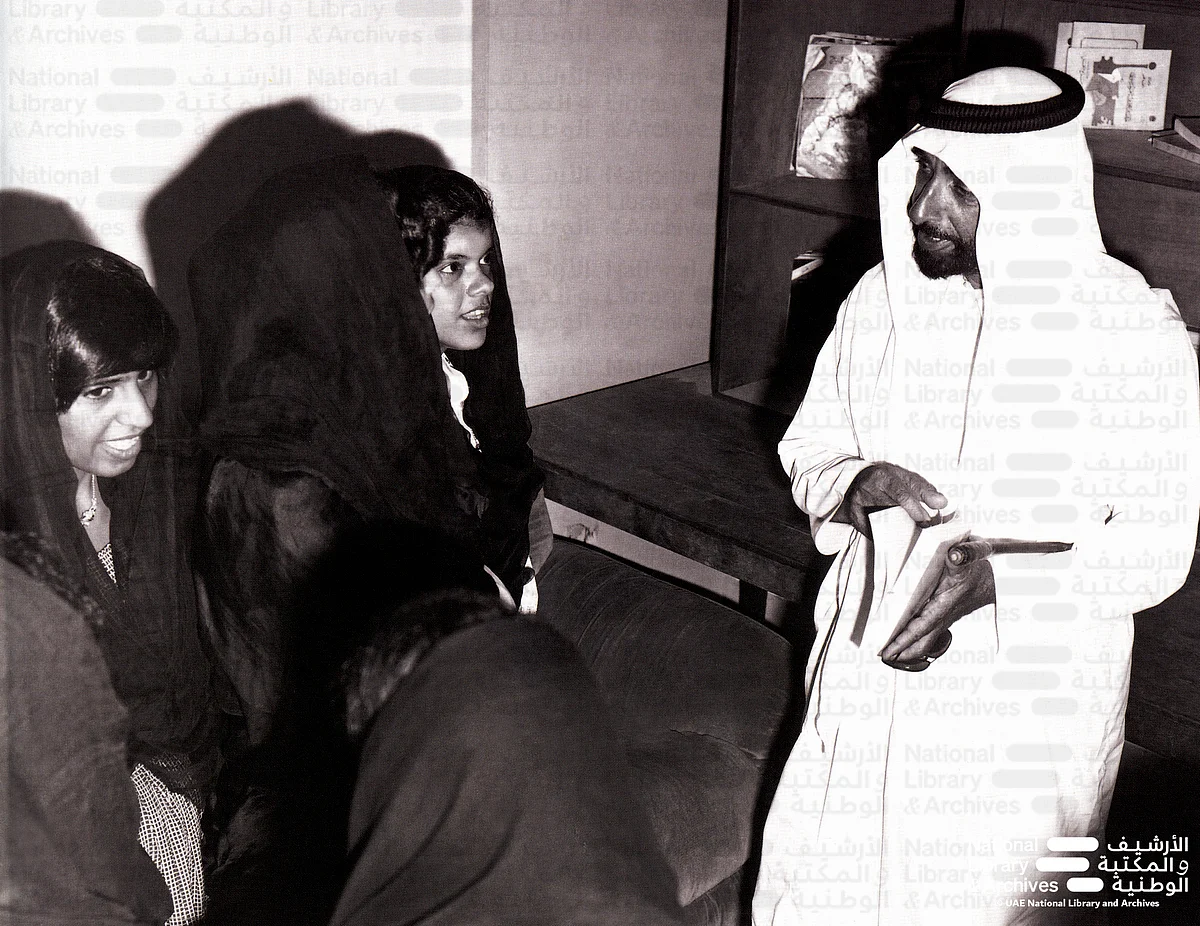
Even before 1971, Emirati women played a quiet yet vital role. “Yes, but indirectly,” Thani remarked about women’s contributions to the UAE formation. “Men conducted formal negotiations for the Union, but women sustained the social fabric, ensuring stability as mothers and wives. They supported families, reinforced kinship, and maintained cohesion, creating an environment for unity.”
Influential figures
Some women mediated tribal conflicts and defended their emirates. Sheikha Hessa bint Al-Murr, wife of Sheikh Saeed Al Maktoum, rallied forces to defend Dubai’s fort, hosted public majlis, and was a trader and businesswoman. A majlis, before the UAE’s formation, was a gathering space for peacemaking or dialogue.
“Sheikha Salama bint Butti Al Qubaisi, Sheikh Zayed’s mother, ensured Abu Dhabi’s stability by urging unity among her sons and financially supported Sheikh Zayed in Al Ain before oil was discovered,” she added.
“Behind every great man, there is a great woman,” Thani stated. “This is true in the Emirates. Women may not have held formal office pre-Union, but their influence was vital politically, socially, and economically,” she added.