
Antonoaldo Neves, CEO of Etihad Airways, stated on Tuesday that the Gulf airline has no immediate plans to go public, as it possesses sufficient resources to “self-fund” its $20 billion growth strategy for the next decade.
In an interview, Neves mentioned that while the airline is prepared for an initial public offering, the ultimate decision lies with its shareholder, the sovereign wealth fund ADQ.
“Any IPO decision is primarily a broader shareholder decision rather than a specific one concerning Etihad,” he told Reuters. “The moment hasn’t arrived yet.”
Keep informed with the latest updates. Follow KT on WhatsApp Channels.
Etihad, which launched operations in 2003, invested billions in acquiring minority stakes in other airlines to expand its network through its Abu Dhabi hub, aiming to compete with Gulf rivals Emirates and Qatar Airways. However, several of these airlines encountered financial issues, leading ADQ to take control of Etihad in October 2022.
Neves, who assumed the CEO role concurrently, emphasized that the UAE’s national airline is focusing on organic growth, as mergers and acquisitions are not part of its strategic plan.
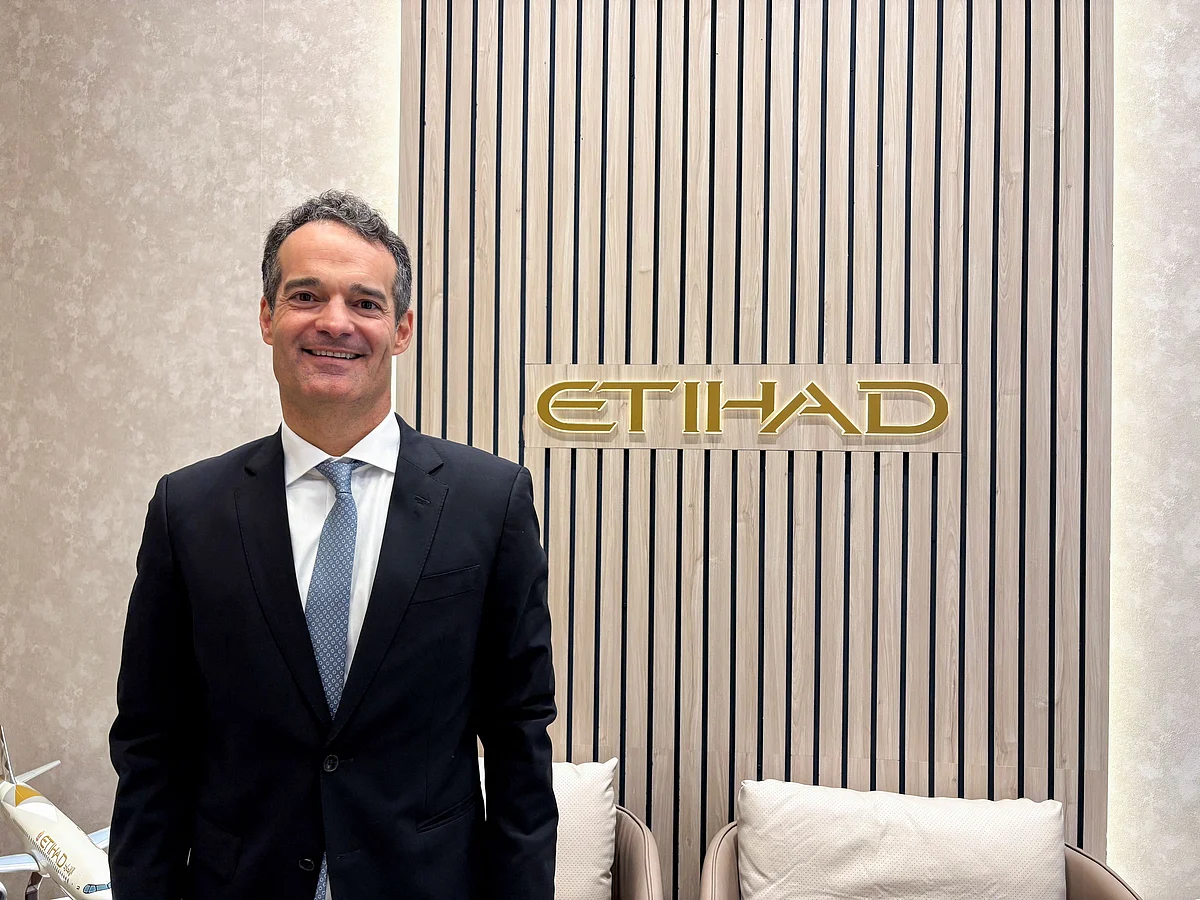
Antonoaldo Neves, CEO of Etihad Airways. Photo: Reuters
Etihad aims to enhance Abu Dhabi’s status as a travel hub linking Asia and Europe. Neves stated that the airline doesn’t require an IPO to support its growth plans, which are projected to exceed $20 billion over the next decade. “We believe we can self-fund that,” he asserted.
Neves also dismissed concerns about global economic instability, geopolitical, and trade tensions. He affirmed the airline’s commitment to its network expansion strategy, as the Middle East’s growth outlook supports air travel demand.
The airline’s passenger traffic has increased by 17% year-on-year, and its load factor—indicating plane occupancy—rose to 88% from last year’s 86%.
Despite a slowdown in bookings during the Israel-Iran conflict, Neves noted that sales had fully recovered by the end of July.
“People delayed their plans but didn’t abandon them,” he remarked.
Etihad’s fleet comprises over 100 aircraft, including models from Airbus and Boeing. In May, it confirmed an order for 28 wide-body Boeing aircraft, such as the 777X.
Neves indicated that the 777X order is expected post-2030 to replace Etihad’s Airbus A380 planes. Additional aircraft deals are anticipated as the airline explores the secondary market, potentially involving lessors for more jets, he added.
“It’s not solely with OEMs. It could involve lessors or secondhand planes.”