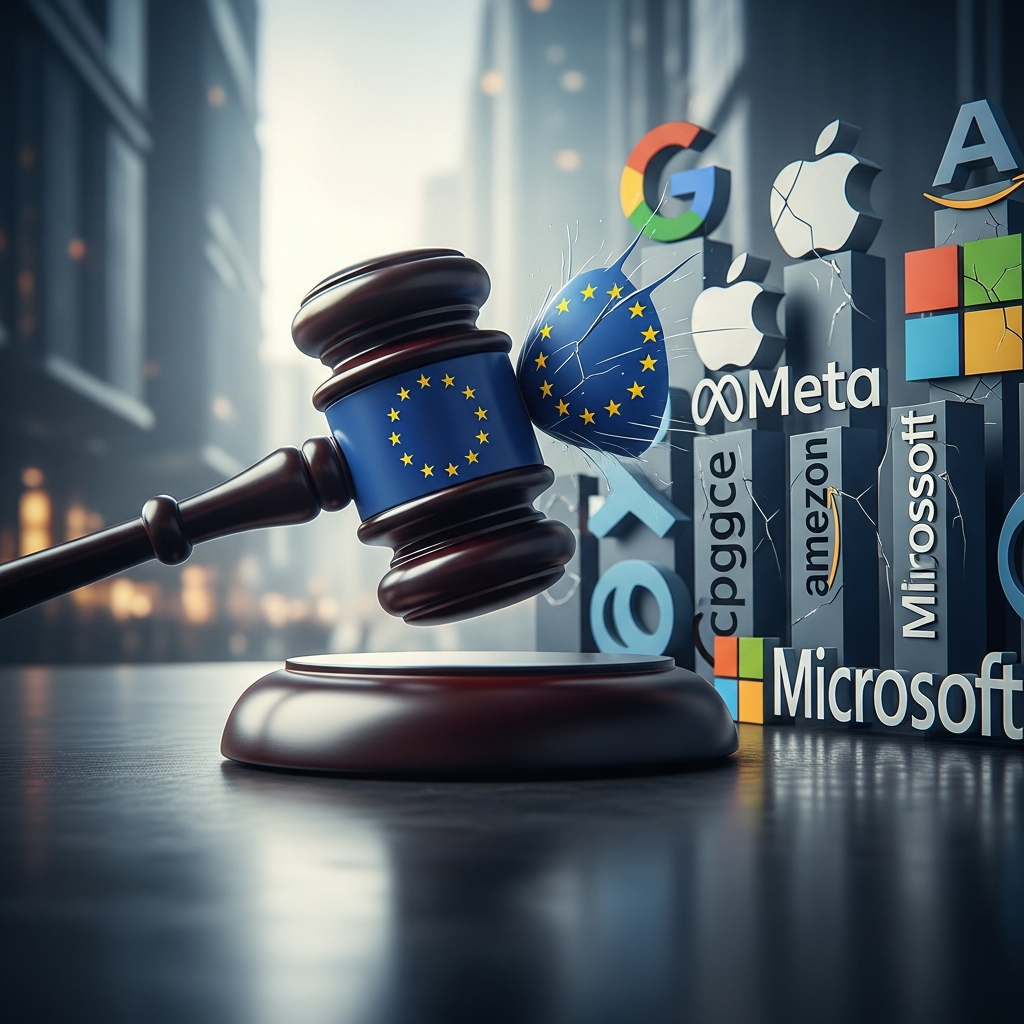
Europe is intensifying its efforts against Big Tech, imposing fines on Google’s Alphabet and Elon Musk’s X, while launching fresh investigations to assert its legal sovereignty, despite opposition from U.S. President Donald Trump.
Just three months after slapping Google with a hefty 2.95 billion euro ($3.44 billion) penalty, the European Commission fined Elon Musk’s X 120 million euros for violating EU online content regulations on Friday.
The U.S. government has retaliated by linking reductions in U.S. steel import tariffs to softer EU digital policies and has instructed its diplomats to lobby against these laws.
The crux of the matter is the EU’s Digital Markets Act, aiming to curb the dominance of companies like Amazon, Apple, Google, Meta Platforms, Microsoft, Booking.com, and ByteDance, alongside the Digital Services Act, which mandates major online platforms to better manage illegal and harmful content.
EU antitrust chief Teresa Ribera firmly dismissed U.S. criticisms.
“We must remind others that we deserve respect. I don’t comment on their health standards regulation in the U.S., but I am committed to ensuring well-functioning digital markets in Europe, which is unrelated to any joint discussions,” she stated at an event.
At another occasion, she opposed those who view competition law as a market-controlling tool or a means to further narrow economic interests.
“It’s a fundamental pillar of open, fair, and sustainable markets. It should never be a bargaining chip in trade negotiations or a tool for protectionism,” Ribera asserted.
Though initially shaken by U.S. threats, their impact seems to be diminishing, said Daniel Mandrescu, a lawyer at Geradin Partners and an associate law professor at Leiden University.
“The EU Commission’s announcement of an official investigation into Meta suggests that political pressure is rapidly losing its grip—the rule of law is simply non-negotiable,” he noted in a LinkedIn post.
For now, supporters of European values hold the advantage, but the true test is yet to come, said Rupprecht Podszun, a professor at Heinrich Heine University Düsseldorf and a director at the Institute for Competition Law.
“I was impressed by this renewed vigor in EU enforcement. However, it also sets an expectation: retreating has become more difficult. The commitments in the Google Ad-Tech case and the outcome of the Meta AI probe will be the ultimate tests,” he remarked.
Last month, Google proposed making it easier for publishers and advertisers to use its ad technology, challenging EU antitrust demands to divest part of its business to resolve conflicts of interest.
An EU decision on this proposal is expected early next year. EU regulators initiated an investigation into Meta on Thursday and may order it to halt the rollout of AI features in WhatsApp that would hinder competitors.