Pollution in India’s capital heavily influenced Natasha Uppal and her husband’s choices on parenthood — either raise their child outside the city or stay and remain without children.
New Delhi, along with its metropolitan area, accommodating over 30 million residents, frequently ranks highest globally for air pollution.
Raised in the city, Uppal often contemplated leaving, especially during days confined indoors with air purifiers running or when she endured severe migraines.
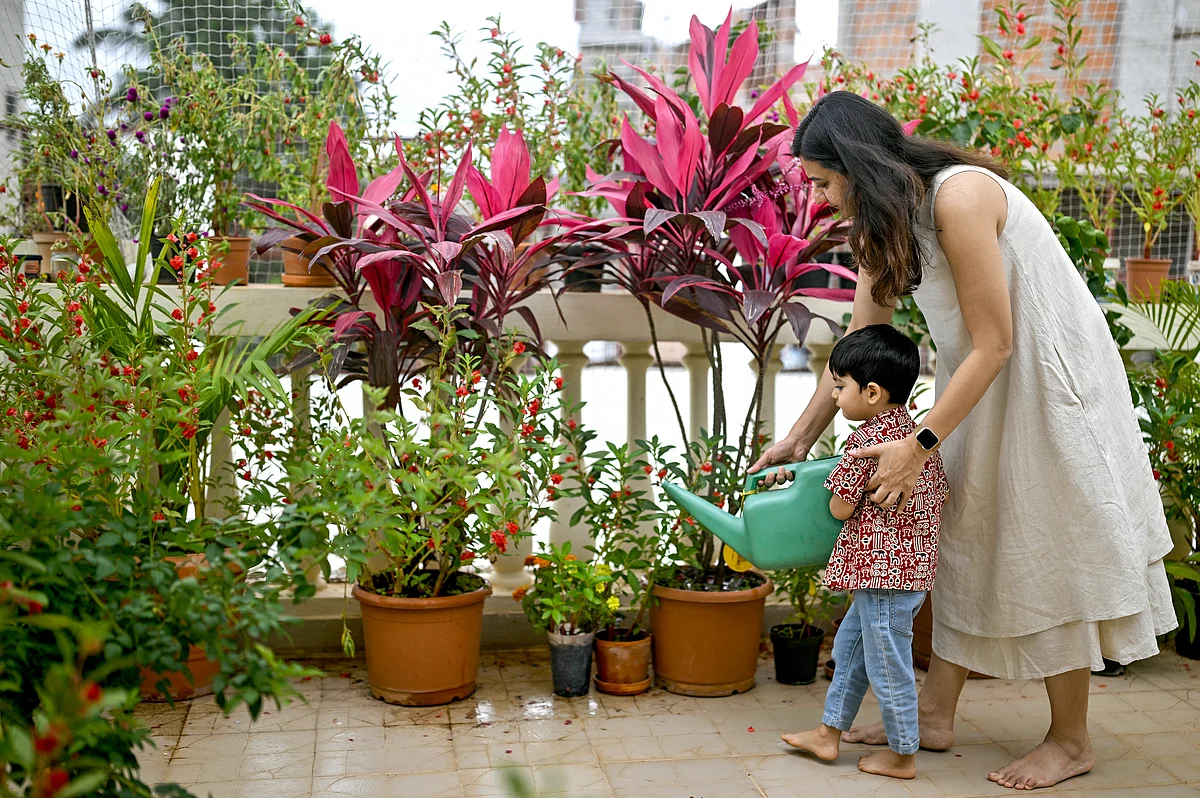
Natasha Uppal, a pollution refugee and founder of the maternal health support group Matrescence India, watering plants with her son on their Bengaluru terrace garden. — AFP
The decisive moment came when the couple decided to have a baby.
“When we thought about what we could provide for our child in Delhi,” she told AFP, “the air became a major obstacle for many of those things.”
In 2022, they moved to Bengaluru, and days later, she found out she was pregnant.
They are among the growing number of families leaving Delhi due to health concerns related to air pollution.
Uppal, the 36-year-old founder of Matrescence India, said relocating was the “best decision.”
Bengaluru’s air pollution can occasionally reach three times the World Health Organization (WHO) limits.
However, that is significantly less than Delhi’s prolonged haze, allowing her son to “play outside as much as he wants.”
Clean air is a “basic human right,” she said. “Everyone should be able to take it for granted.”
3.8 million deaths
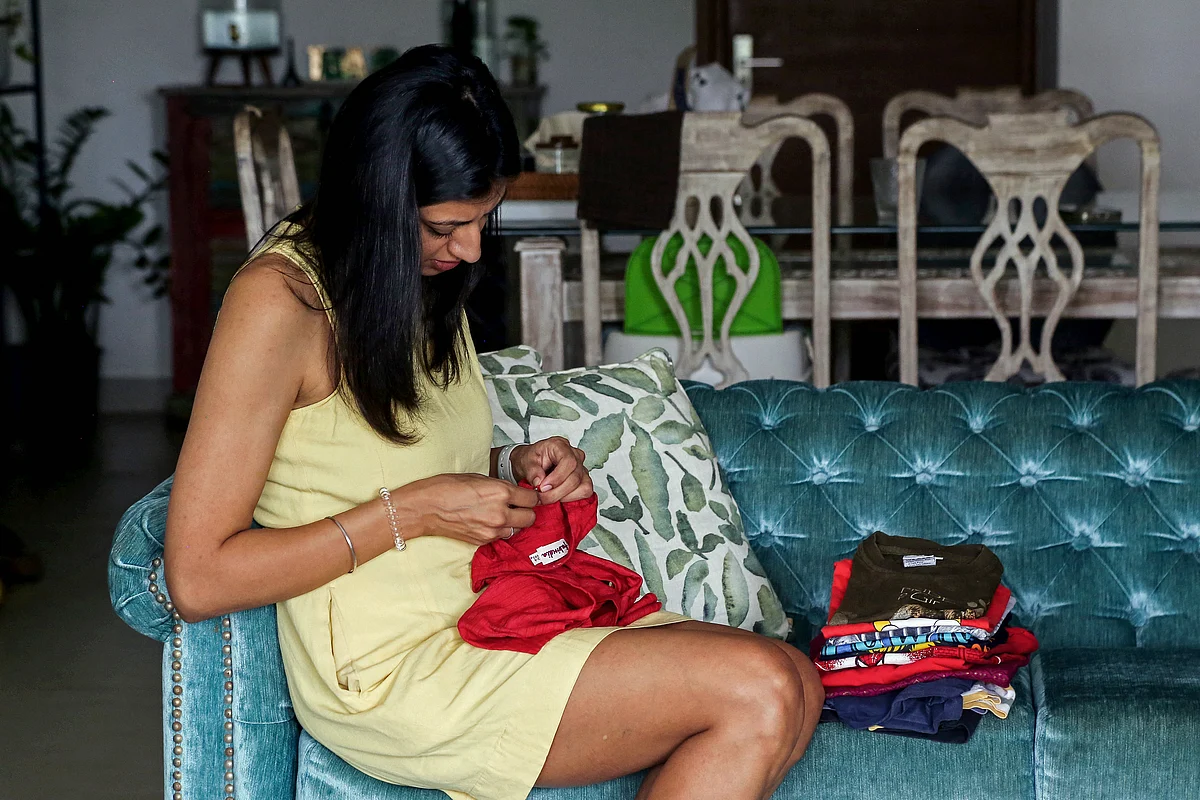
Vidushi Malhotra, a pollution refugee and founder of an education advisory organization, folding laundry at her Goa home. — AFP
Every winter, Delhi is engulfed in dense smog, a harmful blend of crop-burning, industrial emissions, and heavy traffic.
PM2.5 levels, cancer-causing micro-particles small enough to enter the bloodstream, have soared to 60 times WHO limits.
Despite reform promises, measures like partial vehicle bans or water trucks spraying mist have minimally impacted air quality.
This year, authorities pledged cloud-seeding trials to reduce pollution.
A study in The Lancet Planetary Health last year linked 3.8 million deaths in India between 2009 and 2019 to air pollution.
The UN children’s agency warns that polluted air significantly increases the risk of acute respiratory infections in children.
For Vidushi Malhotra, 36, the turning point was in 2020 when her two-year-old son frequently fell ill.
“We had three air purifiers running non-stop, yet it wasn’t enough,” she said.
A year later, Malhotra, her husband, and son relocated to Goa, encouraging friends to join, initiating a “mini-movement.” Some followed.
“I keep returning and see my loved ones suffer,” she added. “It deeply saddens me.”
Nebulisers, inhalers
Others, like Delhi resident Roli Shrivastava, stay but live in constant worry.
The 34-year-old maintains inhalers for her smoke allergies and nebulisers ready for her toddler, whose cough worsens in winter.
“The doctor advised that winter would be challenging,” she said. “He simply told us, ‘If your child coughs at night, don’t call me — just start nebulising.’”
As winter approaches, Shrivastava prepares for another indoor season — limiting outdoor play for her son, running air purifiers, and monitoring air quality daily.
When visiting relatives in Chennai, her son’s health “improves significantly.”
“His runny nose stops, and his cough disappears,” she said.
Shrivastava and her husband, both working with a global advocacy group, say they might have left Delhi if not for their “beloved jobs and opportunities.”
Moving, she acknowledges, is a constant thought.
“At the current rate, I don’t think Delhi is suitable for raising children — at least concerning air pollution.”