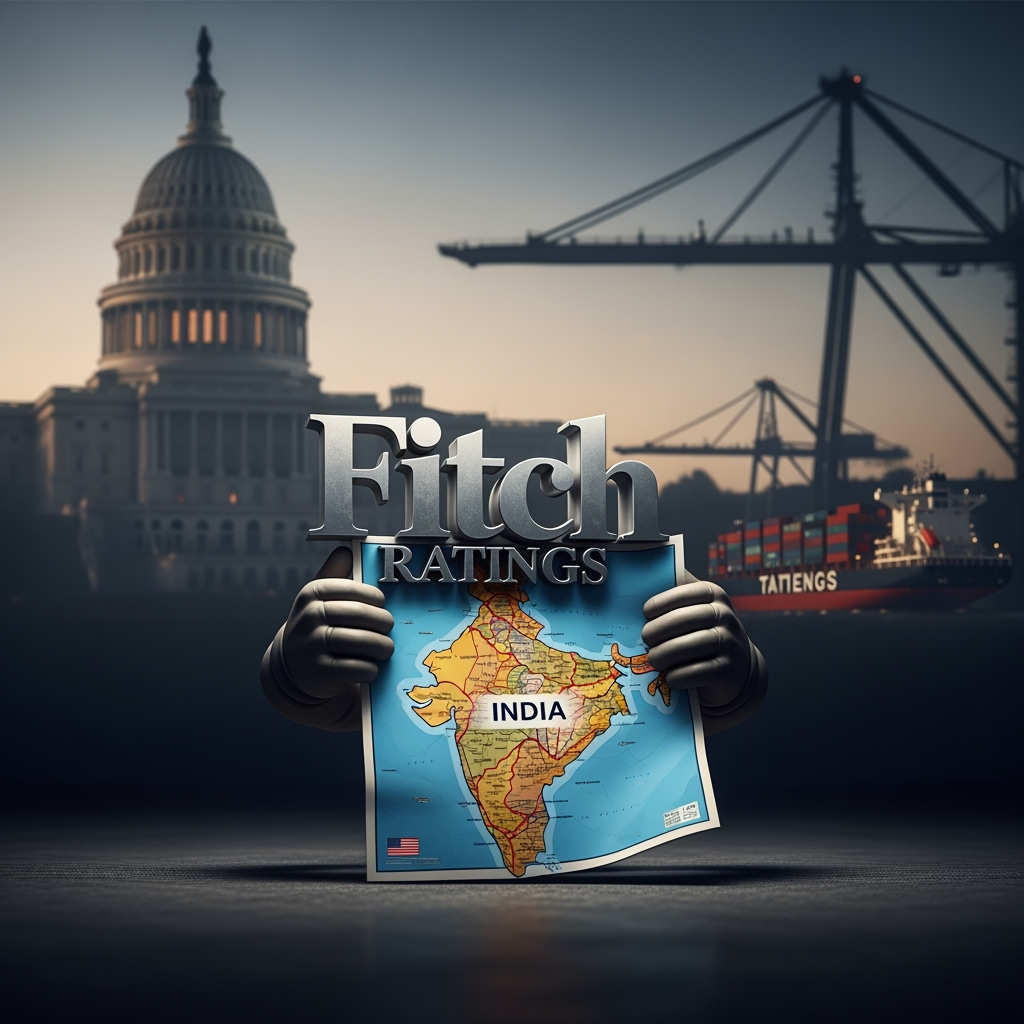
On Monday, Fitch Ratings maintained India’s sovereign rating at ‘BBB-‘, pointing to high fiscal deficits and debt levels. This dashed the government’s hopes for a rating upgrade from all major agencies.
Earlier this month, S&P upgraded India to ‘BBB’, marking its first upgrade in 18 years, leading the government to anticipate that other rating firms would follow.
Fitch has held India’s rating at ‘BBB-‘ since 2006, while Moody’s has kept its ‘Baa3’ rating since June 2020.
Fitch noted that India’s government debt is “elevated” at 80.9%, significantly above the ‘BBB’ median of 59.6%, with a projected increase to 81.5% by fiscal 2026.
“If nominal growth stays below 10%, reducing debt could be challenging,” Fitch added.
The agency forecasts India’s economic growth at 6.5% in real terms for fiscal 2026, consistent with fiscal year 2025. However, US tariffs present “a moderate downside risk” to this outlook.
This rating decision comes just two days before the US plans to impose a 50% tariff on Indian exports. This levy, mainly targeting New Delhi’s oil imports from Russia, is one of the highest tariffs set by President Donald Trump against any trade partner.
If these tariffs aren’t reduced, they could hinder India’s “ability to capitalize on supply chain shifts from China” and “weaken business sentiment and investment,” Fitch warned.
Strong domestic demand is anticipated, driven by government capital expenditures and stable private consumption.
Prime Minister Narendra Modi announced comprehensive tax reforms this month to boost the economy amidst ongoing trade disagreements with the US.
Fitch concluded that these “proposed GST reforms, if implemented, would bolster consumption, mitigating some growth risks.”