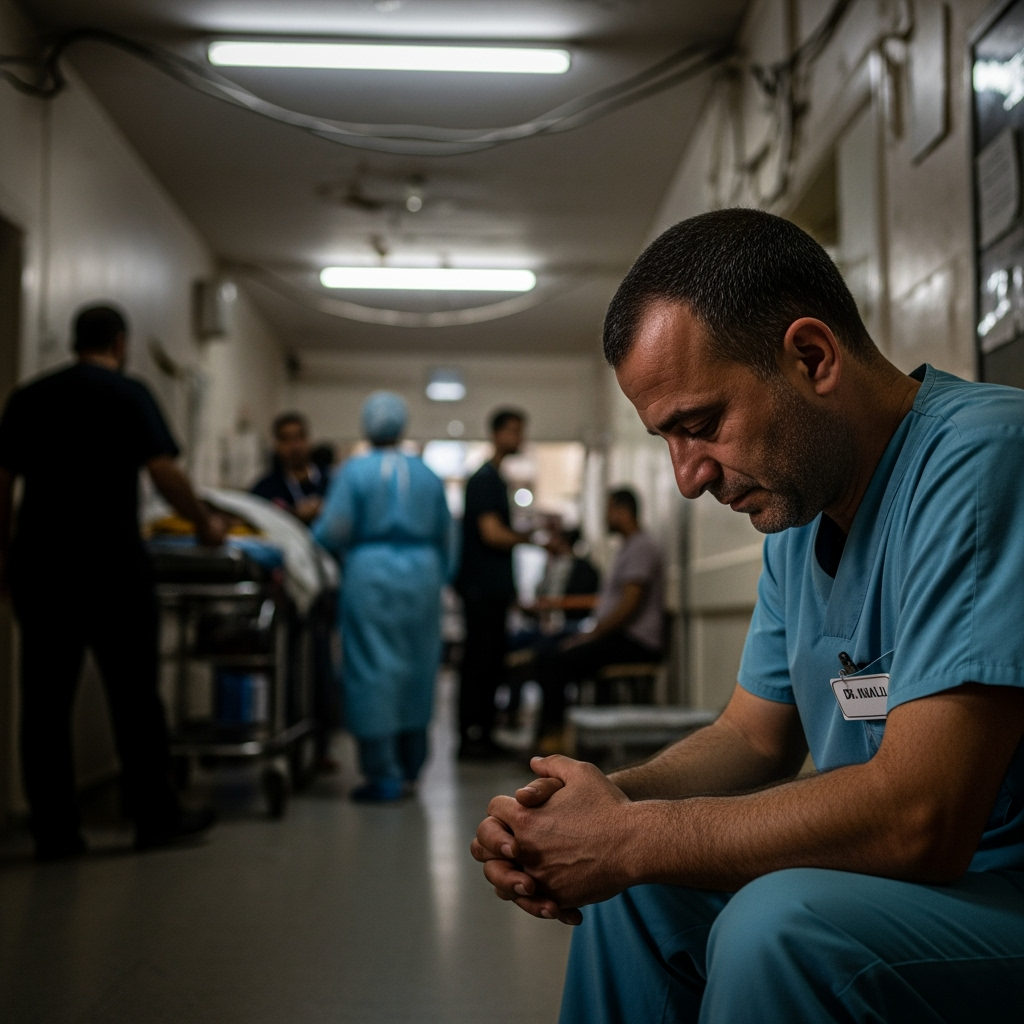
On Saturday, the director of Al Shifa hospital was on duty, managing the hospital’s response to Israel’s attack on Gaza City, when two bodies arrived at the ward: his brother and sister-in-law, victims of the strike.
“I was shocked and heartbroken to see my brother and his wife,” said Mohammed Abu Salmiya, who was working in the emergency department at the time.
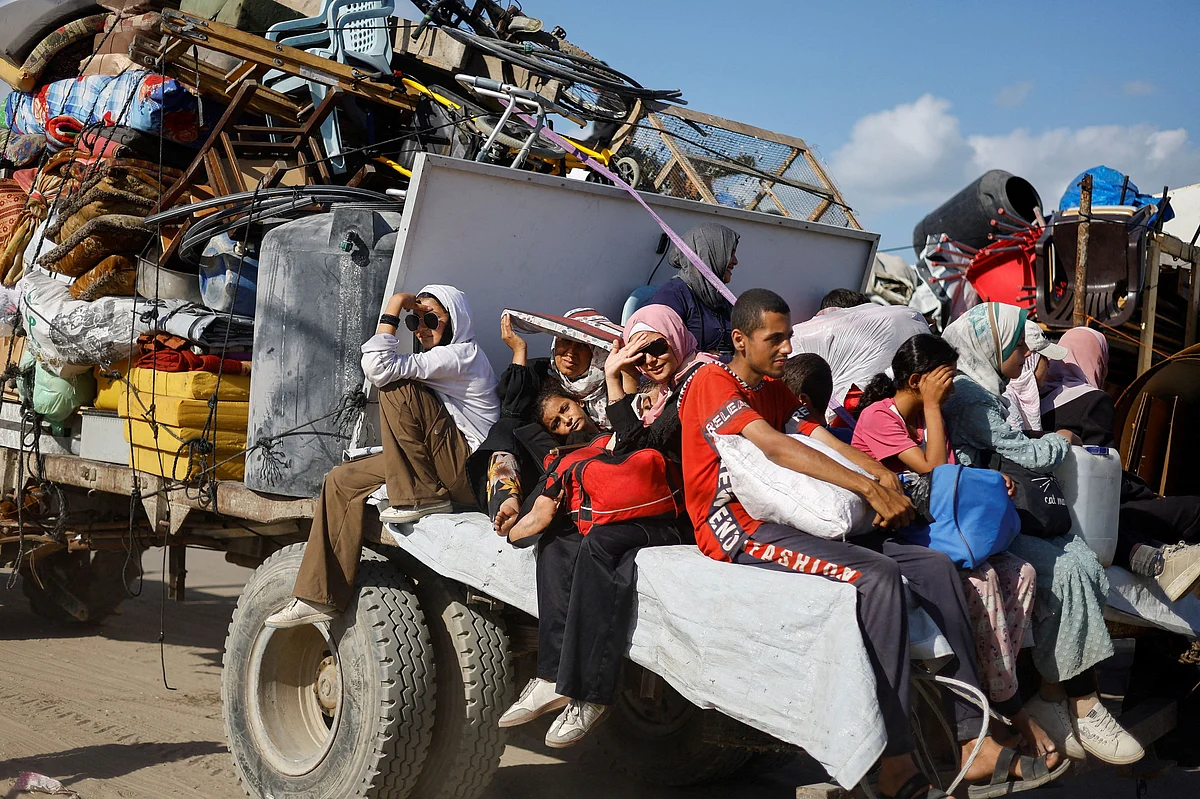
Displaced Palestinians move southward from northern Gaza, fleeing an Israeli military operation, using a vehicle loaded with belongings after being ordered to evacuate Gaza City on September 21, 2025. — Reuters
“Now, anything is possible as you receive your loved ones as martyrs or injured,” he told AFP. “The occupation’s crimes continue, and the number of martyrs keeps rising.”
The Gaza civil defense agency, operating under Hamas, reported that at least 87 people died in Israeli strikes on Saturday, with 70 of them in Gaza City.
The agency stated that 11 died when warplanes targeted the Dughmush family in Al-Sabra neighborhood.
Al-Shifa hospital confirmed receiving 34 bodies from Gaza City, while the Baptist hospital reported receiving 28.
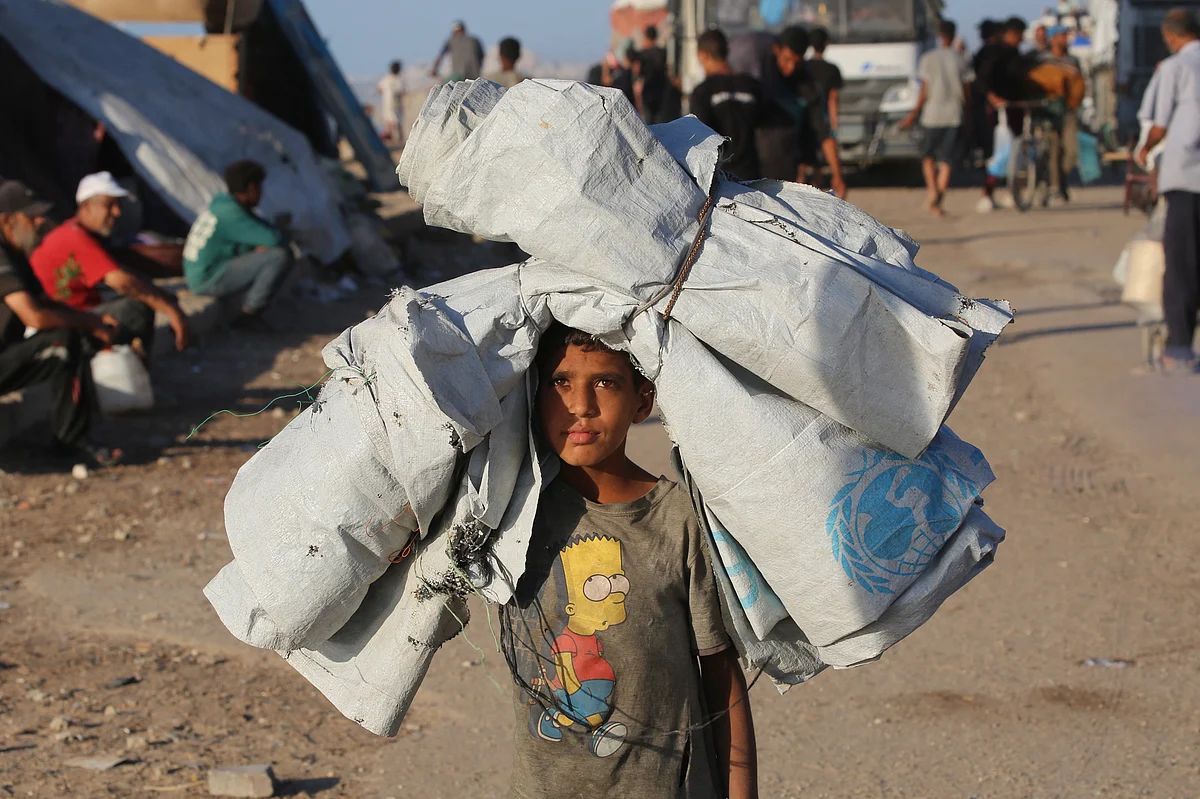
A displaced Palestinian boy carries a tent while moving south on a road in the Nuseirat refugee camp area in central Gaza Strip on September 20. — AFP
The Israeli military did not immediately respond to AFP’s requests for comments on the overall toll or the deaths of Salmiya’s relatives.
However, it stated it was expanding operations in Gaza City, claiming “troops dismantled numerous terror infrastructure sites and eliminated several Hamas terrorists.”
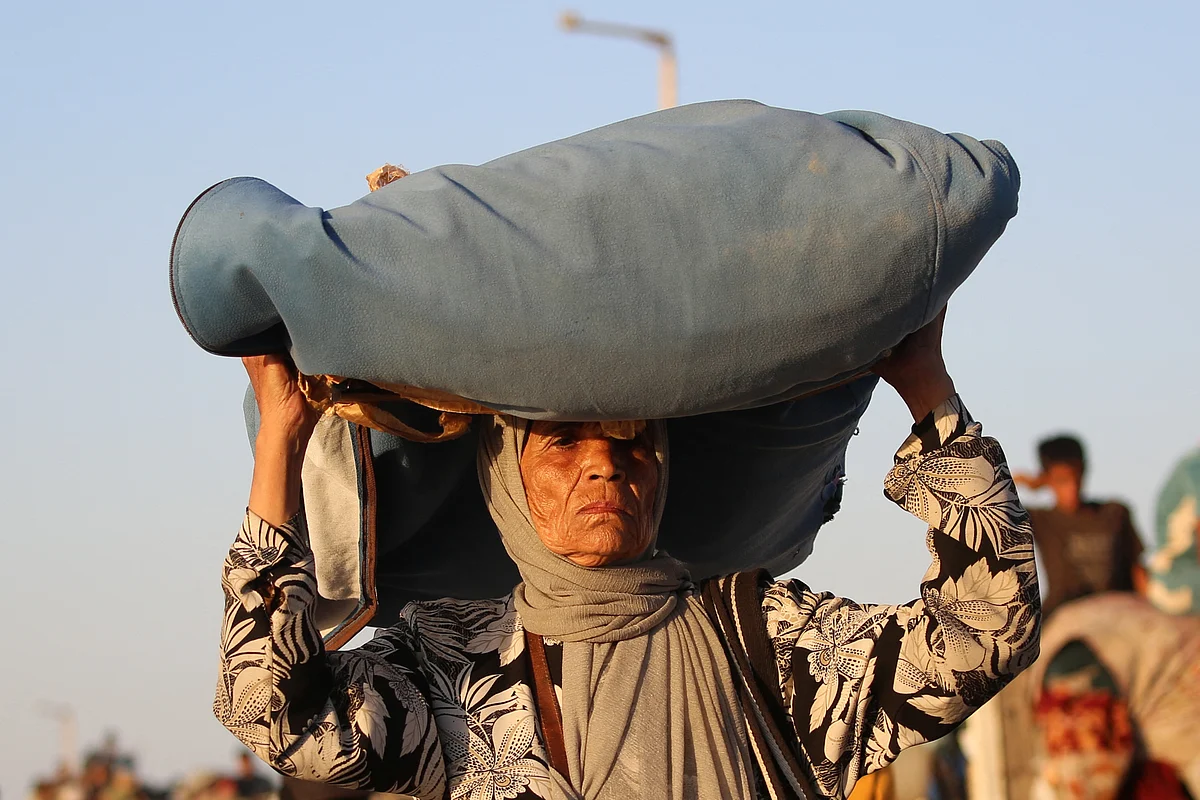
A displaced Palestinian moves with belongings southward on a road in the Nuseirat refugee camp area in central Gaza Strip on September 20, 2025. — AFP
As Israel advances its offensive to seize the largest urban center, despite fears for residents’ safety and hostages held by militants, Salmiya wasn’t the only one facing loss.
An AFP journalist witnessed ambulances arriving at the hospital early Saturday, bringing more bodies from Israel’s bombardment.
Medics placed four bodies wrapped in white shrouds under a tree as another ambulance arrived with more casualties, including a boy.
– ‘Death is more merciful’ –
Hundreds of thousands have fled since Israel’s offensive, but many remain trapped, too weary or poor to leave.
“Death is more merciful,” said 38-year-old Mohammed Nassar from Gaza City’s Tal al-Hawa area, watching neighbors leave.
Families left with belongings piled on trucks, cars, carts, and their own shoulders.
Nassar, caring for three daughters, said he lacked the strength and money to evacuate, leaving him trapped.
“My wife, daughters, and I will wait until the last moment,” he said.
“The occupation aims to displace everyone to destroy Gaza City, turning it into another Beit Hanoun or Rafah—unlivable for 100 years,” Nassar said, referring to other war-torn Gaza areas.
Israel has pounded Gaza City with airstrikes and tank fire to capture what it calls one of Hamas’s last strongholds.
Foreign governments have urged abandoning plans for civilian safety, with the UN declaring a famine in the city.
– ‘We’ll stay’ –
The military launched a ground assault on Tuesday, urging residents to move south, but many Palestinians cite prohibitive costs and uncertainty about destinations.
Those who fled said it took over 12 hours to reach designated southern areas.
Evacuation costs have soared, with truck owners charging $1,500 to $2,000 for the 30-kilometer journey.
The civil defense agency reported 450,000 Palestinians fled Gaza City, while the military estimated 480,000.
The UN estimated about one million people were in Gaza City and surroundings by August’s end.
The military urged relocation to a “humanitarian area” in Al-Mawasi on the coast, promising aid, medical care, and infrastructure.
Israel declared the area safe early in the war but has since targeted it, claiming Hamas targets.
Raeda al-Amareen said explosions woke her before dawn.
“We want to evacuate but lack money,” she told AFP.
“We can’t even afford bread. What do we do? We’ll stay—either we die or find a solution.”