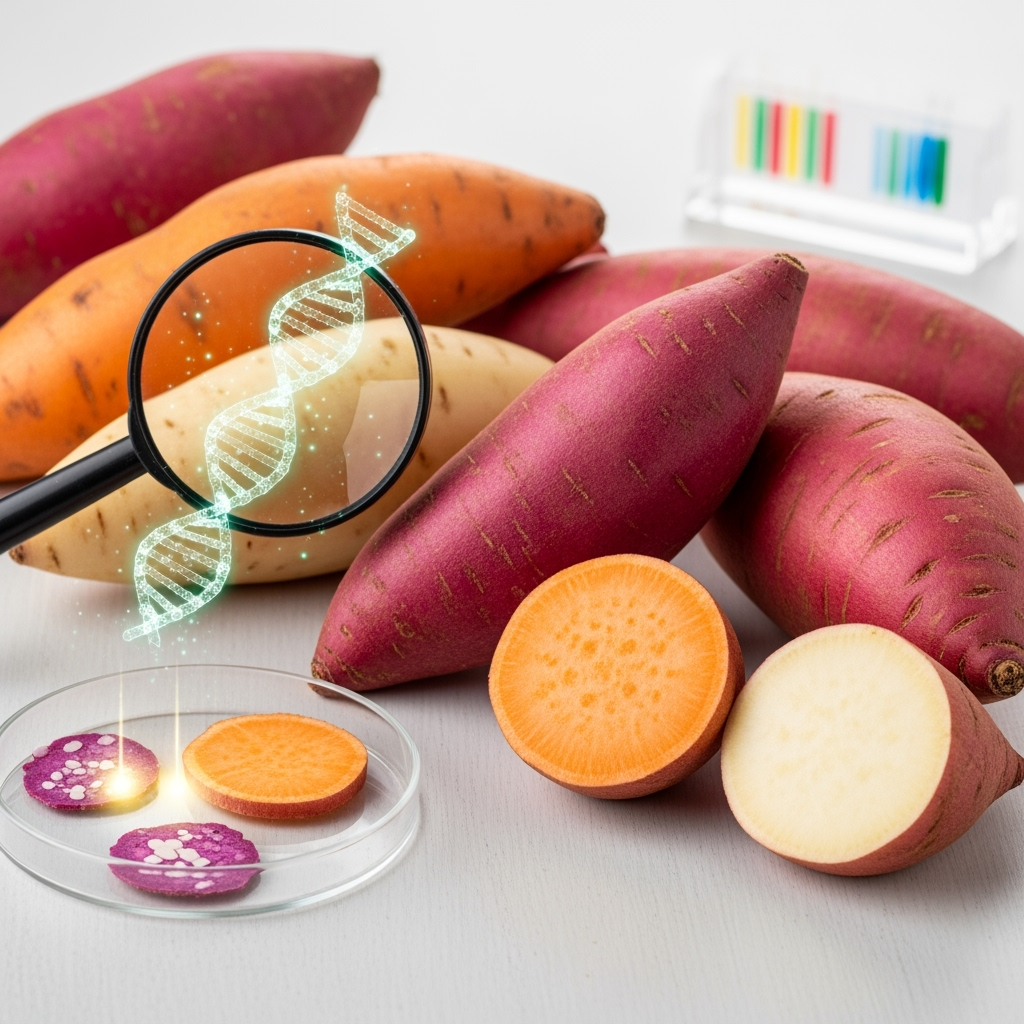
Sweet potatoes (Ipomoea batatas) are a vital food source for millions of people around the world, especially in sub-Saharan Africa, where their natural ability to withstand harsh climatic conditions contributes to food security. However, understanding their genetic code has been challenging for decades due to their six sets of chromosomes, unlike humans who have only two sets, according to a report. A research team led by Professor Zhangjun Fei at the Boyce Thompson Institute succeeded in determining the complete genetic sequence of the ‘Tanzania’ variety, known for its disease resistance and high quality. They untangled 90 chromosomes into six original sets, an unprecedented achievement. This complex genetic insight provides producers with unprecedented tools to identify genes associated with production, nutrition, and climate adaptability more efficiently. Alongside sweet potatoes, this work demonstrates how modern genomic methods can decode similarly complex crops such as wheat, cotton, and bananas, accelerating agricultural innovation worldwide.