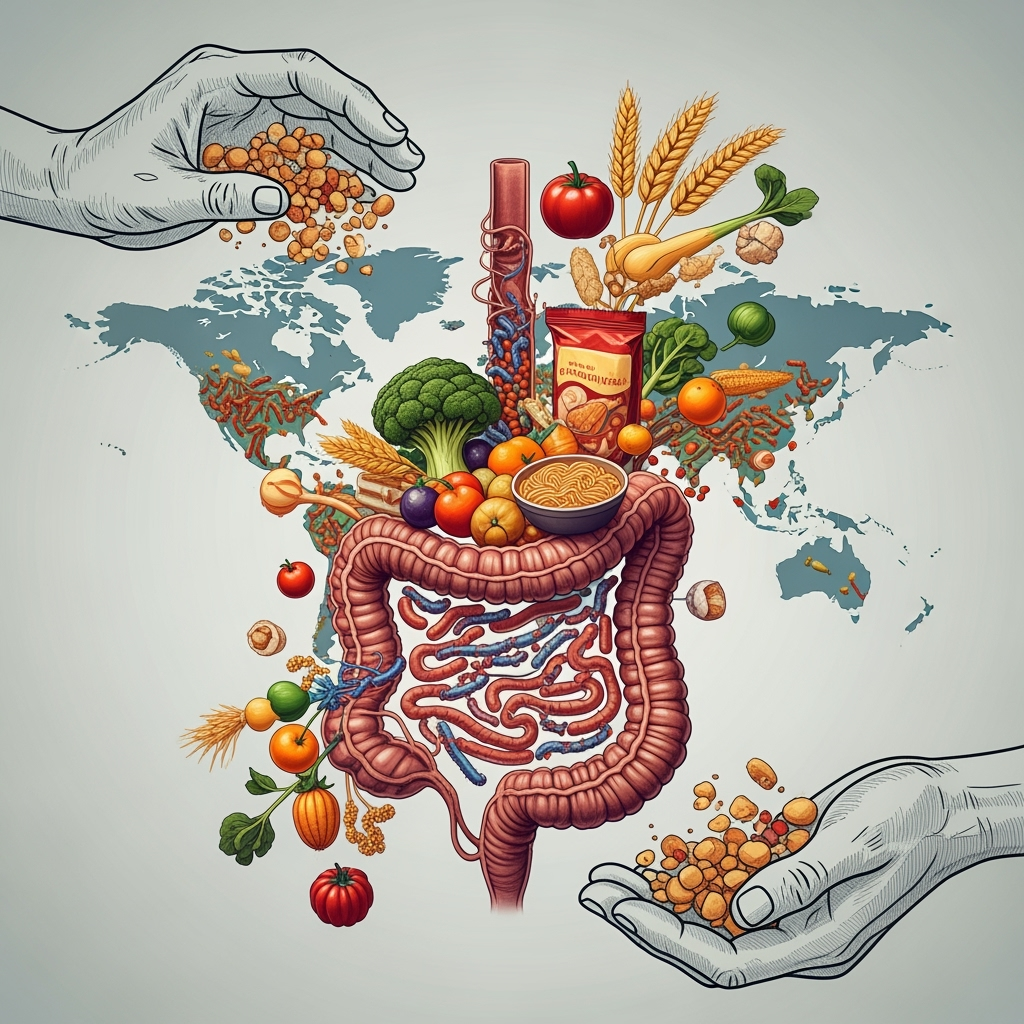
According to a report issued by the Food and Agriculture Organization of the United Nations on July 28, 2025, between 638 to 720 million people worldwide suffer from hunger, with children bearing the greatest burden. The report highlighted that scientists are exploring new solutions to this global crisis, with an increased focus on the role of the gut microbiome, which is the collection of bacteria and microorganisms in the digestive system, shown to play a crucial role in stunted growth.
In a pioneering experiment conducted in 2013, led by Professor Mark Manary from the University, researchers transplanted gut bacteria from children in Malawi, some of whom were malnourished and others healthy, into laboratory mice. The results, published in the journal “Science,” showed that mice receiving bacteria from malnourished children suffered from weight loss and growth disorders.
Researchers analyzed stool samples from the children over a year to monitor gut development. Using advanced DNA sequencing techniques, the team successfully reconstructed 986 complete microbial genomes, including genomes discovered for the first time. Jeremiah Minich, the lead author of the study, explained that the team used “a highly efficient and accurate long-read process,” allowing them to analyze human samples twenty times more than previous studies, which is a crucial genomic resource for understanding malnutrition.