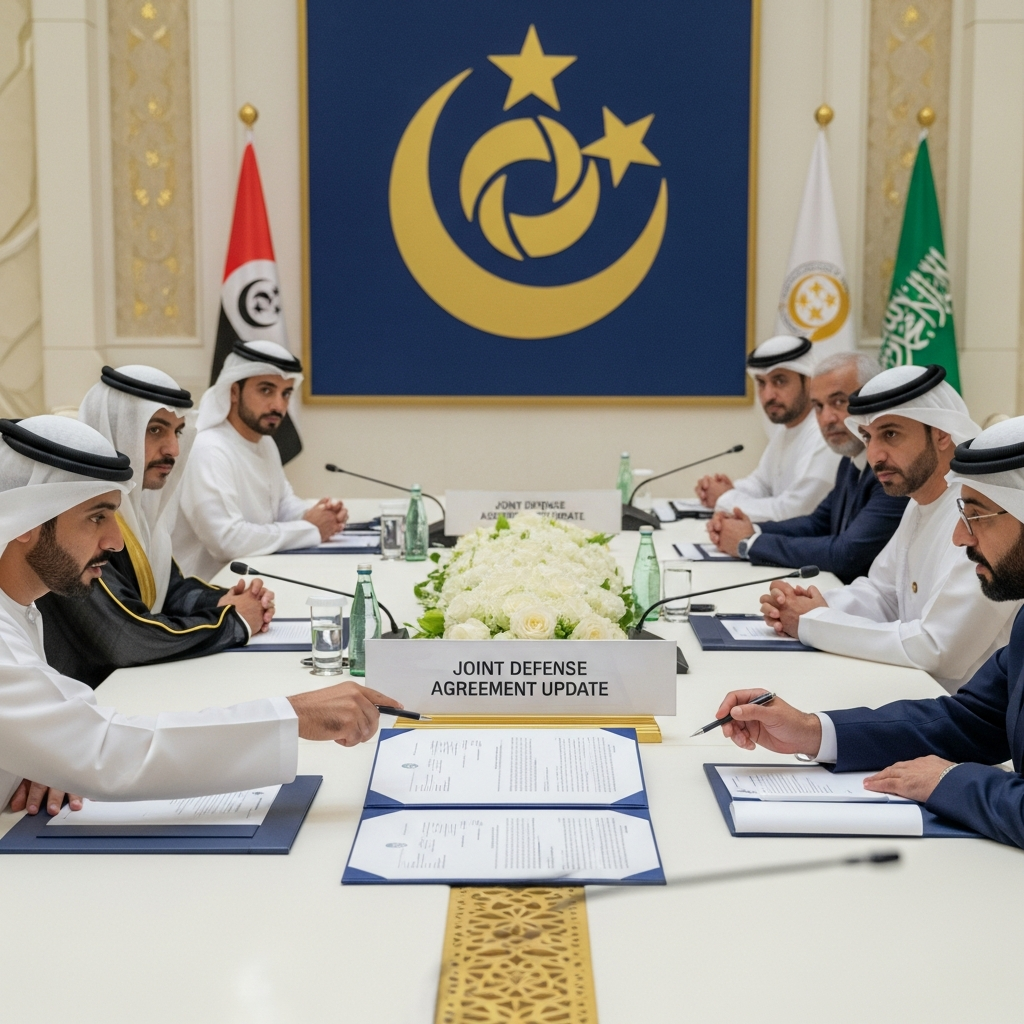
During a dialogue session in Bahrain, Al-Budaiwi was asked if the upcoming Gulf summit would address the updating of the Joint Defense Agreement. He explained that the Israeli attack on Doha prompted the GCC leaders to hold an emergency summit, followed by an extraordinary meeting of defense ministers in the Qatari capital, dedicated to reviewing shortcomings and enhancing Gulf military cooperation.
He added that the defense ministers approved five key points aimed at improving the effectiveness of joint defense cooperation, noting that continuous efforts are being made to bridge gaps and improve military coordination among GCC countries.
Al-Budaiwi emphasized that the missile defense shield project still requires the completion of several technical aspects, but he affirmed that the Gulf states are determined to proceed with it in collaboration with their allies, expressing optimism about achieving tangible progress “in the near future.”
Last week, he confirmed that defense integration between the GCC countries serves as a “protective shield” against threats and is a fundamental pillar for safeguarding national and economic security. These meetings followed the GCC leaders’ tasking of the unified military command, on September 15 in Doha, with implementing practical measures to develop joint defense mechanisms in light of the Israeli aggression against Qatar.
According to the Supreme Council’s statement, the High Military Committee will assess the Gulf’s defense situation and sources of threats, and propose a vision to enhance deterrent capabilities. On September 18, the Joint Defense Council, in its meeting in Doha, adopted five mechanisms to strengthen defense capabilities after discussing the implications of the Israeli attack on Qatar, which it described as a “serious escalation and a violation of international law and the UN Charter.”