As the UAE speeds up its national sustainability initiatives ahead of key policy milestones between 2024 and 2026, leaders in the private sector are crucial in realizing the government’s vision with tangible results. Leading this movement is Hotpack Global, a UAE-based manufacturer, whose proactive sustainability strategy sets a precedent for industry-wide transformation.
UAE’s environmental policies, such as national single-use plastics regulations, Dubai’s Executive Council Resolution 124 of 2023, and the Net Zero 2050 goal, are transforming consumer habits, manufacturing norms, and corporate accountability. These policies aim to minimize waste, tackle plastic pollution, promote the use of circular materials, and encourage companies to embrace sustainable alternatives without hindering economic growth.
For Hotpack, these objectives align perfectly with its enduring commitment to responsible production. Over the years, the company has significantly invested in alternative materials, circular systems, and compliance-driven manufacturing to not only meet but surpass the UAE’s evolving sustainability standards.

Abdul Jebbar PB, Group CEO and Managing Director of Hotpack.
“Our sustainability journey is grounded in the fundamental belief that progress must be responsible,” stated Abdul Jebbar PB, Group CEO and Managing Director of Hotpack. “The UAE’s progressive environmental policies provide companies like ours with a clear path to innovate purposefully. We view regulation not as an obstacle, but as an opportunity to lead.”
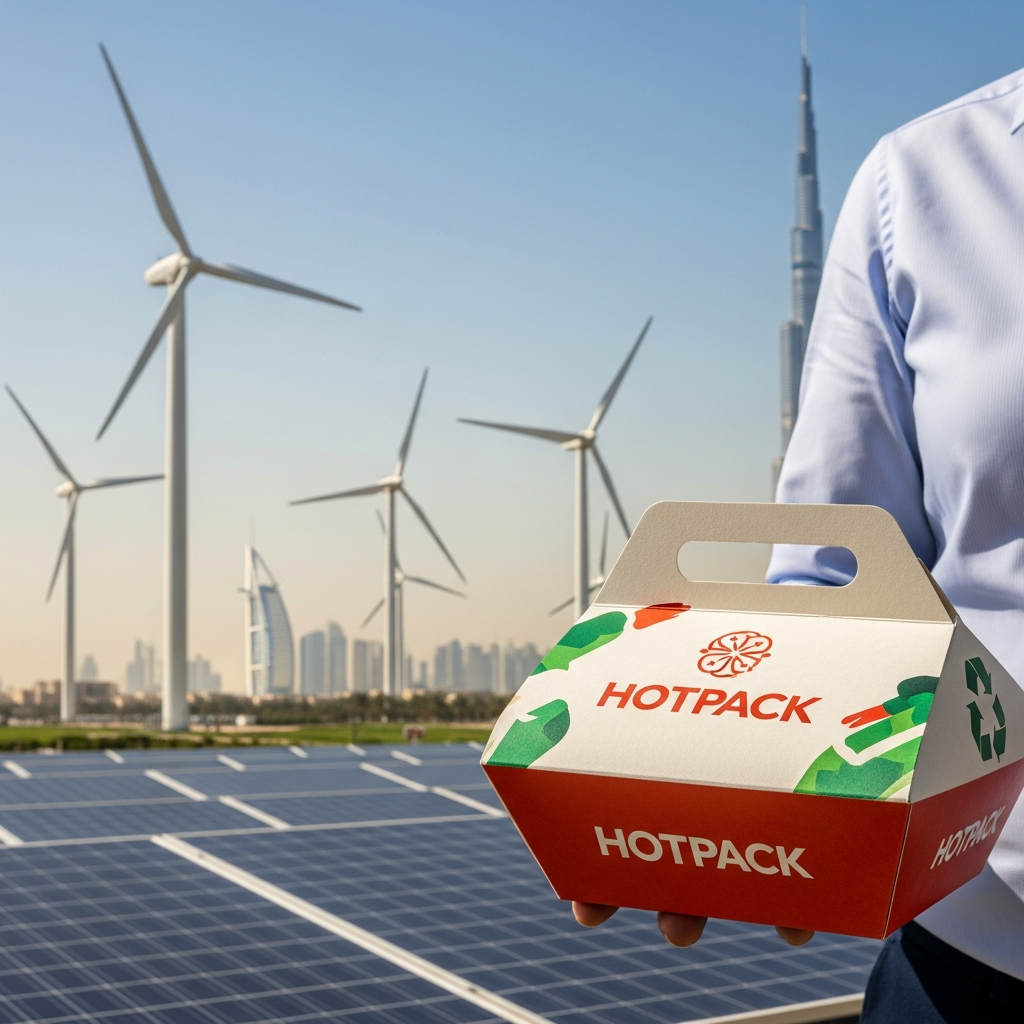
Hotpack has already achieved full compliance with the UAE’s current and upcoming bans on single-use plastics. The company offers paper and multi-use bags thicker than 57 microns, wooden cutlery, plant-based straws, recycled-polymer products, paper cups and lids, and fiber-based plates, providing effective alternatives for all restricted items. Notably, Hotpack does not produce Styrofoam, significantly decreasing reliance on difficult-to-recycle materials.
Beyond regulatory compliance, the company has enhanced its sustainability impact by investing in renewable materials like PLA, implementing large-scale solar projects across factories, upgrading waste-management systems, and initiating responsible transportation measures. These efforts have earned Hotpack significant accolades, including the EcoVadis Gold Certification (Top 5 percent globally) and the Dubai Chamber ESG Label – Advanced Category, highlighting its achievements across environmental, social, and governance criteria.
Hotpack’s dedication also extends internally with initiatives such as the Hotpack Happiness Program, improvements in worker welfare, and company-wide ESG training, reflecting the UAE’s belief that sustainability encompasses human well-being and social responsibility.
“The UAE has set ambitious environmental targets, and we see it as our responsibility to contribute significantly,” Jebbar added. “Sustainability is not just a mandate for us; it is part of our culture, our innovation strategy, and our duty to the communities we serve.”
As the nation accelerates towards Net Zero 2050 and a fully circular economy, Hotpack’s approach sends a strong message: when policy direction aligns with corporate commitment, the result is not just compliance, but long-term, transformative change for the UAE and beyond.