“In numerous royal Indian households,” shares chef Naved Nasir from Dubai’s renowned restaurant Khadak, “daughters were traditionally barred from entering the kitchens. Only daughters-in-law were entrusted with the treasured recipes, passed down through generations.” This custom was meant to prevent women from revealing their maternal home’s culinary secrets in their marital abode.
Rani Kulsum Begum, niece to Salar Jung III of Hyderabad, defied this norm. Though she hadn’t mastered the mystical spice blends from her mother’s kitchen, upon marrying Kunwar Raja of Mehmoodabad in Uttar Pradesh and delving into culinary arts, she struggled with the unfamiliar flavors of cherished dishes, starkly different from her childhood. Overwhelmed, she reached out to her grandmother, expressing her longing for her familiar childhood flavors. Her grandmother, ever supportive, sent back basic recipes through letters. Reports suggest it took her about six months to perfect these staples. Once achieved, she found her calling — safeguarding age-old recipes and sharing her culinary discoveries.
This passion led her to various collaborations and pop-ups, sharing her culinary expertise and love for food with many. In Dubai, this endeavor resulted in her week-long collaboration with Khadak and chef Naved Nasir. This partnership, running until Sep 21, features a meticulously curated seven-course meal (priced at Dh185) showcasing the finesse of measuring ingredients by hand, identifying the perfect char from visual cues, and judging sweetness by aroma.
The result is a delightful array of tastes and textures, skillfully crafted and served with finesse. Khadak, open since November last year, offers a delectable menu featuring lesser-known but beloved Hyderabadi heirlooms such as patthar ka gosht (marinated, slow-cooked mutton) and moong daal gosht (mutton with green moong lentils). It celebrates Indian heritage recipes, using some as inspiration and others for replication. This concept aligns with Rani Kulsum Begum’s vision, making it the ideal venue to host a feast infused with these flavors. Available in both vegetarian and non-vegetarian options, the limited-edition meal kicks off with a light soup to whet your appetite. For meat lovers, there’s gosht ka marag with chaar koni roti — a rich mutton broth infused with spices and nuts, or tamatar ka shorba with namak pare (tomato soup with parmesan crisps).

The second offering features the kebab course. From a plethora of choices — such as shami kebab, tunday kebab, galawati kebab— the chefs opted for mutton shikampur kebab, crafted with hung yogurt and served atop delicate roomali, akin to a thin handkerchief. The texture resembles pâté, melting in the mouth. Vegetarians can enjoy anari doodia, pan-fried paneer parcels with a potato filling.
Following this, guests can choose between murgh harees with sheermal, a sweet and spicy combination on a bed of lentil-rich mashed chicken. Vegetarians can opt for katal (jackfruit) prepared as a haleem dish.
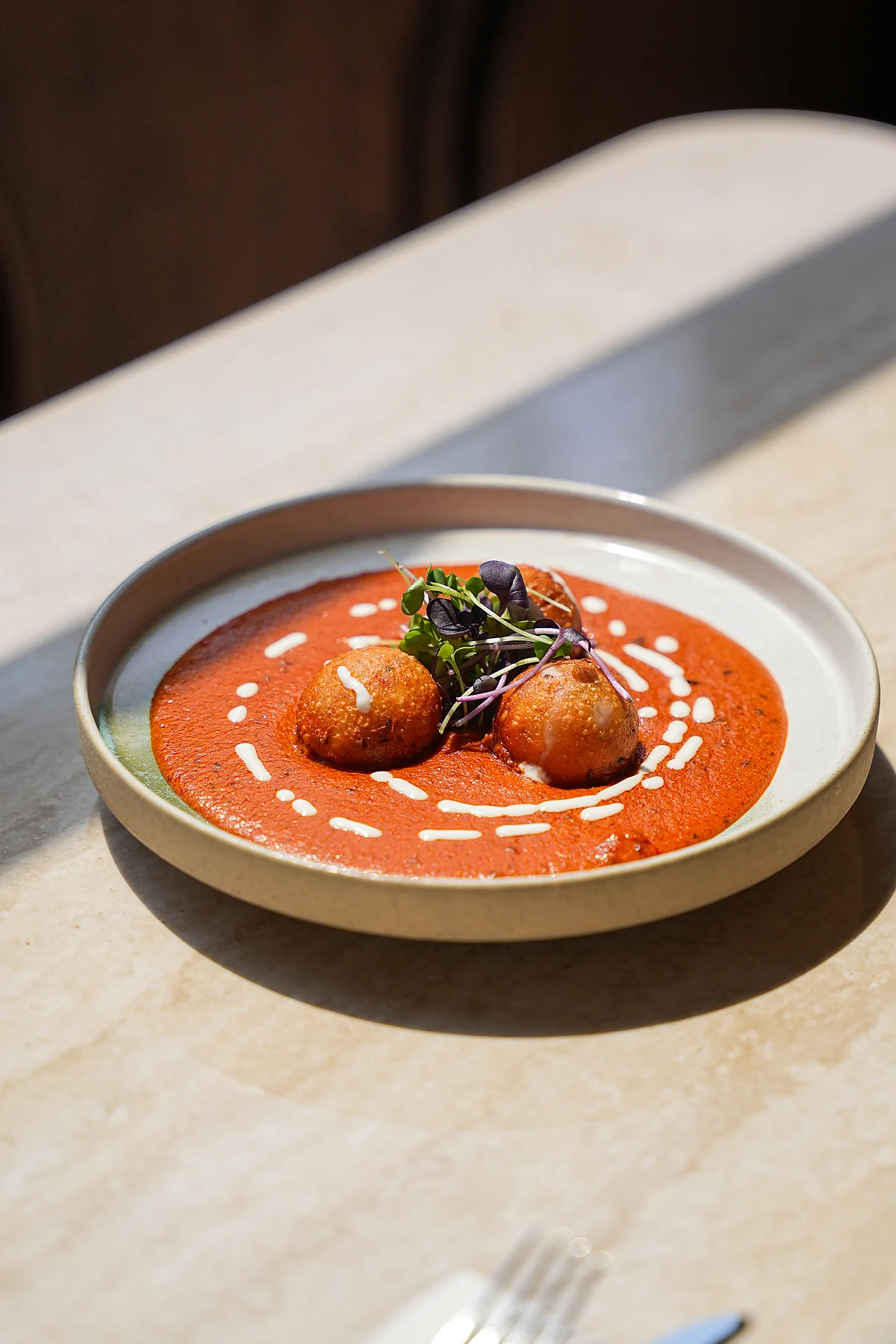
An unconventional addition is the palate cleanser — a kala khatta gola, an Indian summer staple found across street corners in the country. As guests savor the flavors and anticipate the next course, four options await: dum ka murgh (cheese-stuffed tender chicken); shabghir (stew with goat tongue and shank simmered overnight); tala gosht (fried and spiced goat meat chunks); or shabnami kofte (veggie dumplings with black grapes in tomato sauce). This assortment is accompanied by khatti dal (a tangy yellow lentil dish), palak maziyat (spinach with raisins), and flatbread (taftaan, a fluffy naan-like bread with fennel and nigella seeds, or roomali).
No Hyderabadi meal can exclude biryani. For Rani Kulsum Begum, this meant preparing kachchi ghost ki biryani, where meat and rice are spiced and steamed together in a pot. Additionally, kumbh ki tehri, a mushroom concoction, is also offered.
The meal concludes with a dessert served on a bed of dry ice — fried bread pudding topped with rabri froth infused with saffron and cardamom. Dining in circles with culinary insight reveals the nuances of cut, color, and flavor profiles, and how spice mix methods transform a dish’s taste. For instance, did you know that slicing an onion differently alters its taste? A longer cut ruptures fewer cells, resulting in a milder, sweeter flavor, while slicing it across its equator makes it more pungent.
To truly appreciate a place, one must understand its culinary language. Each bite introduces you to a unique culture, and this is an ideal opportunity to acquaint yourself with the tables — and lives — of the nawabs (royals).