Araqchi stated in Iranian television remarks that “Our political stance is clear and decisive,” demanding recognition of the Iranian people’s right to enrich uranium. He added that “activating the ‘trigger mechanism’ may cause economic harm, but we confront it through political and legal means and by continuous coordination with Russia and China,” continuing: “Russia and China do not consider the activation of the ‘trigger mechanism’ to be legal.” The Iranian Foreign Minister explained that “the European troika (France, Britain, Germany) and the United States tried through media intimidation to force Iran to make concessions,” adding: “All our proposals were rejected despite some European countries showing formal agreement, but they failed to convince America.” Earlier today, Iranian President Masoud Bazshkian revealed that his country reached a preliminary agreement with Europeans regarding the mechanism for re-imposing sanctions. Bazshkian said, “America wants Iran to be weak, and our people have realized that through our unity we can build our country,” stressing the need to “unite internally by utilizing our great capabilities and we will find solutions to all problems.” Bazshkian added: “We announced our readiness for dialogue, and in negotiations with Europeans, we agreed to allow inspectors from the International Atomic Energy Agency to come, and we said we are ready to provide explanations about enriched uranium, but they still present new excuses.” Khamenei emphasized through the “X” platform the “impossibility of negotiating with Washington or trusting it to conclude any agreement,” pointing out that “Iran has faced pressure since it began using nuclear energy in medical, agricultural, and industrial fields, but it has not and will not surrender.” It is noted that a Russian-Chinese draft resolution to extend the lifting of sanctions on Iran did not receive enough votes in the UN Security Council, while Britain, France, and Germany informed the council of activating the mechanism for re-imposing sanctions, deciding on September 19 to reinstate international restrictions, expected to be implemented after September 27. Iranian Foreign Minister Abbas Araqchi condemned during a Security Council session the Western countries’ rejection of the Russian-Chinese draft resolution, which called for postponing the activation of the ‘trigger mechanism,’ confirming that “Iran adhered to the nuclear agreement based on unfulfilled European promises.” Araqchi noted that “Washington’s withdrawal constituted a betrayal of diplomacy, while the three European countries buried the agreement, forcing Iran to reduce its commitments according to its legal rights,” accusing Europeans of choosing confrontation instead of dialogue.





 Latest news
Nothing Announces $200M Series C for AI Platform
Latest news
Nothing Announces $200M Series C for AI Platform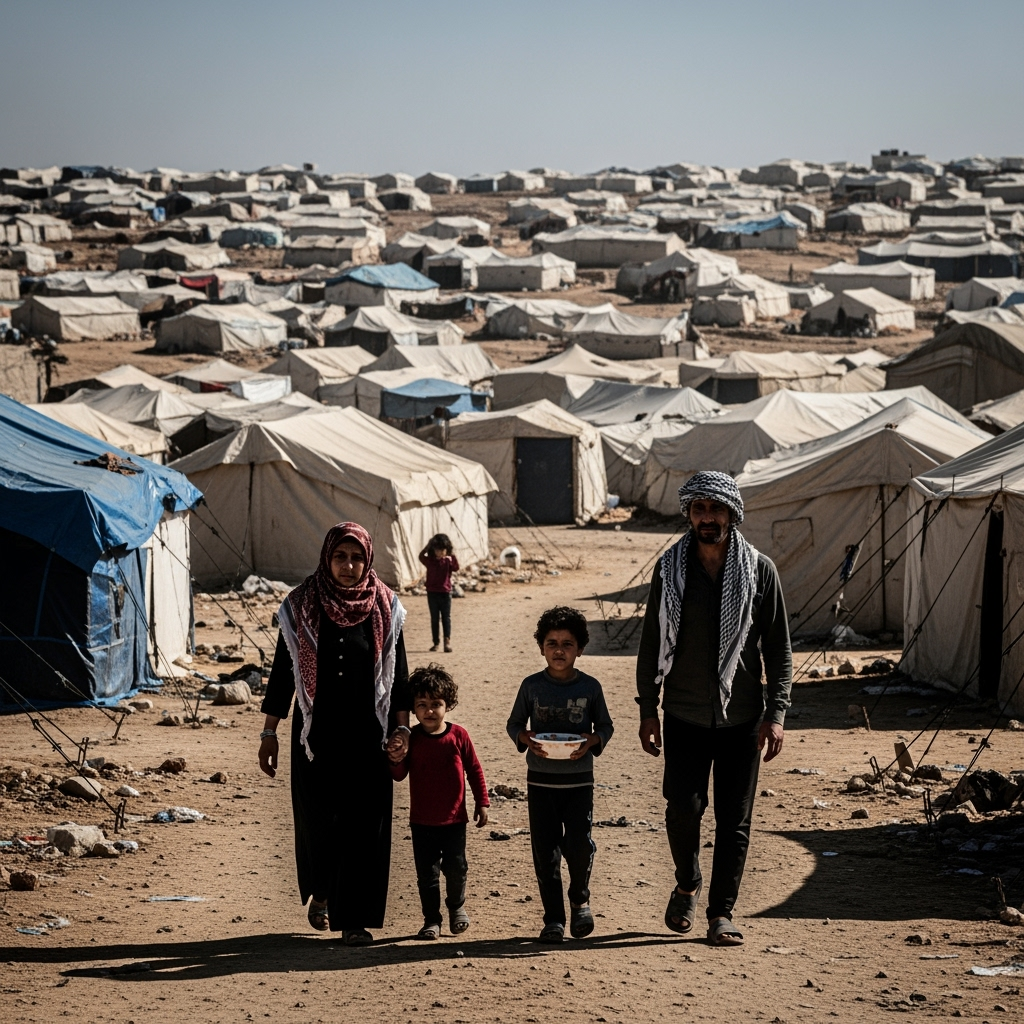 World
Gaza Conflict: Rising Displacement and Hunger
World
Gaza Conflict: Rising Displacement and Hunger





