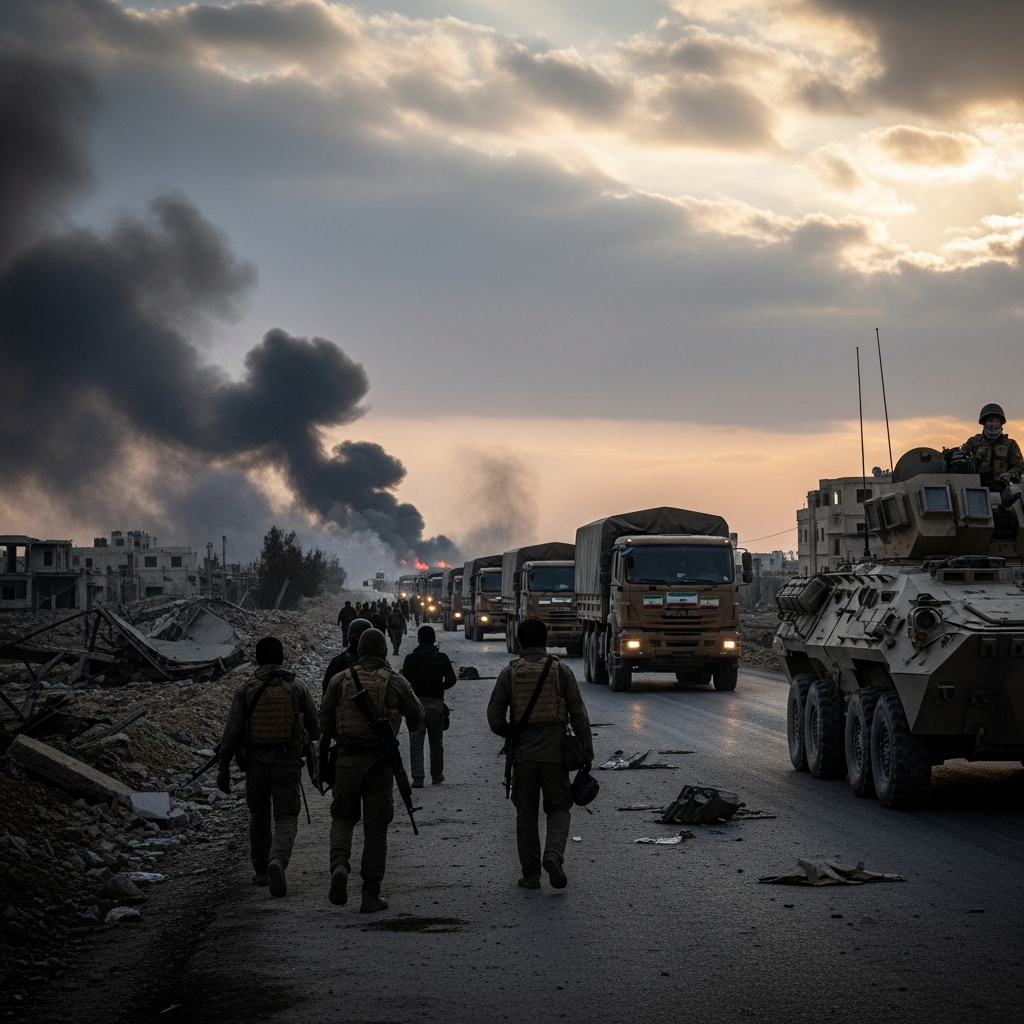
In December, as Syrian cities rapidly fell to a swift rebel advance, Iranian forces and diplomats backing Bashar al-Assad recognized the inevitable. According to sources speaking to AFP, they abandoned the longtime leader just days before his overthrow.
Throughout Syria’s civil war, which began in 2011 after the regime’s brutal crackdown on pro-democracy protests, Iran was a key supporter of Damascus, sending military advisors and members of its Revolutionary Guards to support Assad.
Iranian and allied fighters from the region—primarily Lebanon’s Hezbollah, but also from Iraq and Afghanistan—held strategic positions, bolstering Assad’s regime, only to retreat as Islamist-led forces surged towards the capital.
Syrian military personnel operated under the Iranian Guards, whose influence grew as Assad’s control diminished.
A former Syrian officer, who was stationed at a Guards’ security headquarters in Damascus, recounted that on December 5, his Iranian superior summoned him to an operations center in the Mazzeh district to discuss a “crucial matter.”
The officer, fearing for his safety and speaking anonymously, said his superior, known as Hajj Abu Ibrahim, delivered shocking news to about 20 gathered Syrian officers and soldiers.
“Starting today, there will be no more Iranian Revolutionary Guards in Syria. We are withdrawing,” they were informed.
“It’s over. From today, we are no longer responsible for you.”
He mentioned they were ordered to destroy sensitive documents and remove hard drives.
– Border congestion –
The announcement came amid significant advancements by Islamist forces, though it caught Syrian soldiers off guard.
“We knew things were bad, but not this bad.”
They were given a month’s advance salary and sent home.
Two days later, Islamist forces took Damascus without resistance as Assad fled to Russia.
Two Syrian staff members from Iran’s consulate in Damascus, also speaking anonymously, described a hurried Iranian withdrawal.
The consulate was empty by the night of December 5 as Iranian diplomats rushed to Beirut, they told AFP.
Several Syrian employees with Iranian citizenship left with them, accompanied by senior Revolutionary Guards officers, according to one former employee.
At Jdeidet Yabus, the main border crossing to Lebanon, taxi drivers and former staff reported heavy congestion on December 5 and 6, with an eight-hour wait to cross.
The former consulate employees said Iranians instructed their Syrian personnel to remain home and paid them three months’ salary.
By the morning of December 6, the embassy, consulate, and all Iranian security positions were deserted, they said.
– Russian base –
During the war, Iranian-commanded forces were stationed in critical areas within Damascus and its suburbs, especially in Sayyida Zeinab, known for a significant Shiite shrine, and near Damascus airport, as well as along the Lebanese and Iraqi borders.
Parts of northern Aleppo and other areas in the province were also major staging grounds for personnel and fighters.
At a former key military base south of Aleppo, Colonel Mohammad Dibo noted that when the city fell early in the rebel offensive, “Iran ceased fighting.”
Iranian forces “had to retreat abruptly following the rapid collapse” of Assad’s military, said Dibo, who participated in the rebel advance and now serves in Syria’s new army.
On the heavily damaged walls of the deserted base, an AFP journalist observed Iranian and Hezbollah slogans, and a mural of a sword slashing through an Israeli flag.
Israel, Tehran’s adversary, had launched hundreds of attacks on Syria throughout the war, primarily targeting Assad’s forces and Iran-backed groups.
The former Syrian army officer, requesting anonymity, said that on December 5, a senior Iranian military figure known as Hajj Jawad and several soldiers and officers were evacuated to Russia’s Hmeimim base on the Mediterranean coast before flying back to Tehran.
At the abandoned Aleppo site, Dibo stated that after the city’s fall, “about 4,000 Iranian military personnel were evacuated via Russia’s Hmeimim base,” where they had sought refuge.
Others fled overland through Iraq or Lebanon, he mentioned.
Their departure was so hurried that “when we entered their bases” in Aleppo province, “we discovered passports and IDs of Iranian officers who didn’t even have time to collect them.”