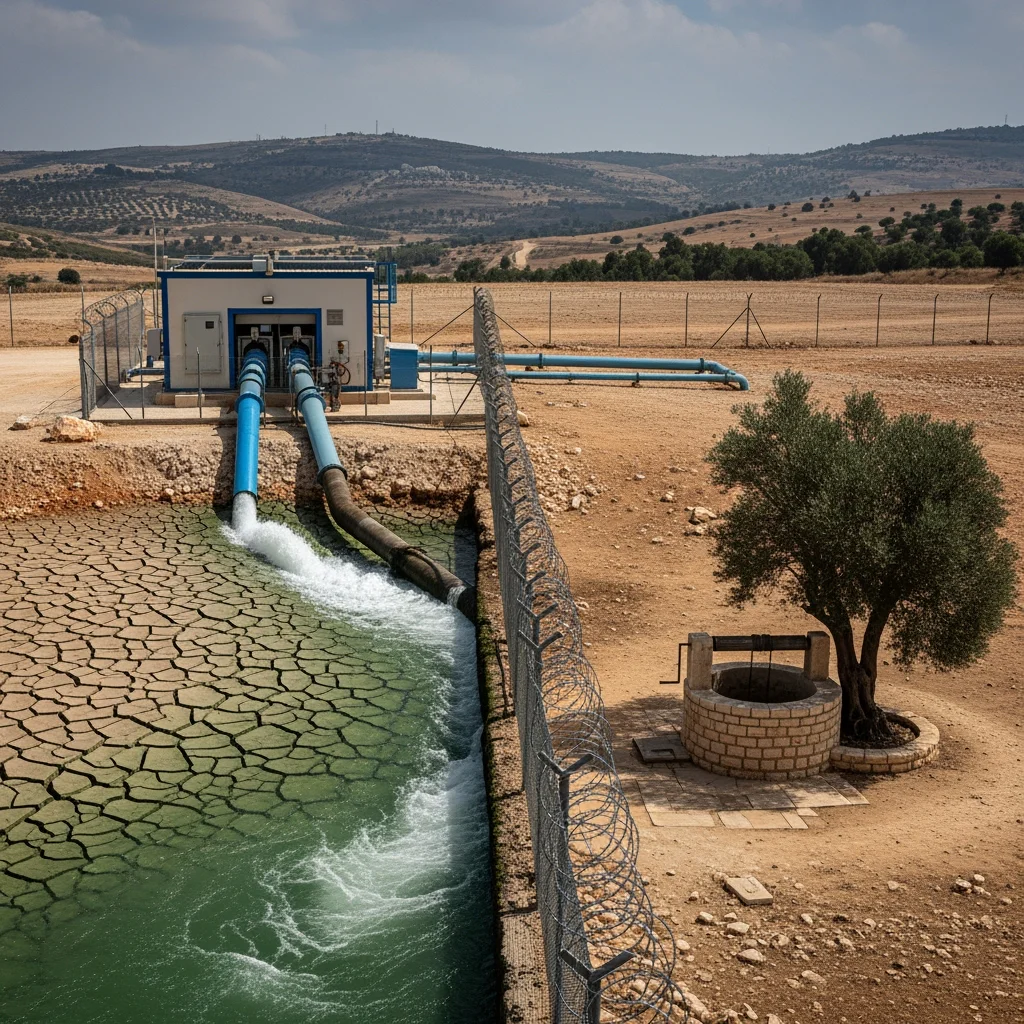
He added in statements to ‘Sputnik’ that from the very first moment of its occupation of Palestinian territories, Israel has completely controlled the water through a series of military orders, underscoring Israel’s intent to target water from the outset. He confirmed that Israel currently controls 85% of Palestinian water sources, while the remaining water control has been delegated to settlers, who are encouraged to attack and sabotage water wells and take control of them in Palestinian villages, especially those east and north of Ramallah. He explained that settlers, about two weeks ago, took control of a number of Silon wells near the village of Qaryut south of Nablus, and now Israeli settlers are targeting the eastern wells of the Ramallah Governorate, emphasizing that Israel wants to transform water from a Palestinian national issue into a commercial one.
He continued, ‘The occupation, through these measures, forces Palestinians to buy more water from Israeli companies compulsorily, after settlers’ militias have been empowered to control and sabotage Palestinian wells, threatening both citizens and agricultural lands.’ Just days ago, the pumping completely stopped from wells and water stations in the Ain Samia area in the West Bank. The authority stated that ‘a group of its water wells east of the city of Ramallah, benefiting around 70,000 Palestinians, were disrupted after being attacked by Israeli settlers.’ It added that its crews lost control of the entire water system due to the assaults, leading to a total work stoppage and disruption of pumping to dozens of Palestinian villages and towns.
It noted that ‘the persistence of the current situation would lead to a humanitarian catastrophe threatening more than 70,000 citizens by depriving them of their basic right to water.’ Israel controls the largest share of water sources that reach Palestinians and considers the water issue a fundamental and strategic one, preventing Palestinians from drilling new wells or renovating old ones. Many wells have been demolished under the pretext of lacking permits, as happened in the northern Jordan Valley and the villages of Hebron and Bethlehem in southern West Bank. In the West Bank, Israel controls more than 85% of groundwater, placing obstacles in front of Palestinians for drilling and renovating wells, which is also the reason for the reduced amounts of spring discharge.
Palestinians mainly rely on groundwater sources, which account for 73.1% of the total available water. The water crisis follows a winter with scarce rainfall, where records from the Palestinian Meteorological Department indicate that rainfall in most Palestinian governorates did not exceed 60% of the general average, impacting rainfed agriculture dependent on rainwater on one hand, and the stock of collection wells on the other.