To tackle the escalating education costs in Dubai, the Knowledge and Human Development Authority (KHDA) has unveiled a new strategy.
The authority aims to introduce innovative incentives for socially-conscious investors and government-backed support to enhance the affordability of quality education for families.
The initiative was announced on Wednesday by Aisha Abdulla Miran, Director General of KHDA, at the Mohammed bin Rashid Leadership Forum 2025, held at Dubai World Trade Centre, addressing the affordability concerns that have been a hot topic on social media and among parents in the emirate.
Stay updated with the latest news. Follow KT on WhatsApp Channels.
Discussing the challenges families face, Aisha Miran acknowledged the widespread concern about education costs in Dubai, a recurring public issue.
“Education is often discussed alongside the high cost of schools,” Aisha Miran noted. “Recently, on social media, many, including a foreigner, contacted me about the Dh1 million cost of her children’s education in Dubai. This feedback shaped our strategy to offer good education at reasonable prices.”
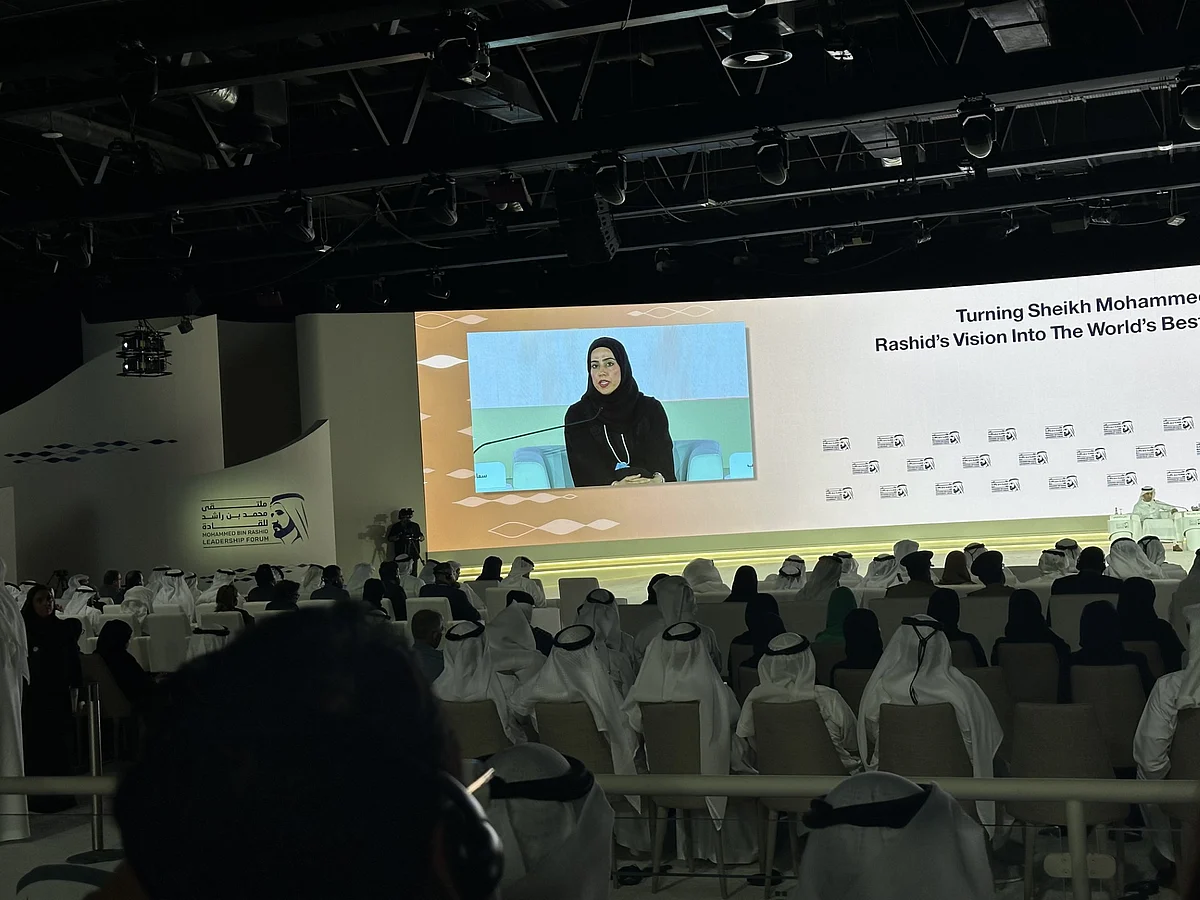
Aisha Abdulla Miran. Photo: Ruqayya AlQaydi
The KHDA director outlined an ambitious plan to offer more educational choices for parents while upholding Dubai’s academic excellence.
A key element is a pioneering policy to be presented to the Executive Council, aimed at attracting investors focused on social goals rather than profitability.
“We aim to provide parents with diverse educational options,” she explained. “Our policy for the Executive Council will incentivize a specific type of investors driven by social objectives.”
The framework proposes government support through subsidized land rentals and affordable land prices, offering backing for socially-driven educational projects.
The strategy encompasses more than cost reduction, integrating urban planning to create sustainable educational ecosystems in Dubai.
“By linking urban planning, land distribution, school requirements, investment costs, and providing reasonably priced housing for educational staff, we address multiple cost factors,” she detailed.
This comprehensive approach acknowledges that factors like staff housing, operational costs, and infrastructure impact education expenses.
While tackling affordability, Aisha Miran also highlighted Dubai’s educational achievements and future global ambitions.
“We have made significant educational advances globally, but there’s still a way to go to meet aspirations in other areas. Achieving top ten rankings will take time,” she stated.
The KHDA collaborates with various entities to boost Dubai’s appeal to international students, aiming to attract 50% of the region’s international students.
The approach involves partnerships to create an integrated educational environment supporting both affordability and quality.
“We work with entities to provide affordable housing and health insurance, enhancing our competitiveness in attracting international students and global educational programs that add value to the emirate,” she explained.
Success hinges on coordinated efforts across government bodies, reflecting Dubai’s integrated approach to complex social and economic issues.
“Plans require solidarity and cooperation from diverse entities,” she added.
The new policies will roll out in phases, with the Executive Council review as the initial step in a comprehensive educational reform balancing excellence and affordability.