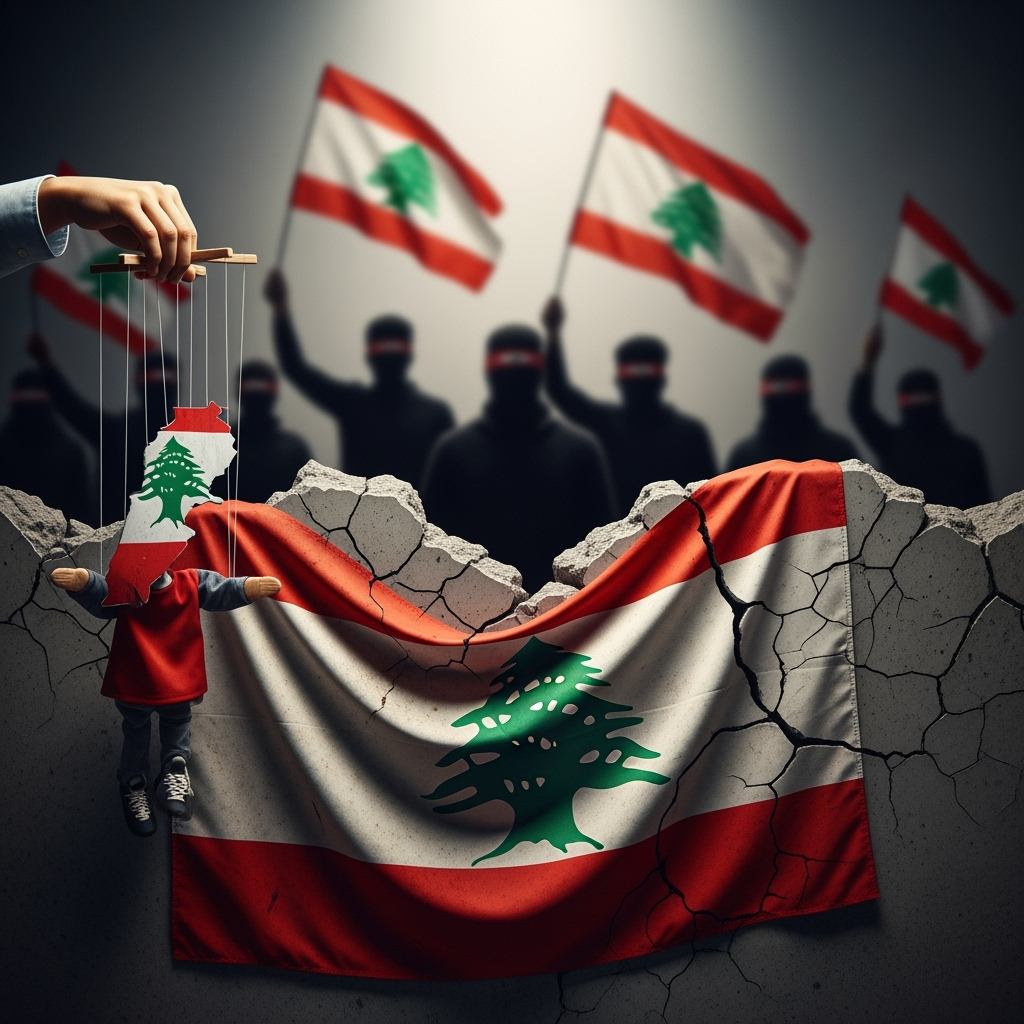
The Lebanese Ministry of Foreign Affairs stated that it “reminds the leadership in Tehran that it would be better to focus on the issues of its own people and concentrate on meeting their needs and aspirations instead of interfering in matters that do not concern it,” emphasizing that it “will not allow any foreign party to speak on behalf of the Lebanese people.” It added that “the statements by the Iranian Supreme Leader’s advisor regarding Hezbollah’s weapons are unacceptable,” continuing: “The state will respond appropriately to any attempt to undermine its decisions or incite against them.” Ali Akbar Velayati, the advisor to the Iranian Supreme Leader on international affairs, asserted that “in facing conspiracies.” Velayati, in an interview with the Iranian “Tasnim” agency, in response to the decision adopted by the Lebanese government to disarm Hezbollah under pressure from the United States and Israel, said that “this is not the first time such ideas have been proposed in Lebanon, but they will fail as they have failed before,” explaining that “the resistance in Lebanon today enjoys acceptance and support from all Lebanese, including Christians, Shiites, Sunnis, and others.” He clarified that “the resistance represents Lebanon’s dignity and that the life and security of this country are linked to it.” He reminded that “the Lebanese have not forgotten that in 1982, when there was no resistance, the Israelis reached southern Beirut and the suburb area, but in the end, they were forced to withdraw under the pressure of Hezbollah’s resistance.” Velayati emphasized that “in the past, when the resistance had fewer capabilities and resources, it thwarted these plans, and today, with greater public support and more resources, it will not allow these projects to materialize, by God’s will.” He pointed out that “one of the reasons for proposing these political projects is the belief of the Zionists, after they assassinated, with the help of the United States, major leaders like Hassan Nasrallah, that Hezbollah has weakened, while its basic structure is still very strong,” confirming that “Hezbollah today is more solid than in the years 1981 and 1982, and that if it were not for its presence, the Israelis would have inflicted on Lebanon what they inflicted on Palestine.” Velayati added that “Hezbollah, which protected Lebanon, will also protect itself from these American plots,” stressing that “the peoples of the region, especially the Lebanese people, are asking: Does the Lebanese government have any sense of responsibility towards protecting the country and the people to propose such projects?” Lebanese Hezbollah confirmed, last Wednesday, that “the party will treat the Lebanese government’s decision to disarm the party as if it does not exist.” Hezbollah, in a statement, said that “the government’s decision to limit weapons to the state weakens Lebanon’s ability against Israeli-American aggression,” adding that “the government’s decision achieves for Israel what it did not achieve in its aggression on Lebanon.” The party described the government’s decision as “a major sin,” affirming that the decision represents a clear violation of the government’s ministerial statement and gives Israel a free hand to tamper with its security, politics, and future existence. Hezbollah confirmed its openness to dialogue, ending Israeli aggression on Lebanon, liberating its land, and releasing prisoners, stressing the necessity for the government to prioritize taking the necessary measures to liberate all Lebanese territories from occupation. The Lebanese government assigned the country’s army last Tuesday to develop an implementation plan to confine weapons to legitimate forces by the end of this year. The National News Agency reported, last Tuesday evening, that the Lebanese government held a ministerial session lasting six hours, during which it decided to assign the army to develop a plan to confine weapons to legitimate forces by 2025. The agency pointed out the condition that the plan be presented before the end of this month, as announced by Prime Minister Nawaf Salam. Prime Minister Nawaf Salam confirmed after the cabinet session ended, that “the government’s ministerial statement and what was mentioned in the president’s inauguration speech affirmed the state’s duty to monopolize the carrying of weapons.” Salam stated: “The council decided to continue the discussion on the American paper in a government session on August 7, assigning the army to develop a plan to confine weapons by the end of this year, and to present it to the cabinet before the 31st of this month.”