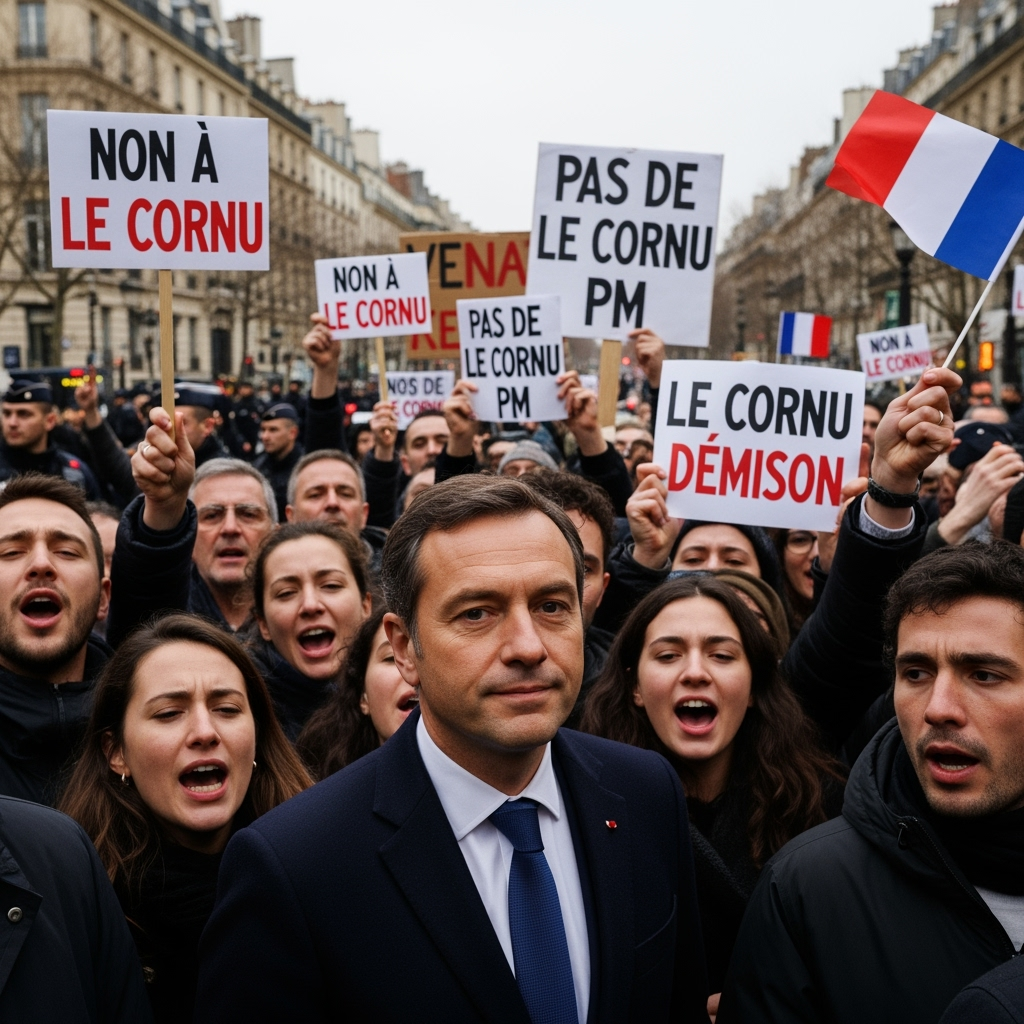
Sebastien Lecornu, the newly appointed Prime Minister of France, will assume his role on Wednesday amidst a wave of protests. These demonstrations are anticipated to disrupt transport, education, and various services as a collective expression of discontent towards President Emmanuel Macron.
The protests are organized by a loosely connected left-wing group known as “Block Everything,” marking a challenging start for Lecornu, 39, a close Macron ally who previously served as defense minister for three years.
Macron appointed Lecornu as prime minister late Tuesday, following a parliamentary confidence vote loss by his predecessor, Francois Bayrou, which necessitated his and his government’s resignation.
Bayrou’s failure to enact austerity measures aimed at debt reduction left uncertainty about Lecornu’s approach to budget approval.
The official transition between Bayrou and Lecornu is scheduled for Wednesday at midday.
“The president believes that (under Lecornu) a political agreement is achievable while respecting all viewpoints,” stated the French presidency.
Stay informed with the latest updates. Follow KT on WhatsApp Channels.
Macron, focusing internationally on resolving Russia’s conflict in Ukraine, faced a pivotal domestic choice regarding his new premier.
Lecornu is regarded as a discreet but adept operator who, importantly for Macron, lacks presidential ambitions.
Initially considered for the premier role in December, Bayrou reportedly pressured Macron into giving him the position.
Lecornu becomes the seventh prime minister since Macron’s 2017 inauguration, the fifth during his second term starting in 2022, and the third within this year alone.
Lecornu’s significant task is to foster cooperation in parliament and avoid Bayrou’s fate, striving to serve Macron’s presidency until 2027.
On X, Lecornu pledged his government would strive for “political and institutional stability to unite the country.”
‘Zero tolerance’
Wednesday’s protest impact remains hard to predict due to limited union involvement, with many planning broader strikes and protests on September 18.
The left-wing “block everything” call has raised enough concern for authorities to deploy 80,000 police nationwide.
Interior Minister Bruno Retailleau warned of “zero tolerance” for violence or blocking key sites.
Police are monitoring “vital economic points” like oil refineries.
Retailleau emphasized the need for a new government to “embody state authority,” accusing the hard-left France Unbowed (LFI) and leader Jean-Luc Melenchon of inciting “insurrection.”
Despite high-speed and most Paris metro trains operating normally, regional rail, suburban services, and airports, including Charles-de-Gaulle and Orly, face disruptions.
The decentralized protests, spreading to rural areas and small towns, echo the 2018 Yellow Vest movement, a major first-term challenge for Macron despite lacking clear political leadership.
Observers note the current movement leans more left-wing than the Yellow Vests, featuring more young, intellectual participants.
Paris police chief Laurent Nunez suspects the “radical left” is orchestrating protests with “spectacular actions,” but without “civil society” support.
Demands from protesters include rejecting Bayrou’s proposal to abolish two bank holidays, reducing medical costs for workers, and providing more generous sick leave.
Bayrou argued for 44 billion euros ($52 billion) in spending cuts to curb France’s debt and stabilize public finances.