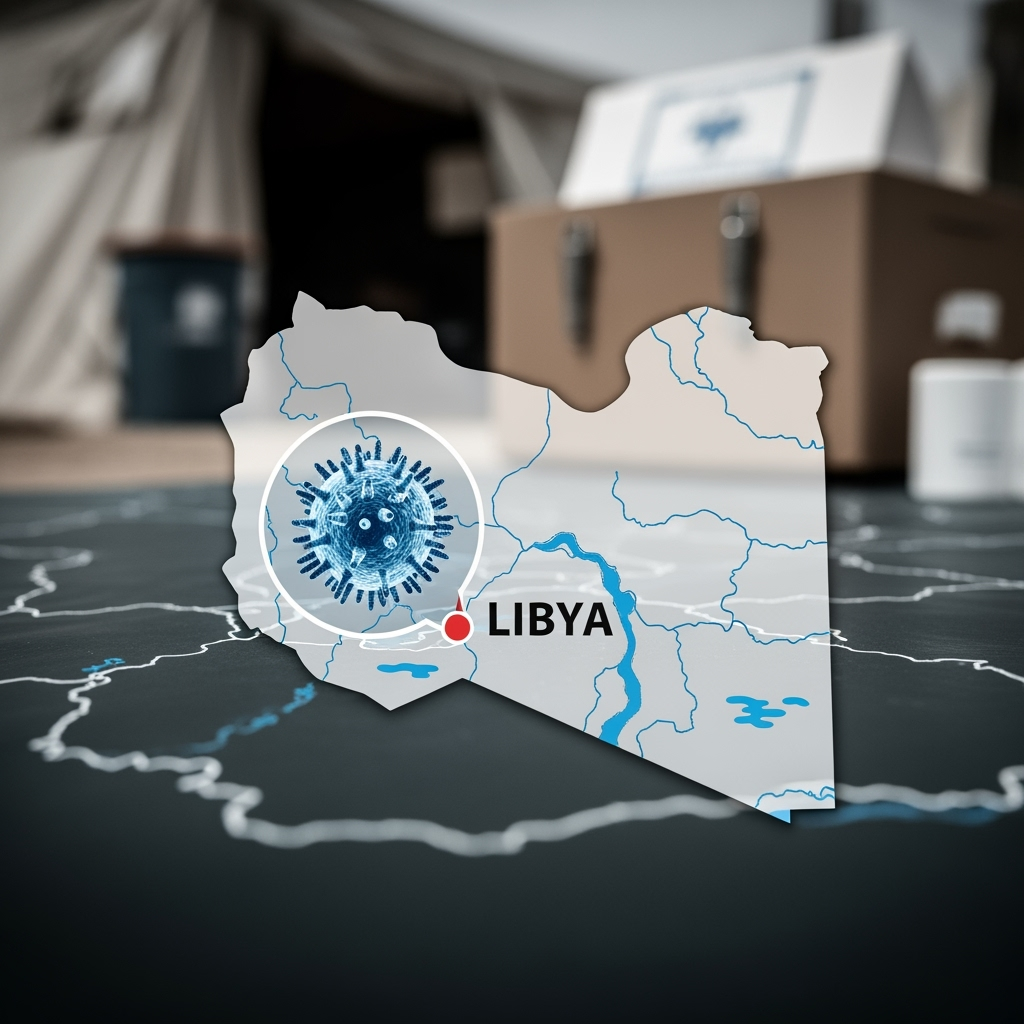
With the outbreak spreading in 18 Sudanese states near the border, the Libyan government’s Ministry of Health swiftly held emergency meetings and formed a task force to monitor the situation in the city of Kufra, which hosts over 65,000 Sudanese refugees. Although medical teams confirm no infections have been recorded among the refugees or citizens yet, the situation remains under strict observation for any potential emergencies.
Ismail Al-Eidha, head of the emergency room at the Ministry of Health of the Libyan government, stated, “The emergence and increase of cholera cases in Sudan, especially in 18 states, including the northern states and the Darfur region adjacent to the Libyan city of Kufra, have resulted in over 3,000 cholera cases and 700 deaths, according to statistics documented by the World Health Organization and UNICEF offices in Sudan. These figures are accurate and verified.”
He emphasized that these measures were directed by the general command of the Libyan army, with full support from the Deputy Commander for the Health Sector in Kufra city, raising the alert level to the highest to combat cholera. A central emergency room has been established for direct communication with the emergency room in Kufra, and more than 20 specialists have been prepared for monitoring, investigation, and response to follow up on the refugees, conduct regular tests on them, and monitor their locations.
Al-Eidha noted that urgent needs in Kufra city have been identified and are being provided, asserting that no cholera cases have been recorded in the city so far, despite the daily increase in refugees. He added that all refugees in Kufra City are receiving free treatment up to this moment while the Libyan government is working to provide various needs, and the WHO and UNICEF contribute part of the support as a precautionary measure against cholera.
Communication between the Libyan government and Sudanese authorities is conducted through the general command of the Libyan army, which recommended treating Sudanese refugees the same as their Libyan brothers, not merely as “refugees.” He explained that the vaccinations given to the refugees are routine, booster, and mandatory, similar to Libyan citizens, such as measles, rubella, and polio vaccinations, while vaccination against cholera is only given after more than seven confirmed cases are recorded, according to WHO regulations. He added that ongoing monitoring and medical examinations are being conducted under the supervision of local authorities and health teams.
Al-Eidha confirmed that no cholera cases have been recorded in Libya so far, and in the event of an outbreak within Libyan territory, specialized teams and experts will be enlisted to combat the infection. He explained that the health file is under full control thanks to continuous monitoring and investigations.
He emphasized that the Ministry of Health intensified health education and awareness, especially since cholera is transmitted through contaminated water and treated with intravenous fluids and chlorine, stressing that true health awareness lies in guiding citizens and refugees on prevention methods, such as handwashing and general hygiene.
The Ministry of Health of the Libyan government has included in their plans the dissemination of health awareness and education within the areas where refugees are located through local media and mobile health teams, affirming that the situation in Kufra city remains under control at this moment.
Dr. Ali Al-Mabrouk Abu Qarin, a member of the Arab-African Advisory Council for Awareness, stated that “Sudan is experiencing a large and ongoing cholera wave, threatening displacement areas and extending its effects to southern Libya.” He added in statements to “Sputnik” that “recent reports from the WHO and the United Nations confirm that the Eastern Mediterranean and Africa regions are the highest affected globally by this epidemic in 2025, with the ongoing increase in brotherly Sudan, recording high numbers of suspected cases, which are continuously increasing, warning of rising mortality rates in the absence of treatment and vaccines, and lack of safe and potable water sources, alongside the absence of proper sanitation and waste management far from water sources.”
He pointed out that “Sudan, due to war and ongoing armed conflicts, suffers from the collapse of the health system, in addition to repeated attacks on medical facilities, exacerbating the health crisis amidst overcrowding and lack of safe water, resulting in rising cholera incidence and associated diseases such as malaria, measles, dengue fever, and acute malnutrition on a large scale.”
Abu Qarin noted that “Libya receives successive flows of Sudanese refugees through Kufra and surrounding areas, imposing unhealthy conditions in displacement areas and gathering points, especially in the oases and Libyan border towns, necessitating urgent measures, including activating early warning systems at entry points and clinics, detecting suspected cases through symptoms and laboratory tests, establishing dedicated treatment points away from refugee gatherings, and providing appropriate treatment, where 70-80% of cases can be treated using oral solutions, intravenous fluids, antibiotics, and zinc for children.”
He also emphasized the “necessity of continuous community awareness through the use of potable water, regular handwashing with soap or alcohol following global standards, proper food cooking, isolating patients, and disposing of contaminated items in healthy ways, and preventing swimming until two weeks after symptoms disappear.”
He added that “the coming phase, within two weeks to a month, requires intensifying single oral vaccination campaigns, completing the second dose according to WHO protocols, targeting high-risk areas, crossing points, camps, gathering camps, and crowded neighborhoods, equipping integrated laboratories with modern capabilities to diagnose suspected and confirmed cases, urgent repair of water and sanitation networks, designating safe areas for laundry, and integrating cholera response with malaria, measles, and malnutrition within one mobile clinic.”
Dr. Ali Al-Mabrouk Abu Qarin concluded his statements to “Sputnik” by calling for “raising health emergency levels and enhancing cooperation with the WHO, the United Nations, and relevant authorities locally, regionally, and internationally, to face this escalating epidemic threat.”