The ministry clarified in a statement, published on its social media account, that it has devised a precise security plan to secure the mission headquarters and all embassies and diplomatic missions in coordination with various security agencies.
According to the statement, a rocket was launched and landed in a house in the Janzour suburb west of the capital, without causing any damages. Sweeps and follow-up operations led to the seizure of a 2003 Toyota Camry vehicle, inside which two additional rockets and the used launch base were found.
The ministry confirmed that the competent authorities have initiated procedures to identify those involved, with ongoing investigations and the collection of necessary information to apprehend and bring them to justice.
The Ministry of Interior emphasized its firm commitment to enforcing security, protecting public and private properties, and securing the premises of missions and embassies. It affirmed that it will not tolerate criminals and outlaws, undertaking its duties “with full professionalism and skill” to enhance security and stability and prevent any violations.
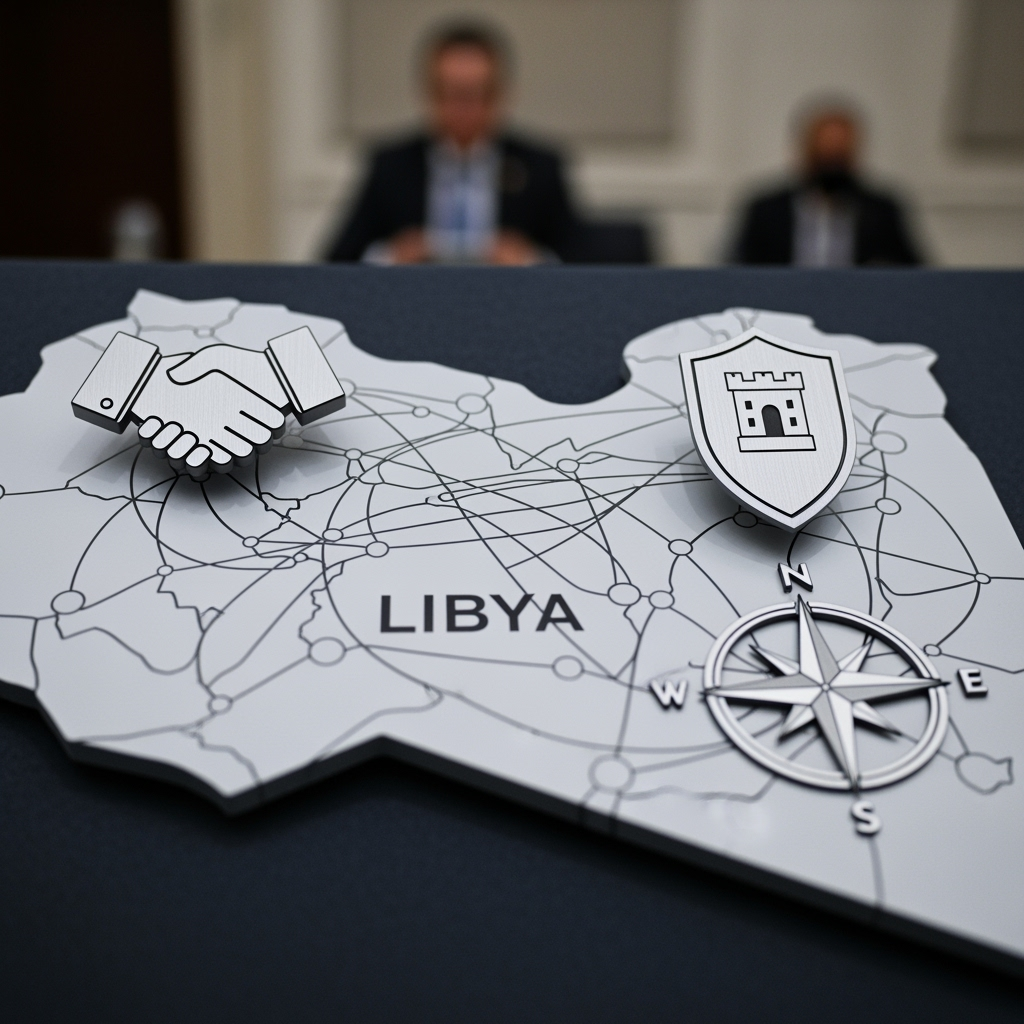
Earlier, on Thursday evening, the Special Representative of the UN Secretary-General to Libya, Hana Tetteh, announced before the Security Council and unified institutions, confirming that the roadmap focuses on three main pillars: launching foundational and legislative reforms paving the way for presidential and legislative elections, in addition to negotiating the formation of a unified government with broad national acceptance.
Tetteh stated in a press release: “Today, I presented to the UN Security Council a roadmap leading Libya towards elections and unified institutions, and most importantly, I place it in your hands,” adding that “the process was formulated based on broad popular participation.”
She clarified that the three pillars in the roadmap include “preliminary foundational and legislative reforms to create conditions for credible presidential and legislative elections,” in addition to “negotiating the formation of a new unified government capable of leading all of Libya with broad national acceptance and popular trust.”
The UN Special Representative continued that the third pillar is a “structured and inclusive national dialogue to help build consensus on the upcoming and complex issues related to the economy, security, national reconciliation, and good governance, including outstanding constitutional issues.”
Libya suffers from having two rival governments; the first in the east led by Osama Hamad appointed by the House of Representatives, and the second in the west led by Abdul Hamid Dbeibeh, who refuses to relinquish power except through elections. Presidential elections were scheduled to be held in Libya on December 24, 2021, but political disagreements among the conflicting parties, as well as the dispute over the election law, prevented their completion.