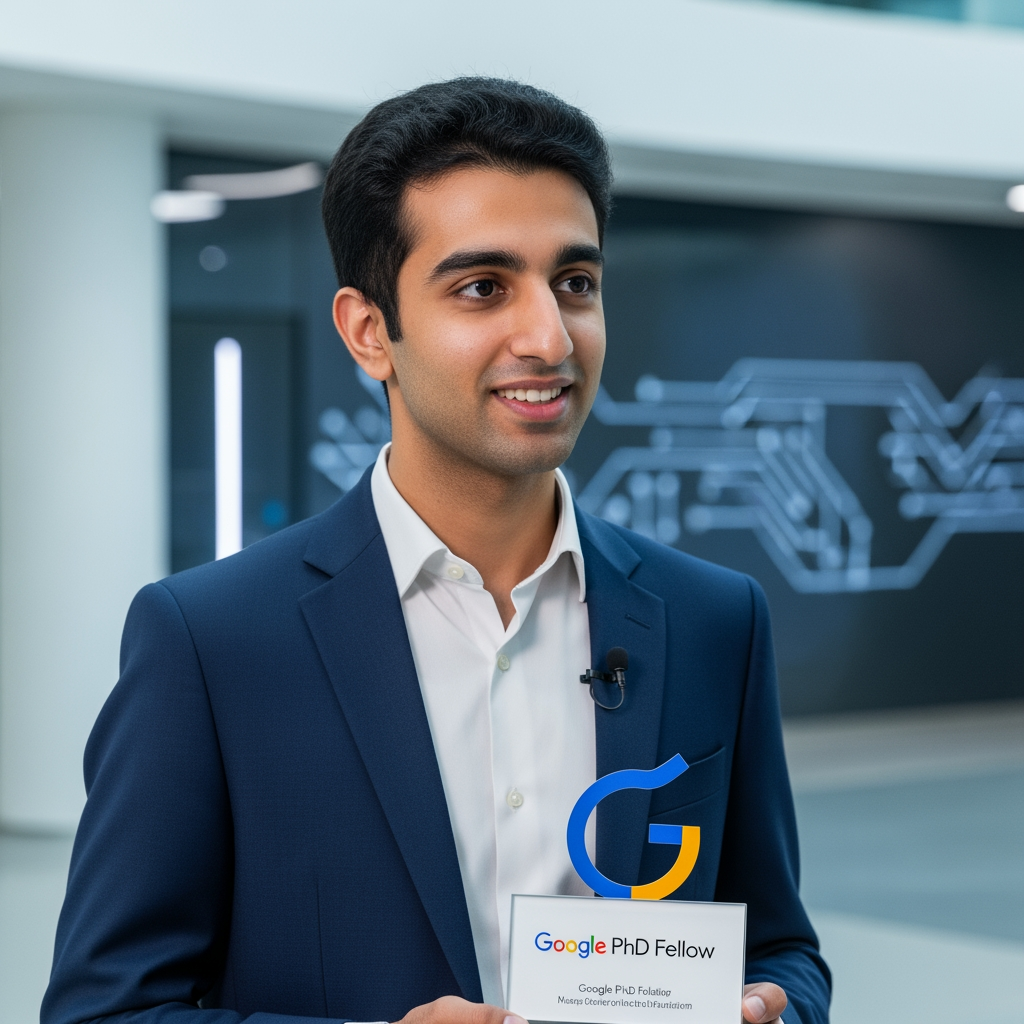
Muhammad Maaz was immersed in coding at his desk when an exciting email arrived. Professor Ian Reid, the Chair of Computer Vision at Mohamed bin Zayed University of Artificial Intelligence (MBZUAI), eagerly shared the news that Maaz had been chosen as a 2025 Google PhD Fellow in Machine Perception. This recognition makes him the first researcher from the Gulf to earn this esteemed honor.
“I was just sitting there, in shock,” Maaz recounted to Khaleej Times. “It’s one of those rare moments when you see years of dedication finally rewarded.”
Now in its 16th year, the Google PhD Fellowship selected 255 PhD candidates globally from thousands of nominations across 35 countries and 12 research fields. Each university can nominate only four students, making the competition fierce. The fellowship provides $85,000 annually, mentorship from Google Research, and connects recipients to a global research network.
Stay informed with the latest updates by following KT on WhatsApp Channels.
Maaz’s success challenges the ongoing narrative of regional brain drain, where top researchers leave the Middle East for opportunities elsewhere. Instead, he exemplifies a return, choosing Abu Dhabi over leaving.
“After interning in Silicon Valley, I can say with certainty that the gap between Abu Dhabi and global research centers is narrowing rapidly,” Maaz remarked. “With the opportunities available here, it’s all about how we choose to utilize them.”
His research seeks to teach machines not only to see but to understand and communicate what they observe. “Think of ChatGPT, but for videos,” he explained. “You could upload a clip, ask questions about its content, or request summaries and insights.”
These multimodal large language models could revolutionize applications like automated video analysis, surveillance, educational tools, and accessibility features for the visually impaired. “The world is visual—we live in movement and interaction,” Maaz said. “My aim is to enable machines to interpret the dynamic visual world.”
What makes MBZUAI unique
Before joining MBZUAI in 2020, Maaz worked at Confiz Limited and Hazen.ai, tackling computer vision challenges such as person detection and traffic violation systems. Five years later, Abu Dhabi feels like home.
Maaz highlights that MBZUAI’s mentorship structure sets it apart. Professors lead small research groups, offering direct guidance that even top US and European labs struggle to provide at scale. “The support system here lets researchers focus without distractions,” he says.
Founded in 2019 with a 5% acceptance rate, MBZUAI enrolled 403 students this year from over 8,000 applicants. Maaz is the first to win a Google PhD Fellowship.
This achievement goes beyond personal success. “Being the first from MBZUAI and the region to earn this fellowship means my work now shows what’s possible here,” Maaz said. “It drives me to set higher standards, not just for myself but for future scholars.”
When asked what distinguishes Abu Dhabi in attracting and keeping research talent, Maaz said, “This achievement wouldn’t be possible without the UAE leadership’s vision and the environment MBZUAI fosters,” he said. “The best way I can give back is by maximizing these opportunities and striving to produce research that makes the region proud.”