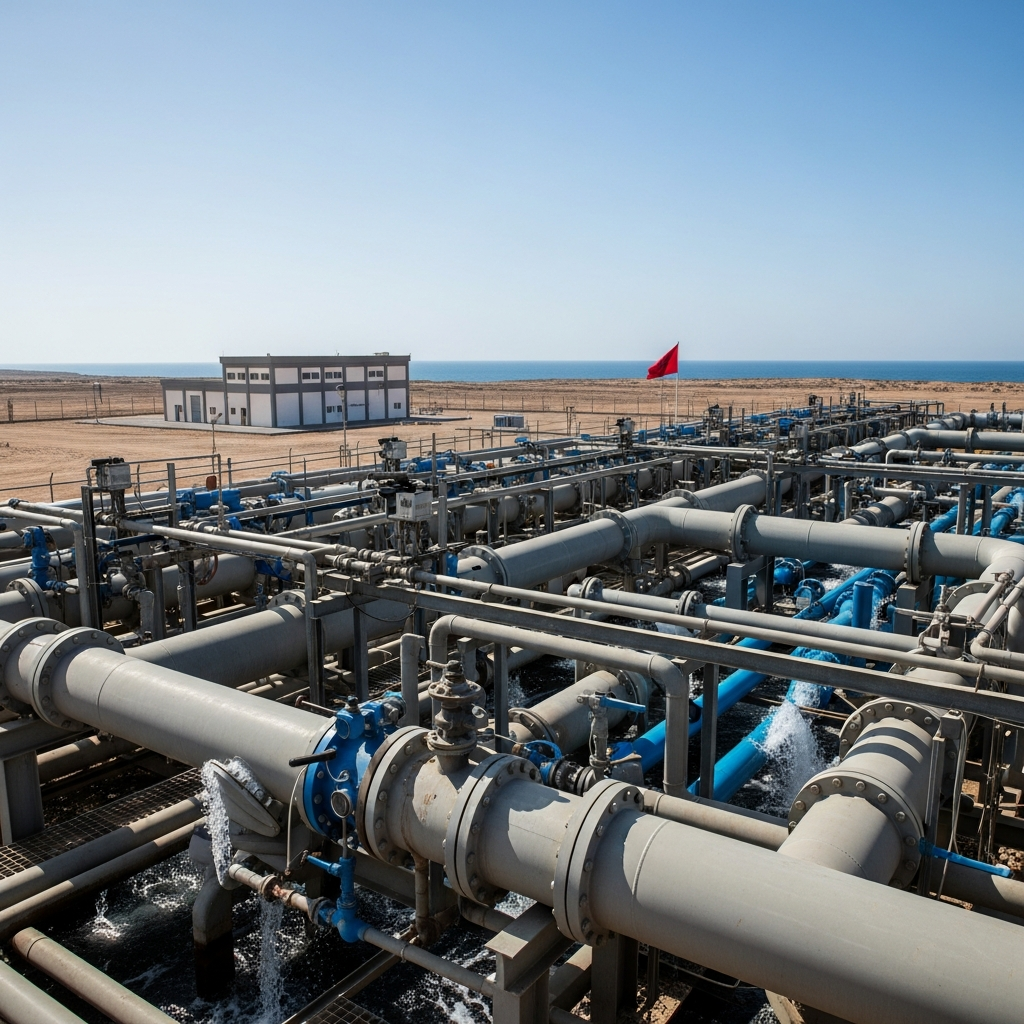
According to Moroccan Minister’s statements, currently about a quarter of Morocco’s drinking water comes from desalination, and the aim is to reach 60% by 2030. This raises important questions about the economic impacts desalination operations impose on the government’s budget.
Moroccan economic expert Amin Samy stated that the seawater desalination plant in southern Agadir has played a model role in alleviating the drought the country has been suffering. He added in his conversation with ‘Sputnik’, that Morocco has faced consecutive drought waves over the past seven years, leading to a sharp decline in traditional water resources such as rivers and groundwater reserves.
He pointed out that Morocco currently operates 17 desalination plants distributed across various coastal areas, with a production capacity of approximately 345 million cubic meters annually, representing about a quarter of the water supply. Additionally, four new plants are under construction, which will add a total capacity of around 540 million cubic meters annually by 2027, including a massive plant in Casablanca (Morocco’s largest city) to boost supplies in densely populated areas.
Regarding costs, investments, and their impact on the budget, he explained that shifting towards seawater desalination involves significant financial costs and large investments, yet it is deemed necessary to ensure water security and avoid the economic consequences of drought. He noted that the Moroccan government has allocated a budget exceeding 115 billion dirhams (about 11 billion dollars) to implement a national water program running from 2020 to 2027. This program is one of the largest water projects in the country’s history, heavily focusing on establishing desalination plants, reusing wastewater, and improving distribution networks.
He pointed out that the investment size in desalination plants is part of the plan done through international partnerships and joint financing to alleviate the burden on the general budget, significantly enhancing public-private sector partnerships. Morocco aims to mitigate this economic burden through innovative technical and energy solutions, as all new desalination plants will be operated using renewable energy (solar or wind), aiming to reduce production costs and limit emissions.
In addition, relying on green energy to operate the plants will significantly reduce the cost of desalinated water, making the project more financially sustainable in the long term. Morocco has signed agreements with international investors to establish renewable energy projects associated with water projects, including laying 1400 km of power lines to transfer clean electricity from the south to desalination plants across the country, funded by Gulf partnerships.
The minister believes that the cost of desalination is a preventive investment that spares the country from massive future losses. Additionally, having a stable water supply supports the continuity of vital sectors like export agriculture; Morocco is a major exporter of fresh agricultural products (like vegetables and fruits) to Europe, and maintaining sustainable irrigation and drinking water ensures this vital economic cycle is not disrupted.
He continued: “If Morocco succeeds in achieving the goal of 60% drinking water by 2030 while maintaining economic stability, it will open the door for increased growth and development.” He added: “In the long run, the kingdom may find itself more independent due to this infrastructure, reducing its vulnerability to climate fluctuations. Thus, Morocco would transition from water scarcity to regional water leadership.”
Morocco has been suffering from the ongoing effects of drought for years, leading to a decrease in the level of most dams, which has affected drinking and irrigation water across the country, prompting it to accelerate the pace of seawater desalination.