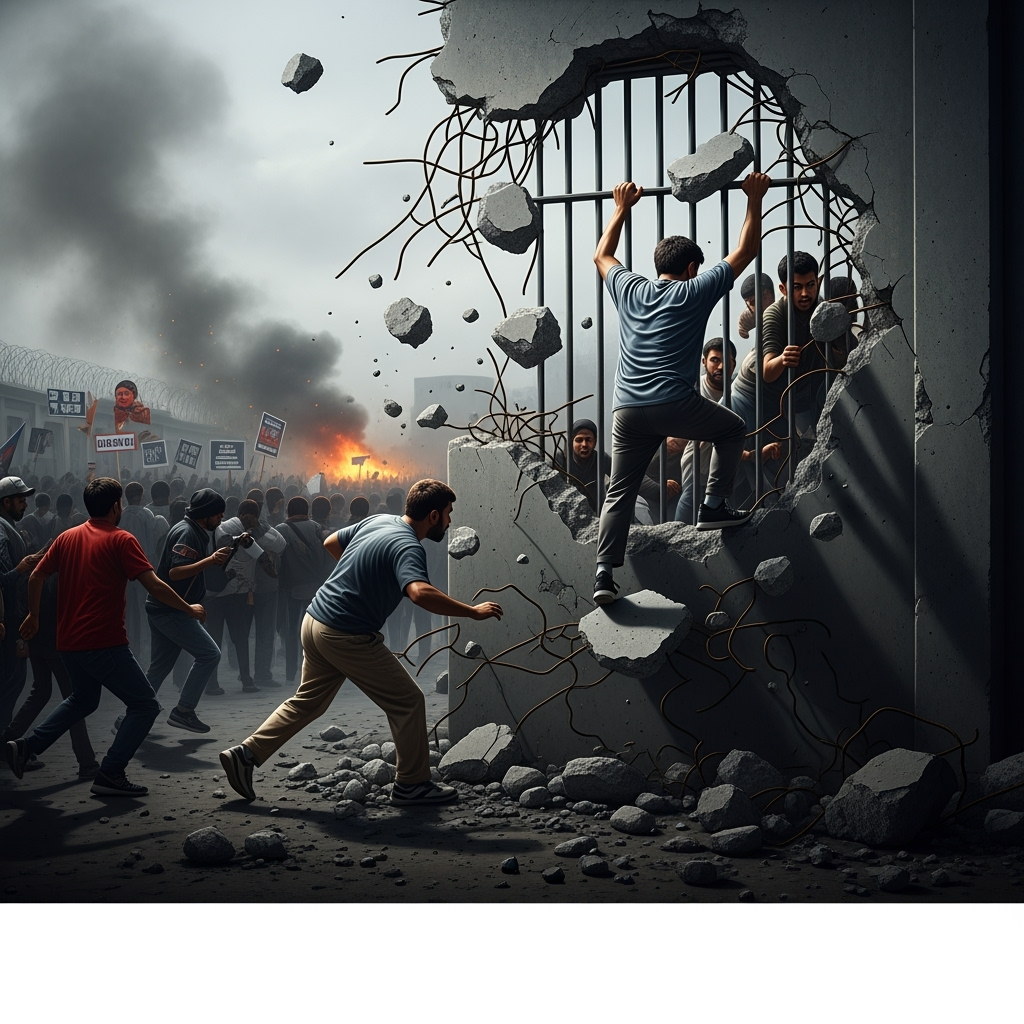
On Wednesday, Nepali authorities reported that over 13,500 inmates escaped from prisons nationwide amid anti-government protests this week.
Nepal Police spokesperson Binod Ghimire confirmed to AFP, “Three officers died yesterday, and more than 13,500 prisoners have fled jails across the country.”
Social media videos showed Dillibazar Jail inmates being restrained by Army personnel in Kathmandu as they attempted to exit, demanding their release. Police have withdrawn from prisons, except the Police HQ, following violent anti-corruption demonstrations.
Stay informed with the latest updates. Follow KT on WhatsApp Channels.
Nepali soldiers patrolled Kathmandu on Wednesday, aiming to restore order after protesters set parliament on fire and forced the prime minister’s resignation, marking the worst unrest in two decades.
Soldiers announced a curfew via loudspeakers amidst a political void, with armored vehicles passing burned-out cars and buildings on the quiet streets.
Nepali Army Chief, General Ashok Raj Sigdel, urged protesters to “cease and engage in dialogue”.
‘Wrong fight’
Protests began Monday in the capital over a social media ban and corruption, led by young demonstrators calling themselves the “Gen Z” movement.
The movement spiraled into nationwide chaos, with government buildings torched after at least 19 fatalities in a crackdown.
The rapid chaos surprised many, prompting a military warning against “actions leading to unrest and instability”.
The army warned that “vandalism, looting, arson, or attacks will be punished”.
Kathmandu’s airport is expected to reopen later Wednesday.
Smoke plumes rose from targeted government offices, politician residences, and stores, an AFP reporter observed Wednesday.
On Nepal’s parliament’s fire-damaged wall, protesters left an obscene farewell to the ousted government, saying they chose “the wrong fight” — signed “Gen Z”.
‘Bad deeds’
On Tuesday, gangs attacked and set fire to the house of 73-year-old KP Sharma Oli, a four-time prime minister and Communist Party leader.
He resigned to allow “a political solution” and his whereabouts remain unknown.
Retired police officer Dev Kumar Khatiwada, 60, at a tea stall, said the ousted government was to blame.
“This is due to our leaders’ bad deeds,” he said but condemned the destruction of major buildings.
“Vandalism isn’t a proper solution.”
The International Crisis Group called it a “significant turning point in the country’s democratic struggle”.
UN Secretary-General Antonio Guterres urged “restraint to prevent further violence,” his spokesman Stephane Dujarric stated.
The future remains uncertain.
“Protesters, trusted leaders, and the army should unite to form a caretaker government,” constitutional lawyer Dipendra Jha told AFP.
Crisis Group analyst Ashish Pradhan agreed, suggesting a “swift transitional arrangement with credible figures, especially for youth.”
But the rapid youth-led uprising left uncertainty over who protesters would support.
Over 20% of Nepalis aged 15-24 are unemployed, with GDP per capita at $1,447, according to the World Bank.
Several social media sites, like Facebook, YouTube, and X, were blocked Friday after the government cut access to 26 unregistered platforms, later restored.
Since then, TikTok videos highlighting ordinary Nepalis’ struggles versus politicians’ children showing luxury goods and vacations have gone viral.