This Sunday afternoon, Al-Shorouk reported that Egyptian Minister of Tourism and Antiquities, Sherif Fathy, stated that the new discovery reflects the strategic role of Sinai as a primary source of copper and turquoise for ancient Egypt and highlights the deep Egyptian presence in the region for thousands of years. Fathy emphasized the Egyptian ministry’s commitment to supporting archaeological missions and enhancing the connection between the achievements of ancient Egyptians and contemporary sustainable development concepts.
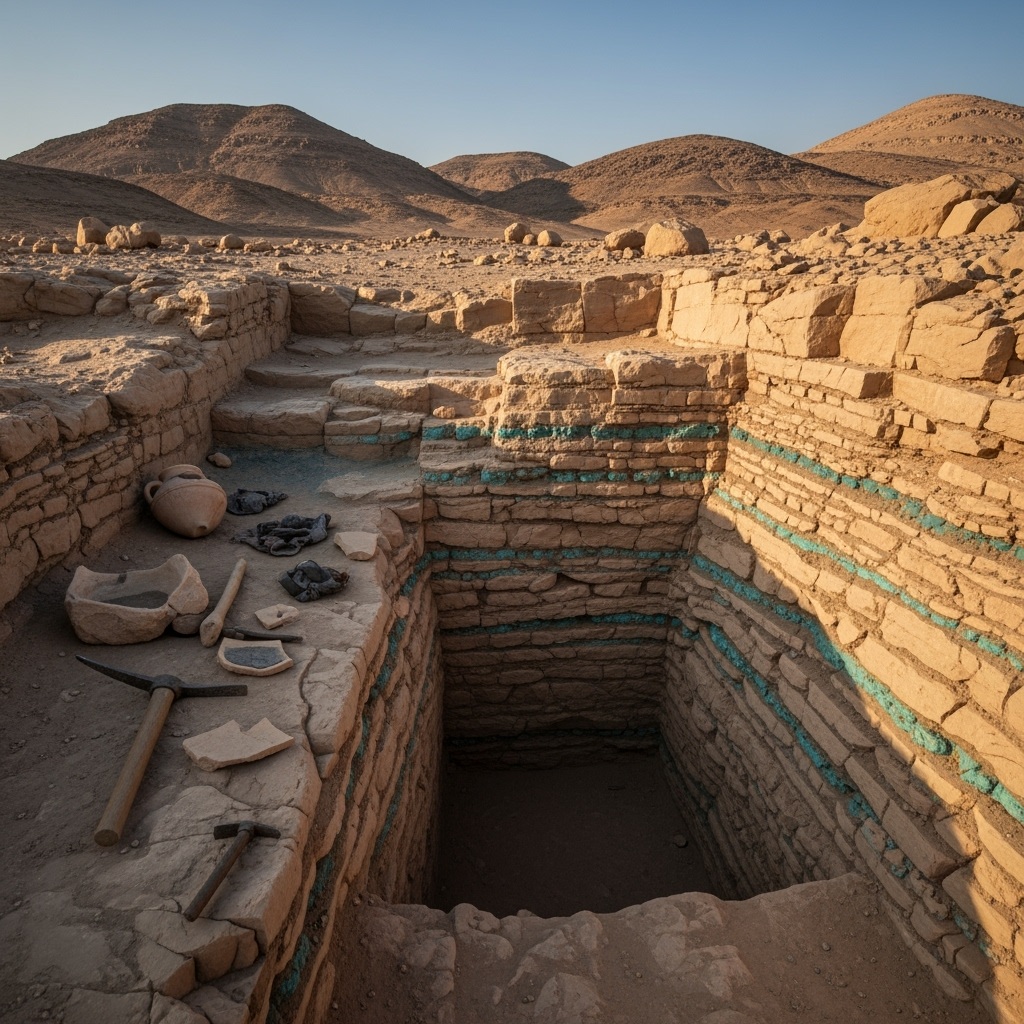
Meanwhile, the Secretary-General of the Supreme Council of Antiquities in Egypt, Mohamed Ismail Khaled, explained that architectural and industrial evidence at Wadi Al-Nasb in South Sinai has shown the continuation of mining activity in this valley from the Old Kingdom to the Late Period, with significant flourishing during the New Kingdom.
Additionally, the head of the Egyptian, Greek, and Roman Antiquities Sector, Mohamed Abdel-Badi, revealed that among the discoveries are two sandstone buildings used as observation points, later converted into copper smelting workshops during the New Kingdom. Inside, furnaces for metal smelting and copper ingots, some weighing over a kilogram, were found, along with clay bellows of various sizes.
He noted that cleaning activities at the discovered site included a third building, likely a control and observation point during various mining expeditions, as well as a large central workshop containing diverse furnaces, raw material preparation tools, Egyptian pottery, and large quantities of local charcoal.
The Egyptian mission continues its work to uncover more details documenting Sinai’s industrial and mining role throughout the ages, highlighting its importance as one of the most significant mining centers in the history of ancient Egypt.