North Korea is celebrating its dominance in women’s youth football after securing a third World Cup title in just over a year. This sporting achievement is being leveraged to support the secretive state’s political system.
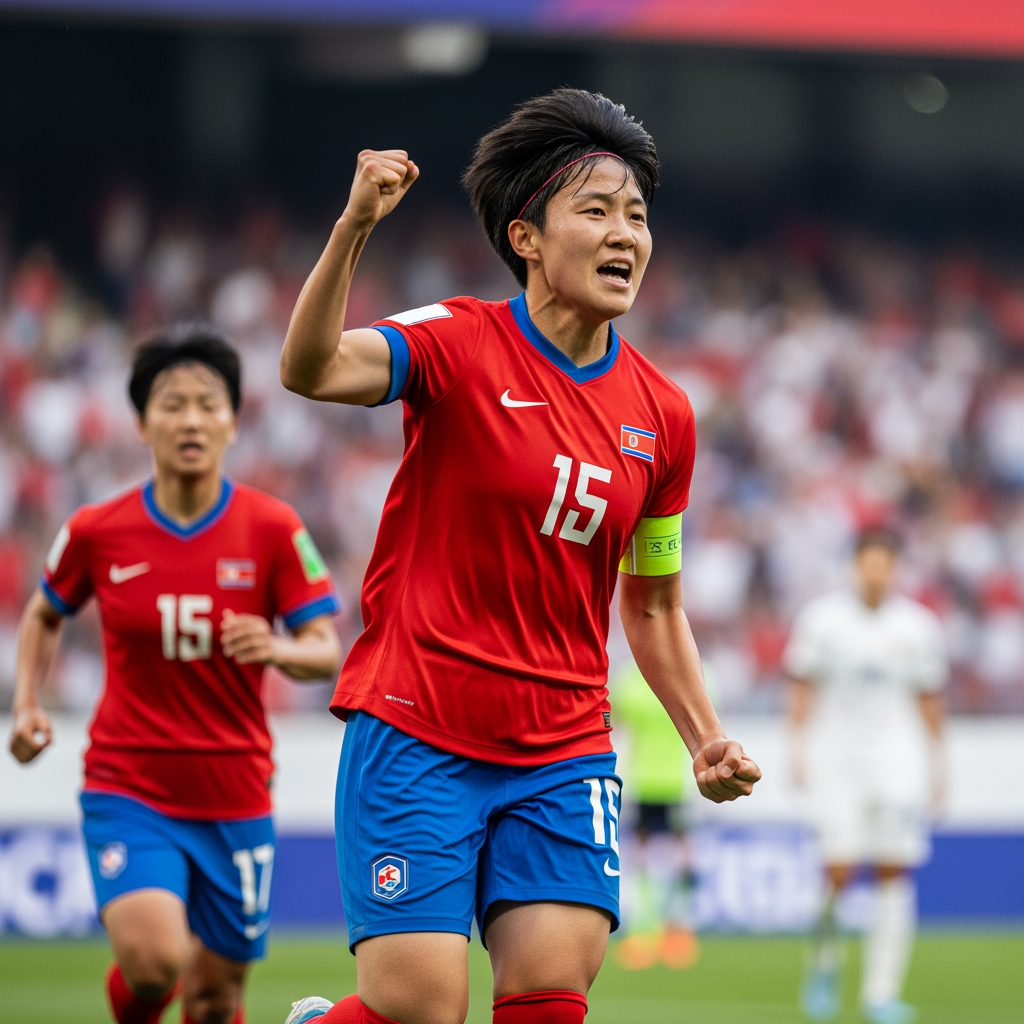
On Saturday in Morocco, North Korea triumphed 3-0 against the Netherlands, clinching their second consecutive Women’s U-17 World Cup and fourth overall, following their victory a year ago.
These consecutive U-17 victories came after North Korea, largely isolated from the world, won the Women’s U-20 World Cup in September 2024.
In Morocco, the North Korean team excelled, setting a tournament record with 25 goals while conceding only three, winning all seven matches.
This victory activated North Korea’s propaganda machine on Monday, with state media highlighting the team’s success as bringing “joy to our beloved motherland.”
The Rodong Sinmun newspaper prominently featured a KCNA article stating, “Our players ran across the pitch waving our republic’s dignified flag with pride.”
Despite being nuclear-armed yet impoverished, North Korea often makes headlines for missile launches but views sports success as a validation of its political system.
Inspiring the Nation
The victory provided “great encouragement and inspiration to all the people…to host the 9th Party Congress as a victorious and glorious event,” according to KCNA.
This refers to the country’s highest decision-making gathering, held every five years, led by Kim Jong Un.
A year ago, officials organized a street parade upon the team’s return from the U-17 World Cup.
Hong Min, an analyst at Seoul’s Korea Institute for National Unification, told AFP he anticipates similar celebrations in Pyongyang soon.
“There’s a perception that the country is culturally backward and isolated,” he said.
“They aim to project an image of strong and vibrant social and cultural foundations.”
Hong noted that children with athletic potential are identified early for training.
“North Korea identifies elite athletes young and invests heavily at the state level to showcase them in global competitions,” Hong explained.
“In return, players feel obliged to repay this investment with their performances.”
This approach is “common in socialist countries” where the state plays a central role in developing elite athletes.
In women’s football, North Korea’s strength contrasts with their men’s team, ranked 120th by FIFA, which hasn’t qualified for a World Cup since 2010.
The senior women’s team ranks 10th and is among the favorites for next year’s Women’s Asian Cup in Australia.
Of the 12 qualified teams, only Japan (ranked eighth) has a higher world ranking.
Stricter Training Regimen
Lee Jung-woo, a senior lecturer at the University of Edinburgh, noted that North Korea adopts a stricter approach to youth sports than Western countries.
“In youth football, European organizations emphasize fun,” he stated in an interview with DW.
In contrast, North Korean young players undergo “highly disciplined, systematic, and professional training regimens, allowing them to excel at an early age.”
Netherlands U-17 coach Olivier Amelink admitted North Korea’s superiority in skill, fitness, and intensity.
“I don’t think we could have beaten them. The gap is too big to compete at the moment,” he told Fifa.com after the final.
“They outplayed us the entire match.”
North Korea’s Yu Jong Hyang was the tournament’s standout player, scoring a joint-record eight goals to win the Golden Boot and Golden Ball awards.
“Our players performed wonderfully in the final,” said midfielder Ri Ui Gyong, who scored the third goal in the final.
“All 25 goals were amazing, achieved because our players trusted each other and gave their all.”