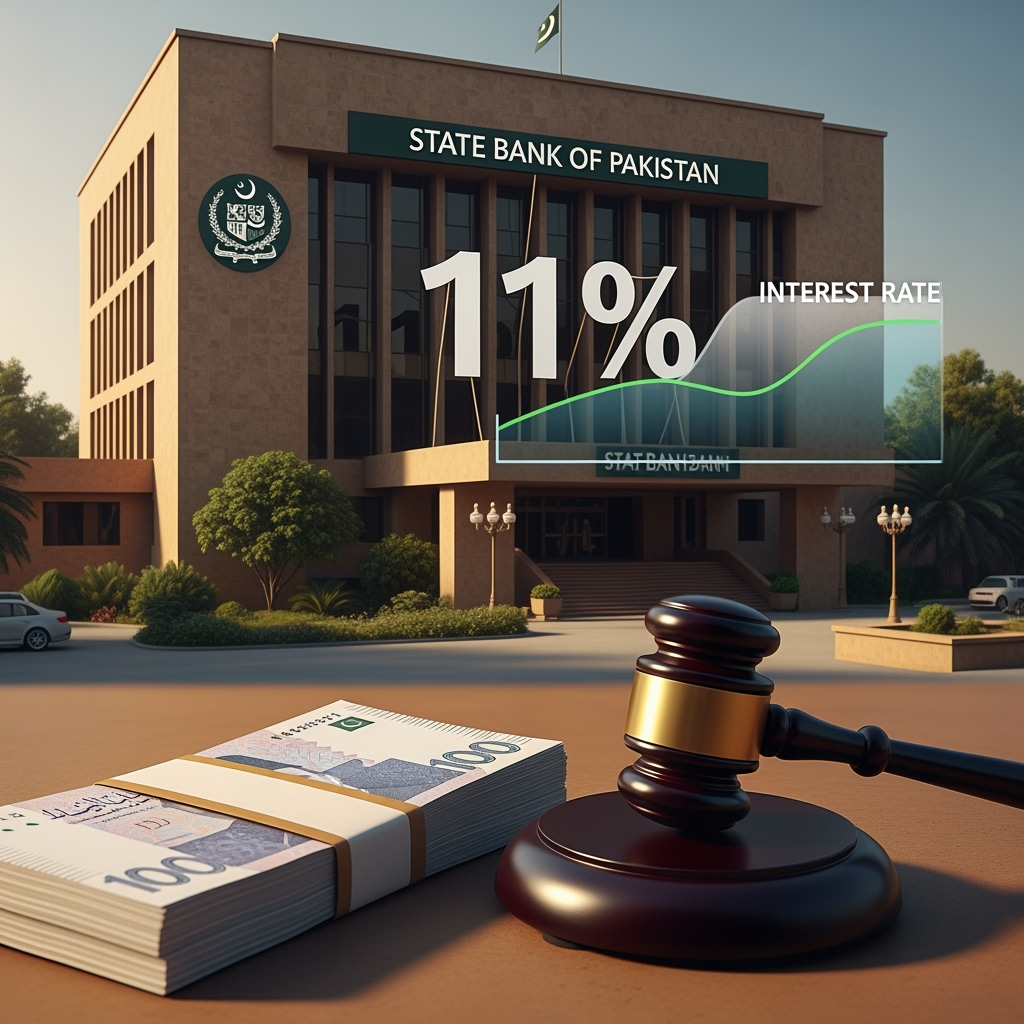
On Monday, Pakistan’s central bank maintained its key interest rate at 11% for the third consecutive meeting, continuing its pause in monetary easing. Policymakers are balancing inflation risks from flood-affected crops with the ongoing fragile economic recovery.
This decision highlights concerns that flood damage to crops could increase price pressures and hinder growth, despite recent cooling inflation and significant rate cuts over the last year.
The central bank expressed in a statement that the economy is on a “substantially stronger footing” to withstand flood impacts compared to previous disasters. However, it cautioned that crop and supply chain damage has dampened growth outlooks.
The GDP growth for 2026 is now anticipated to be near the lower end of its 3.25%–4.25% forecast range.
INFLATION RISKS BREACHING CENTRAL BANK’S TARGET RANGE
Floods have inundated farmlands in Punjab, resulting in over 950 deaths and displacing 4.5 million people, disrupting supply chains and raising concerns about food prices.
“This temporary but significant flood-induced supply shock, especially in the crop sector, may elevate headline inflation and the current account deficit beyond earlier expectations for FY26,” stated the State Bank of Pakistan.
Inflation decreased to 3% in August from 4.1% in July, yet the SBP forecasts it may exceed its 5–7% target range for most of the second half of the 2026 financial year, returning within range by 2027. It mentioned that recent reductions in electricity tariffs could partially offset food price pressures.
Among 14 analysts in a Reuters poll, 13 expected the central bank to maintain rates, with one predicting a 50-basis point cut.
The central bank also pointed out fiscal and external vulnerabilities. Floods may increase government spending and affect tax revenue, while crop losses could widen the trade deficit. However, resilient remittances and improved U.S. market access are expected to help.
Fawad Basir, head of research at KTrade, noted that the SBP adopted a cautious approach, recognizing a buffer for a rate cut but mindful of potential effects on the exchange rate.
The SBP anticipates its foreign reserves will rise to approximately $15.5 billion by December.
Since June 2024, it has reduced rates by 1,100 basis points from a record 22% when inflation peaked near 40% in 2023. The last rate cut was 100 bps in May, with rates held steady in June and July.