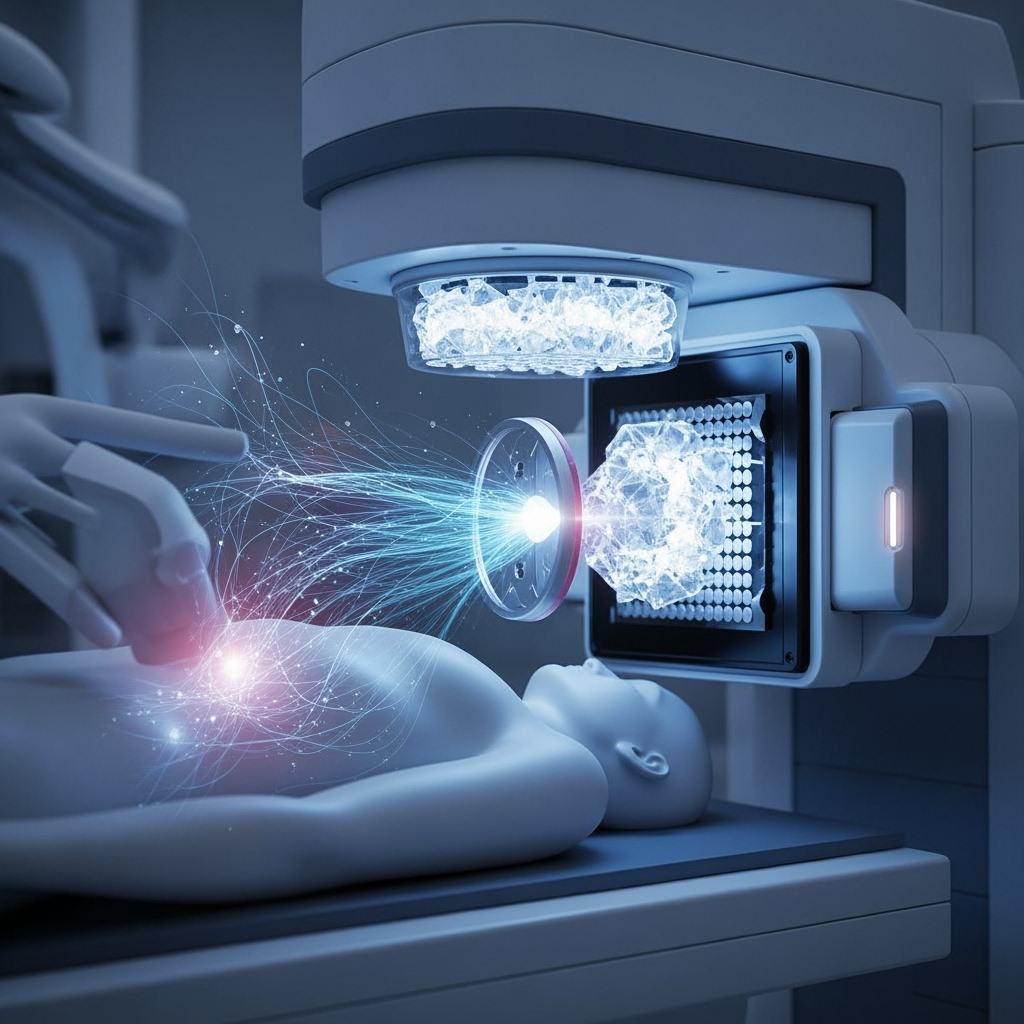
Doctors rely on nuclear medicine tests, such as single-photon emission computed tomography (SPECT), to monitor heart functions, blood flow, and detect deep-seated body diseases. However, traditional detectors used in these tests are expensive, bulky, or fragile. Now, scientists from Northwestern University and Soochow University in China have developed the first perovskite-based gamma-ray detector, capable of capturing individual gamma rays with unprecedented precision, according to the newspaper.
This development promises clearer, faster, and safer examinations for patients, potentially reducing radiation doses and shortening examination times. Unlike costly cadmium zinc telluride (CZT) detectors, which can cost hundreds of thousands of dollars and are fragile, or sodium iodide (NaI) detectors that produce blurrier images, perovskite detectors combine affordability with superior image quality.
This innovation represents a major step towards ensuring that advanced diagnostic tools are available to a wider range of patients at a lower cost without compromising care. Finally, the emergence of perovskite-based gamma-ray detectors represents a transformative achievement in medical imaging technology. By combining high sensitivity, cost-effectiveness, and durability, these new detectors can facilitate access to advanced nuclear medicine examinations.