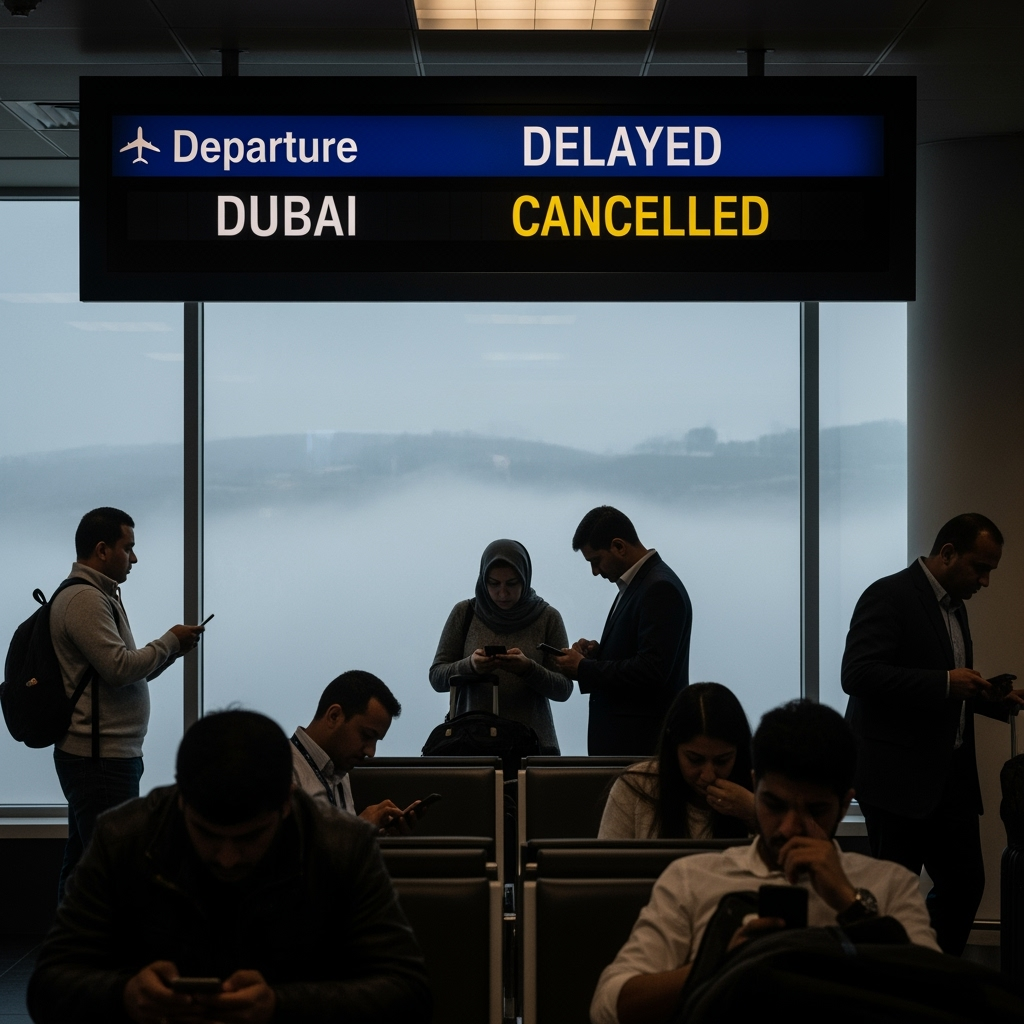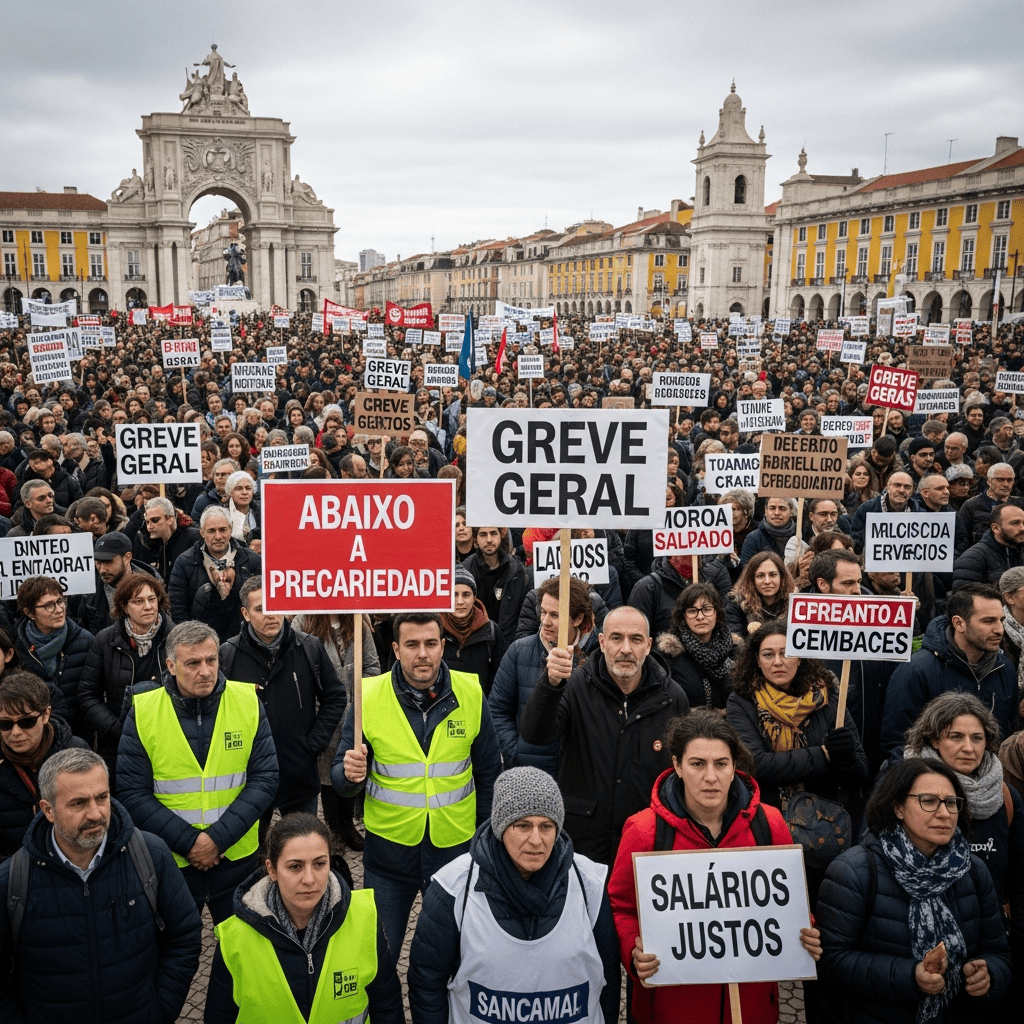
On Thursday, Portugal faced significant disruptions in air travel, trains, hospitals, and schools as unions led the largest nationwide strike in over a decade against government labor reforms.
Lisbon’s main train station was deserted, with most services halted, and TAP Air Portugal cancelled about two-thirds of its typical 250 flights.
Unions reported a complete halt in refuse collection and non-urgent hospital services, affecting schools and courts too.
The unions are outraged by a proposed law from the right-wing minority government, which aims to simplify dismissals, lengthen fixed-term contracts, and expand minimum strike services.
Prime Minister Luis Montenegro maintained that the over 100 measures in the labor reforms are designed to “stimulate economic growth and improve salaries”.
However, the communist-leaning CGTP and moderate UGT unions criticized these plans. The strike is Portugal’s largest since June 2013, amid the country’s debt crisis needing IMF and EU aid.
CGTP leader Tiago Oliveira labeled the reforms as “one of the biggest attacks on labor”. He told AFP that the government’s actions would “normalize job insecurity” and “ease dismissals”.
Out of the five million working population, around 1.3 million are already in precarious jobs, Oliveira noted.
With presidential elections set for early 2026, Oliveira viewed the strike as “already a success” by highlighting the labor reforms publicly.
Public opinion largely supports the strike, with 61% in favor, according to a Portuguese press survey.
On the strike’s eve, Montenegro expressed hope that “the country will function as normally as possible… ensuring some rights don’t infringe on others”.
Despite lacking a parliamentary majority, Montenegro’s government can likely pass the bill with liberal and far-right support, the latter becoming Portugal’s second-largest political force.
The left-wing opposition accused Montenegro’s party of not revealing workers’ rights roll-backs during the last election campaign.
Although Portugal has seen about two percent economic growth and a six percent unemployment rate, the prime minister argued that the favorable conditions should be leveraged for reforms.
Armindo Monteiro, head of the main employers’ confederation CIP, criticized the strike, telling AFP that the government’s draft law is merely a “discussion basis” to address “imbalances” caused by previous left-wing labor changes.