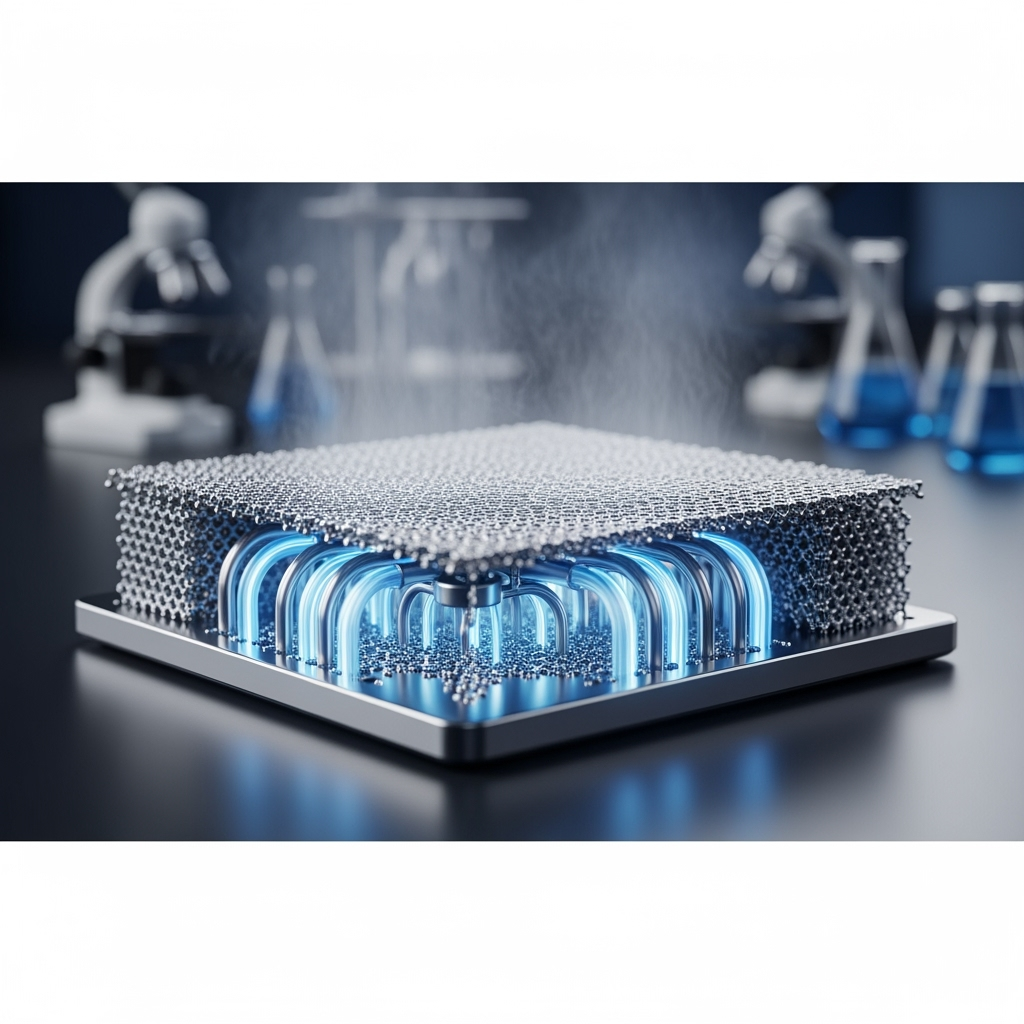
Researchers at the Johns Hopkins Applied Physics Laboratory have made significant advancements in cooling technology by developing a new solid-state thermoelectric cooling system using advanced nanomaterials. These materials are known as ‘Controlled Hierarchical Engineered Superlattice Structures’ (CHESS). These materials have enabled the creation of cooling devices that are nearly twice as efficient as those using traditional bulk thermoelectric materials, according to the newspaper ” “. Besides improved performance, CHESS materials require an extremely small size, about the size of a grain of sand, for each cooling unit, promising substantial cost savings and material efficiency. This manufacturing process is compatible with semiconductor chip manufacturing techniques, facilitating mass production and allowing this technology to be applied on a wide scale. Furthermore, these materials can convert temperature differences into electrical energy, opening new horizons for energy harvesting in wearable technology and aviation applications. Researchers plan to scale this technology to cover larger systems and integrate AI-based enhancements to maximize energy efficiency in segmented cooling environments.