
“You need the job,” one woman said, “so you keep quiet.” While #MeToo has transformed the landscape for women in Hollywood and corporate boardrooms, cleaners, secretaries, and supermarket employees who’ve faced sexual violence at work feel it hasn’t yet benefited them.
Yasmina Tellal, 42, spent six years sorting and packing fruit and vegetables in southern France.
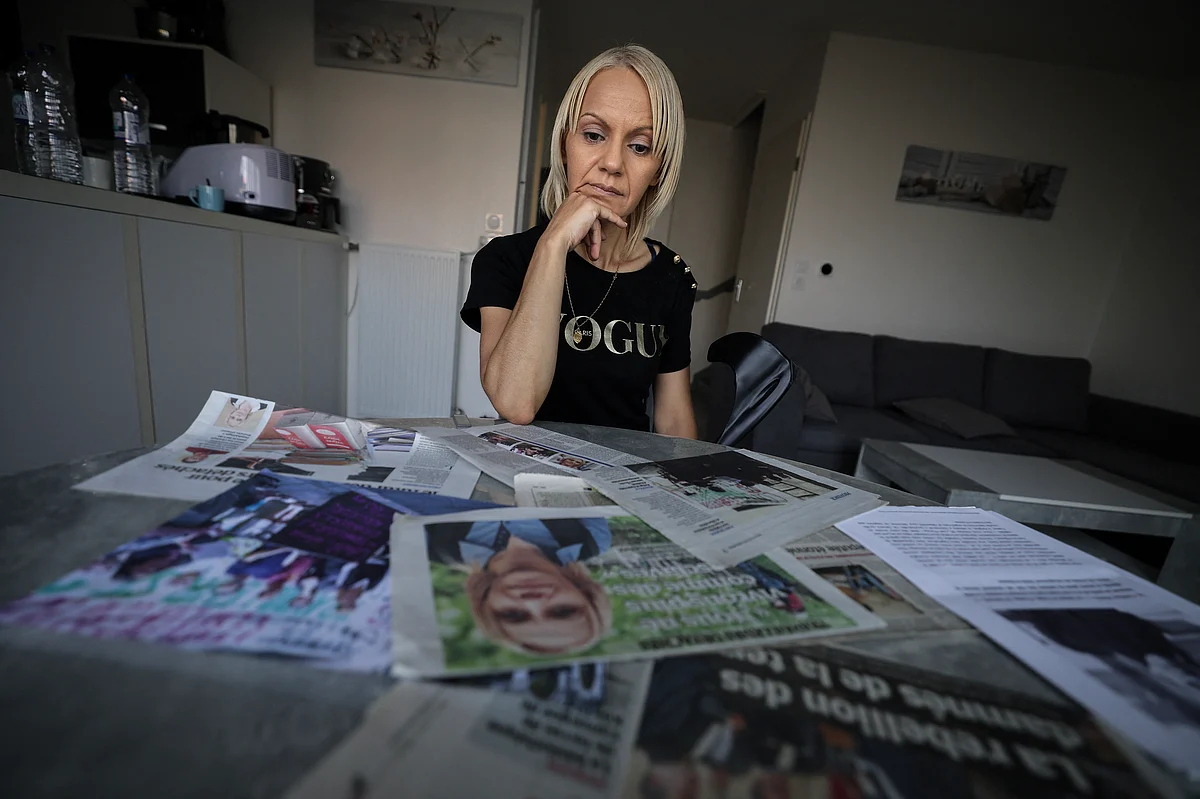
Moroccan-born Yasmina Tellal, a 42-year-old Moroccan woman, reviews press clippings in southwestern France on August 15, 2025. — AFP
“From the beginning,” her bosses “created an atmosphere of intimidation,” she told AFP. “They would kiss us during breaks, touch us, and offer 300 euros ($350) to sleep with them.
“One day, while in the car with my supervisor, he stopped at a rest area, grabbed my hand, and forced it onto him,” she recounted, her voice still trembling even after a decade.
Tellal arrived in France from Spain in 2011 through a Spanish temp agency, expecting a one-year contract at the French minimum wage — around 1,800 euros per month — with housing and meals included.
But it didn’t turn out that way. “I was paid about 400 euros, sometimes less. I had to find my own housing, and the working conditions were unbearable,” she said.
“When you’re broke, you’re trapped, forced to stay and stay silent,” she explained. Then her health began to fail.
In 2015, dizziness and paralysis set in. Doctors diagnosed multiple sclerosis, which she attributes to stress and trauma.
“They destroyed my life,” Moroccan-born Tellal told AFP. But she channeled her anger into a fight for justice — “I had nothing left to lose.”
The Spanish couple managing the agency were jailed for five years in 2021 — three of them suspended — for violating labor laws. However, they were not charged with human trafficking, as Tellal’s lawyer, Yann Prevost, had sought.
The labor court also ignored the sexual abuse she endured.
After a prolonged battle, the former farm worker was awarded 32,000 euros in damages in 2023, a decision upheld on appeal in June.
While Prevost praised her as a trailblazer and “whistleblower,” her story is an uncommon example of a low-paid victim fighting back against the odds.
A major 2019 study by the Foundation for European Progressive Studies (FEPS) found that six out of ten women in the UK, France, Germany, Italy, and Spain reported experiencing sexism or harassment at work.
More than one in ten reported being victims of “forced” or “non-consensual” sexual relations.
From Sexist Jokes to Assault
Marie, a medical secretary, faced rape and harassment by a doctor she worked for in a Paris suburb. For months, the 42-year-old mother couldn’t fully process what was happening.
After a difficult breakup, she moved to the area, and the doctor promised “a great office atmosphere, with frequent outings.” As a small-town girl, she was thrilled.
But soon came “sexist jokes, wandering hands, and my bra being unclasped through my clothes.
“I knew it wasn’t normal but convinced myself, ‘It’s no big deal.’ I was in denial.” Until the day of the assault, which she still can’t discuss five years later.
The turning point came when a younger colleague became a target. “I realized that by staying silent, I was complicit in everything happening at the clinic,” she said.
Marie finally went to the police last year. “It took a long time because I feared not being believed. How could I be taken seriously when I couldn’t recognize what happened to me?”
‘So Normalized’
Women like Marie — whose name has been changed at her request — and Yasmina “are not the type to usually hire lawyers,” said Jessica Sanchez, a social law expert in Bordeaux, southern France. Pursuing a case “takes immense courage… and you need the means to risk losing your job,” she explained.
“Their first concern is, ‘How can I pay rent or feed my kids?'” said Tiffany Coisnard, a legal expert with AVFT, a European organization against workplace violence.
“Sexual harassment at work is so normalized that many women struggle to even identify it,” she added.
Often in precarious financial situations, single parents or those with immigration status tied to their job are especially vulnerable.
Foreign workers without proper documentation face even higher risks of “exposing themselves” to authorities and potential deportation, said Pauline Delage, a gender violence specialist at French research center CNRS.
The FEPS study found that only “a very small minority of workplace harassment victims break the silence that often paralyzes older women.”
Even when lower-paid women speak out, they are “less often heard in the media” than actors, writers, or journalists, said the AVFT.
“Very few” cases reach the police, much less the courts, a French police source told AFP, though officers’ handling of victims has “evolved.”
“We now take care to reassure them… There is a guide on what not to say or do.”
But even he admitted that some officers, both men and women, lack “compassion.”
Even Unions Affected
In theory, victims should be able to report abuse to their employers or union.
But union representatives sometimes hesitate to support victims when it might mean “getting a colleague fired, even if accused of harassment,” said Coisnard.
However, French unions FO and CGT, which have faced harassment cases within their ranks, assert that things have changed.
“Years ago, union advocacy might have outweighed individual cases,” said Beatrice Clicq, a sexual violence officer for FO.
The union was fined nearly a quarter of a million euros in February over harassment in one of its Brittany branches.
“What was tolerated 15 years ago is no longer acceptable,” insisted Myriam Lebkiri, who holds a similar position at CGT.
Hotel Cleaners Revolt
A marathon strike by Ibis hotel cleaners in Paris gained international attention when housekeeper Rachel Keke was elected to parliament in 2022.
However, cases of sexual violence raised during the 22-month conflict received little attention, even though Keke reported being touched inappropriately by a guest.
“We discuss it openly among ourselves,” Keke told AFP — “a guest opened the door naked, another exposed himself, or offered money for sex… But it was quickly made clear that complaints were pointless,” she said.
“The client is always protected.” Management considered “what happened to us not a big deal,” added the 51-year-old.
“These situations often end with a simple apology from management,” sighed Sylvie Kimissa, one of Keke’s former colleagues, after a long day of housekeeping tasks.
A Congolese single mother, she said she’s witnessed several assaults. “We have no choice but to keep working.”
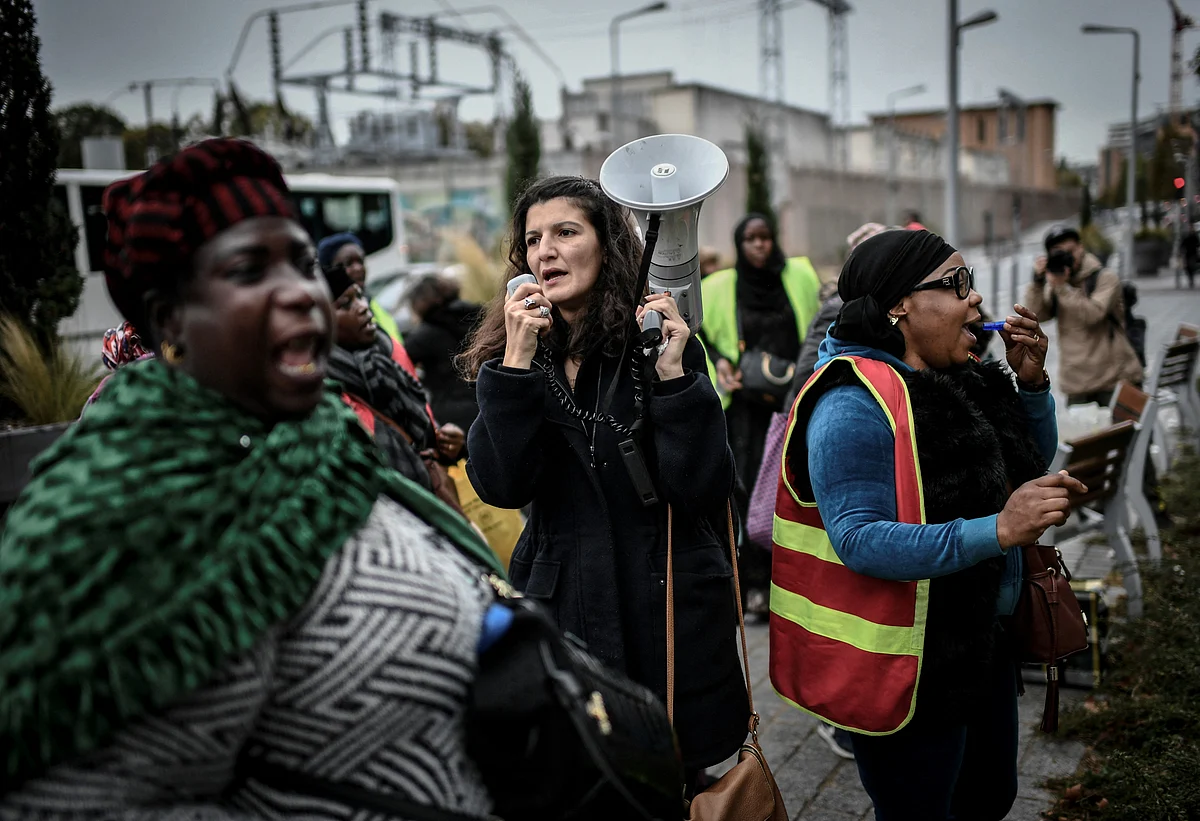
Ibis Batignolles Hotel maids protest on October 17, 2019, outside Accor headquarters in Paris. During their 22-month strike from 2019 to 2021, the maids won better pay and conditions. However, the sexual violence highlighted during the strike received little attention. — AFP
Accor, the hotel’s owner, stated that management has since changed and “no harassment or assault cases have been reported recently.”
DSK Scandal
Experts say little has changed in the 14 years since the Dominique Strauss-Kahn scandal. The former IMF head and French presidential favorite, nicknamed “DSK,” was accused of sexually assaulting housekeeper Nafissatou Diallo at a New York Sofitel hotel.
“All hotel trade levels are affected,” said Maud Descamps, a trainer in industry harassment prevention, but the issue is notably worse in luxury sectors.
“The higher-end the hotel, the more ‘sensitive’ cases involving wealthy customers are,” she said.
“It’s often downplayed because it’s a significant problem.”
“A hotel room is a risky place,” Descamps noted, “and exacerbated by precarious working conditions and outsourced staff, which dilute responsibility.”
The DSK case ended in 2012 with a confidential settlement between him and the Guinean-born housekeeper.
Despite the #MeToo movement, “social pressure on victims remains heavy, and feelings of shame and guilt are pervasive,” said lawyer Giuseppina Marras.
She represented a supermarket worker from Flixecourt in northern France who attempted suicide in 2016, distraught by her colleagues defending the boss who raped and assaulted her multiple times.
The manager was jailed for 10 years in March.
However, Marras noted progress, with “a clear difference in how these cases are handled judicially compared to a decade ago.”
When she previously defended a boss accused of raping staff, he “received only a suspended sentence.”