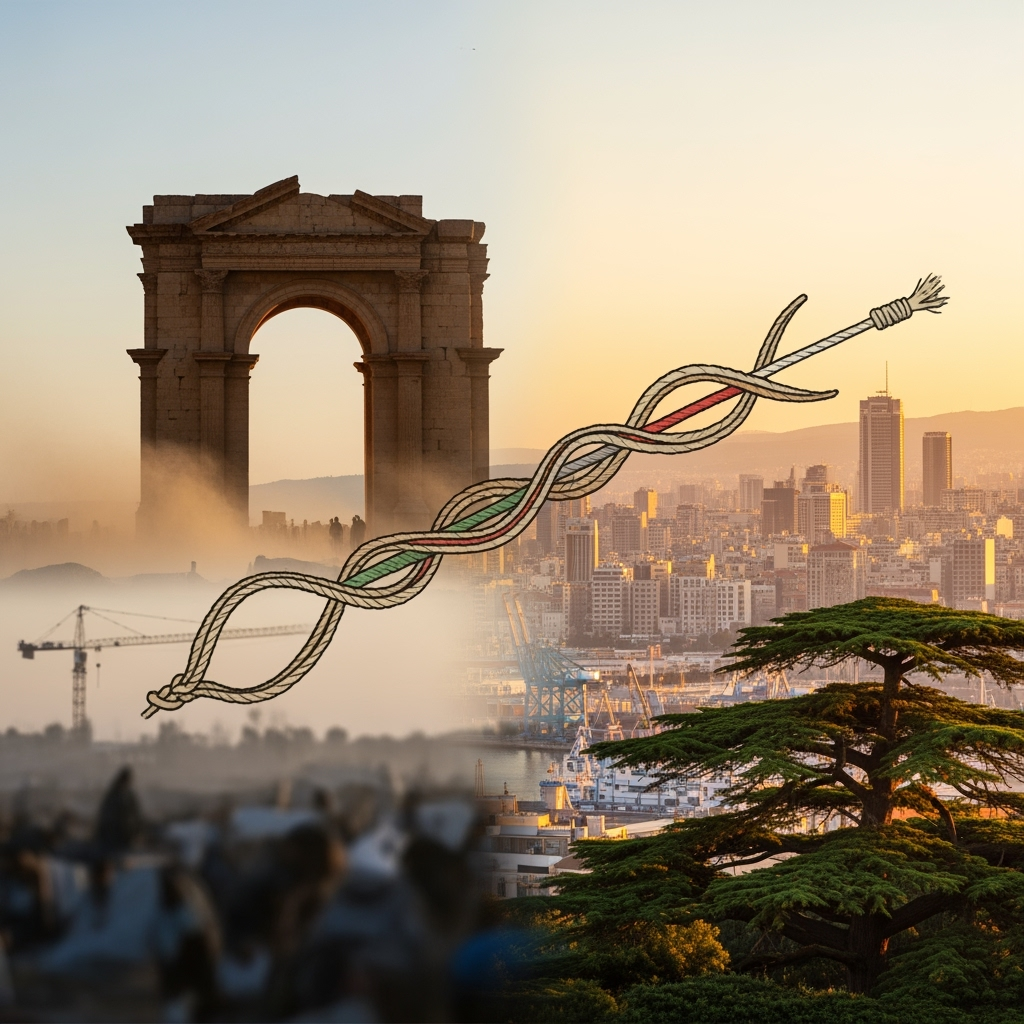
The official Syrian move came after efforts to activate Lebanese-Syrian relations through mediation by the Saudi envoy, Yazid bin Farhan. This move followed the Saudis conveying to Sharaa the protest of Lebanese President Joseph Aoun and Prime Minister Nawaf Salam about what they considered a lack of interest from Damascus in developing relations, and the absence of initiative to visit any Syrian officials to Beirut despite several visits by Lebanese officials to Syria, led by the Prime Minister. The local newspaper “Al-Akhbar” reported that Sharaa formed a committee from the Ministries of Foreign Affairs, Interior, and Justice, whose delegation will visit Beirut next Thursday to arrange for an official delegation’s visit to Beirut to discuss bilateral relations between the two countries. The delegation will meet with Deputy Prime Minister Tarek Mitri, who was tasked by Salam with managing the file, in the presence of Lebanese officials from the Ministries of Interior and Justice.
The newspaper mentioned that the Syrian delegation seeks to achieve tangible results in several files, most notably the demarcation of land and sea borders between Lebanon and Syria, including resolving the identity of the Shebaa Farms. Economic relations will also be discussed, with Lebanon requesting special exemptions for trade movement between the two countries, in addition to the main file concerning Syrian prisoners in Lebanon. The Syrian side, through a prior request, sought from Lebanon to classify prisoners as sentenced or detained without trial, specifying the charges against them. The Syrians clarified that they assume good faith from Lebanon by immediately releasing anyone who has served more than ten years, reducing the sentence for the rest, and releasing anyone accused of committing acts previously classified as hostile to the Syrian regime, considering that the fall of the regime nullifies the crime itself.
Lebanese Prime Minister Nawaf Salam had issued a draft law sent to the Parliament, providing for amnesty for a large number of prisoners in Lebanon, including Syrians demanded by Damascus. In the folds of the project, Salam seeks to reduce the number of prisoners in Lebanon to about half, excluding anyone involved in the blood of Lebanese soldiers, according to Al-Akhbar. The project faced initial obstacles, with the “Kataeb Party” opposing it, and other parties, including the Free Patriotic Movement and deputies who may prevent the law from being passed in Parliament, expressing reservations. The Prime Minister confirms having received preliminary approvals from the “Lebanese Forces” and the Socialist Party blocs and change deputies, in addition to the majority of Sunni deputies.
The Cabinet had postponed discussing the draft amnesty law, which was on the government’s agenda in its last session, coinciding with the arrival of the Minister of Local Administration in Sharaa’s government, Minister Mohammad Al-Arjani, on a secret visit to Beirut. On the other hand, the Syrian side is interested in discussing the status of the Syrian embassy in Lebanon and its relationship with the Lebanese Ministry of Foreign Affairs, in addition to following up on the embassy’s administrative file. It is likely that Damascus will change the current team, in preparation for appointing a new ambassador, after removing the new administration’s classification from the UN Security Council’s terrorism lists.
In terms of security cooperation, after a first meeting held about a month ago in the Saudi capital between the Director of Intelligence in the Lebanese Army, Brigadier General Tony Kahwaji, and the new Director of Syrian Intelligence, Hussein Al-Salama, it was agreed to form joint committees concerned with combating terrorism, especially the “ISIS” organization, and addressing the smuggler problem along the border, with a cooperation protocol to be established between the General Directorate of General Security in Lebanon and its Syrian counterpart regarding border crossings.
After recent developments and the decline of the role of the Lebanese “Hezbollah,” and the shuttle tours of mediators and officials from Arabs and foreigners, it is expected that Lebanon will work on releasing prisoners, in addition to adding flexibility to Damascus’s temporary authority, which is under significant pressure, especially after the coastal and Sweida events and the tension with “QSD.” Consequently, it is understood that the files of border demarcation and other pending issues before the fall of the Assad government are also on their way to resolution, with enhanced cooperation between the concerned parties in both countries.