[Editor’s Note: This article is part of Khaleej Times’ Schools and Parents, a special section aimed at assisting UAE families in navigating educational choices. This section provides explainers, guidance from education leaders, expert advice, and insights from parents, helping readers make informed decisions about schools, curricula, and communities.]
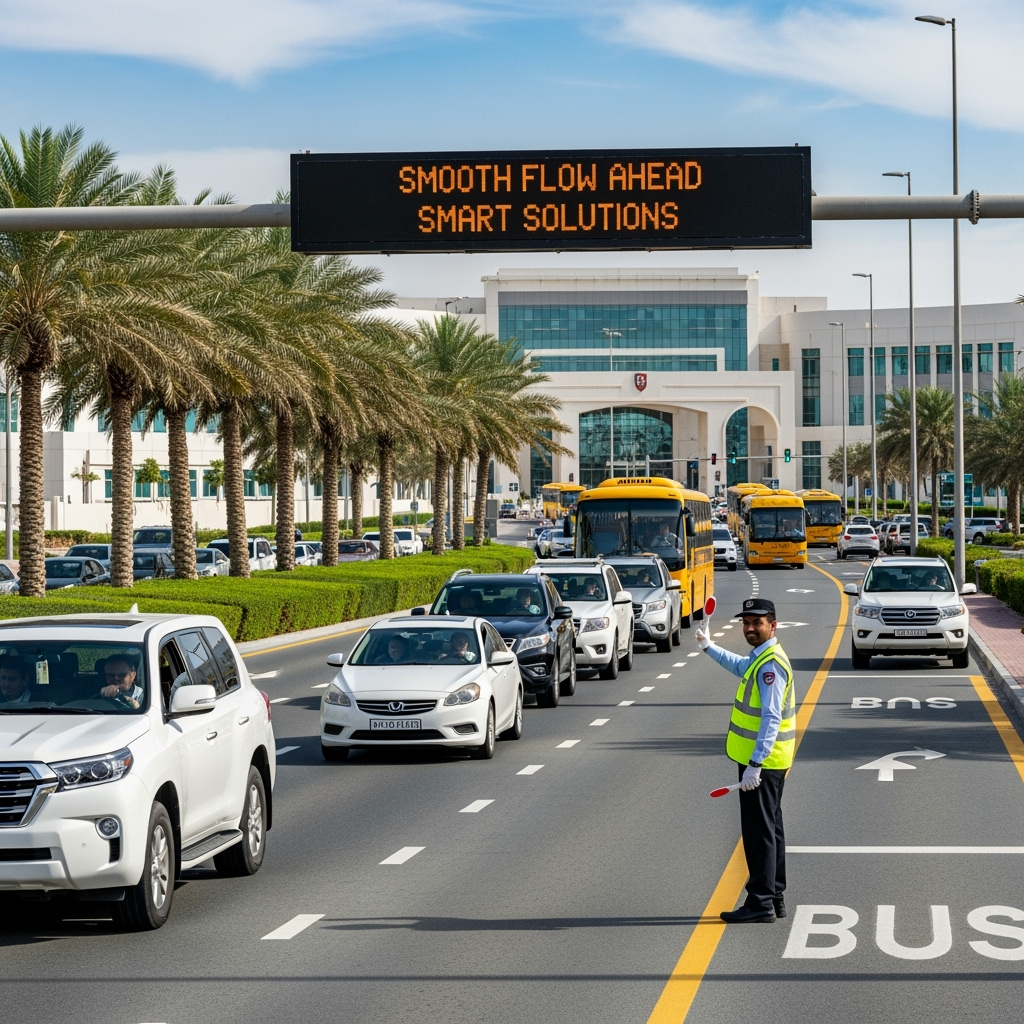
As more families settle in the UAE, traffic jams at school entrances, limited parking, and peak-time congestion have become common in Dubai’s busiest school areas.
Recently, Dubai’s Roads and Transport Authority (RTA) completed traffic enhancements at 10 school-zone locations, benefiting 27 schools across the emirate during the summer of 2025.
The improved zones include Al Warqa 1, 3, and 4; Al Safa 1; Al Barsha 1; Al Garhoud; Al Mizhar 1 and 4; Al Qusais; and Al Barsha South.
Let’s delve into the challenges parents and schools face — and the solutions being explored.
Stay updated with the latest news. Follow KT on WhatsApp Channels.
1. Peak-time traffic volume
For many families, the daily commute nearly doubles during school hours. Filipino parent Ben Lebig, living in Dubai Silicon Oasis, remarked, “The commute that usually takes 20-25 minutes extends to 40-45 minutes during school hours.”
Lebig emphasized the need for cooperation between schools and parents. “My advice to parents dropping their children at school is to be patient and considerate towards others, and avoid stopping or parking in the middle of the road.”

Lebig’s daughter Izabella. Photo: Ben Lebig
2. Bottlenecks at school entrances
“School zones turn into choke points during drop-off and pick-up times,” said Dubai resident Lara Smith. “Even brief stops by parents can cause traffic to pile up, creating long lines of vehicles.”
To improve flow in certain areas, RTA has widened roads leading to the Al Warqa schools complex and introduced new entrances and exits for schools in Al Mizhar and Al Warqa.
3. Inadequate parking spaces
Parents often struggle to find legal parking near schools. “The issue worsens when drivers double park or use pavements to walk their children to the gate,” added another parent, Bhavya Rao.

Rao’s daughters. Photo: Bhavya Rao
Schools are working to build strong relationships with local authorities, including traffic departments and the police.
Seema Umar, Principal of Dewvale School, Dubai, stated, “We’ve assessed key congestion points and implemented staggered drop-off and pick-up zones with staff and parent volunteers supervising. While space is limited, we’ve worked with authorities to temporarily ease restrictions on nearby residential streets during school hours.”
4. Narrow exits and double parking
Some school clusters face challenges with limited exit points and ongoing construction, funneling traffic into smaller roads.
Deepika Thapar Singh, CEO-Principal of Credence High School, Dubai, noted, “Parents, pressed for time, sometimes resort to hurried driving or double parking. However, with security patrols and consistent staff guidance, we’ve seen a marked improvement in traffic flow.”
The RTA’s plan includes building new exits for certain schools and implementing traffic-calming measures, like pedestrian signals, to balance safety with smoother traffic flow.
5. Parents stopping outside school gates
Portuguese expat, Cristina De Sousa pointed out another issue. “Some parents get too engrossed in conversations with their children while parked, causing delays. The kiss-and-drop often takes longer with younger kids, further slowing traffic.”
6. Safety patrols and crossing times
While traffic marshals are stationed outside most schools, parents believe more could be done. “Though traffic marshals do a good job, more could enable a smoother experience,” said Eman Malik.
Patrols play a vital role in ensuring children crossing the road are protected, especially in crowded school clusters like Al Barsha, Al Mizhar, and Al Safa.
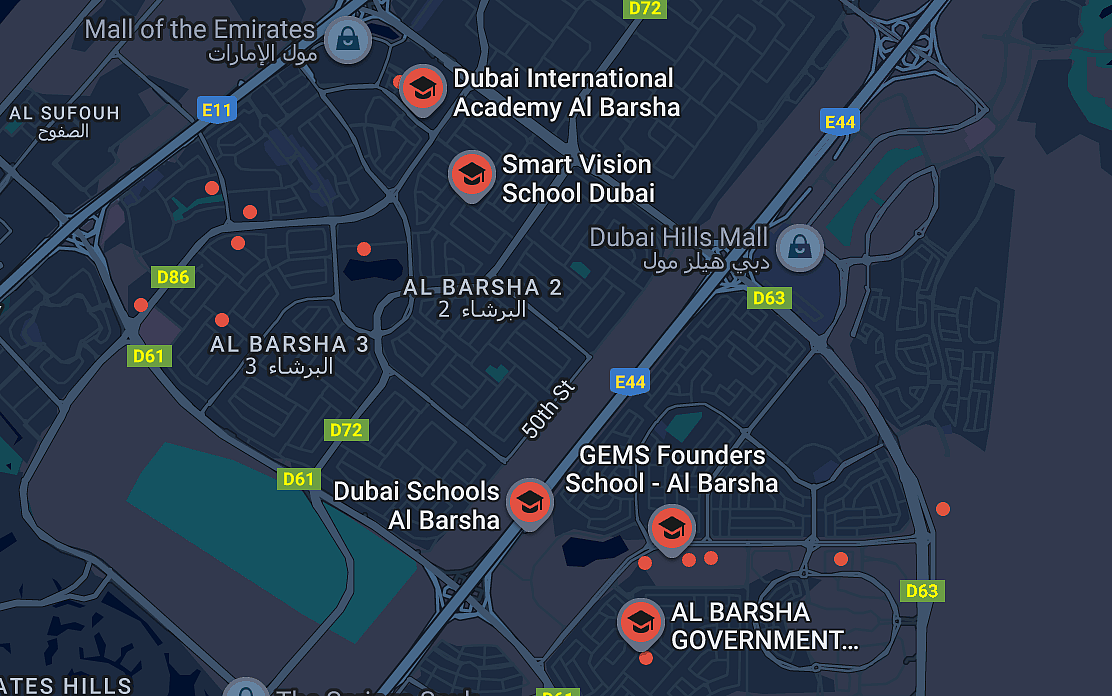
Al Barsha map. Photo: Screengrab/Google Maps
Tackling traffic woes
Experts stress that simple discipline and time management by parents could alleviate chaos.
They emphasize that buses remain the most effective way to reduce congestion. Thomas Edelmann, Founder of RoadSafetyUAE, said,
“Move as many students as possible to school buses – one school bus can take up to 50 cars off the road. In clusters, offer staggered start times. Police presence can prevent driver misbehavior. Parental discipline is crucial. Drop-off children way before school starts and pick them up after it ends. Motorists’ caring manner – it’s not just about our children, but everyone else, too.”
Meanwhile, the UAE’s largest school transport firm, School Transport Services (STS Group), operates across 90 schools, completing over 206,000 student journeys daily with a fleet of 3,600 buses.
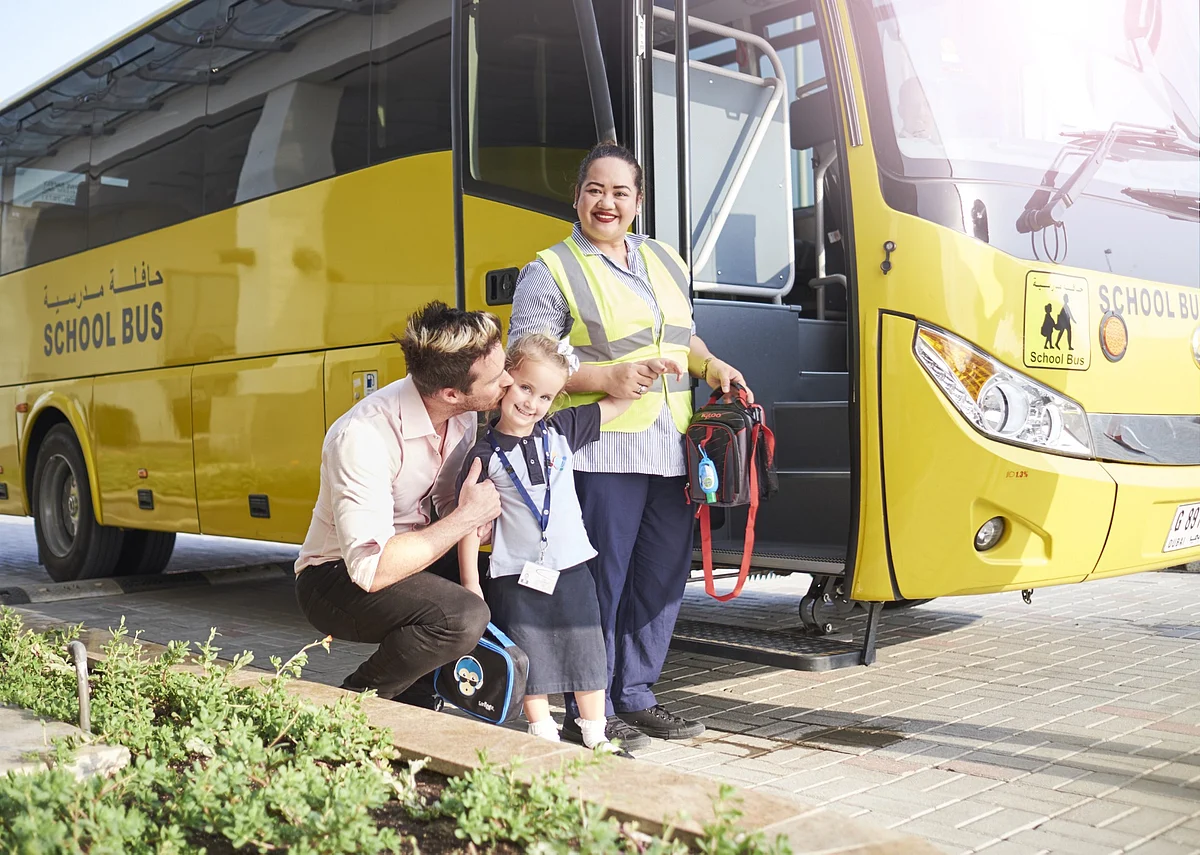
Photo: STS
Specialists also highlighted that with smarter route planning, real-time tracking, and even limited bus-only lanes near school clusters, buses can move more efficiently.
Steve Burnell, CEO of STS Group, added, “On-site bus zones reduce roadside queues, while redesigned drop-off and pick-up areas with separate zones for buses, parents, and staff avoid conflicts and speed up movement.”
STS has even piloted new services. “We recently launched our Spot 2 Spot service at two Dubai schools,” Burnell explained. “It’s designed for students living in nearby residential communities who might not typically use a bus. Offering shorter, direct journeys provides a safe alternative to private cars, further reducing congestion.”
What’s next?
The RTA has confirmed that more traffic solutions are planned for 2025, focusing on additional school zones such as Al Barsha 1, Umm Al Sheif, Al Barsha South, and Al Warqa.
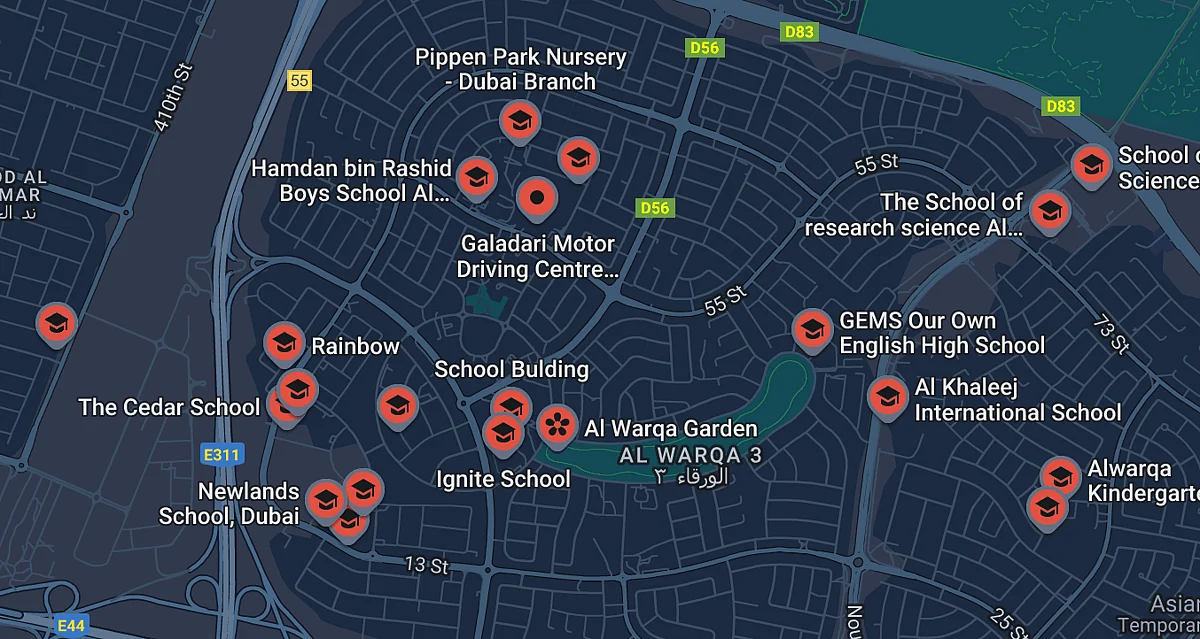
Al Warqa map. Photo: Screengrab/Google Maps
From bottlenecks to parking shortages, Dubai’s school traffic issues are complex, but solutions are underway. Experts and parents agree: a mix of smarter infrastructure, wider use of school buses, staggered timings, and responsible driver behavior can ease the crunch.
As Edelmann pointed out, “Creative solutions need to be devised by schools, students, parents, and teachers … such as ‘park & ride’ lots away from schools, where students can safely store bicycles and ride or walk to school.”