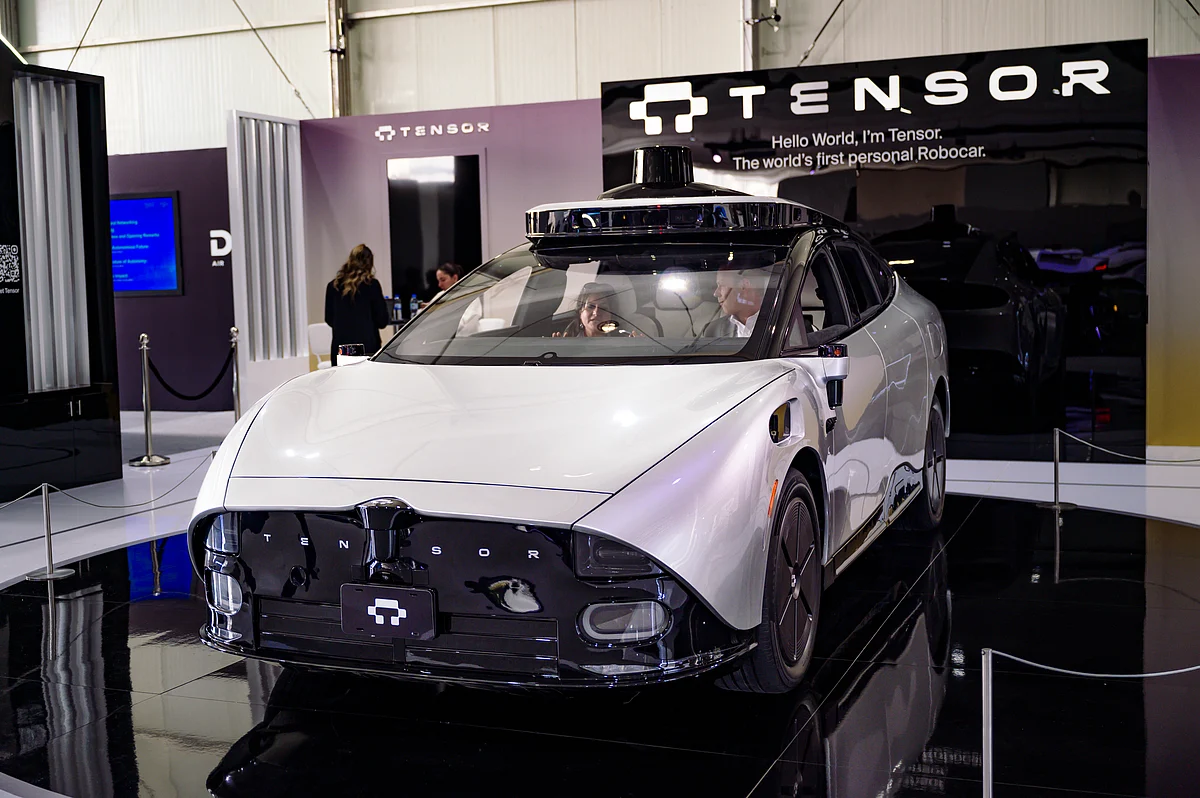
As I stood next to a sleek, metallic vehicle resembling something from a sci-fi movie, I was unsure how to open the door. Then, someone pointed out a small button on the side. With a press, the door smoothly slid open. Inside, another button closed it. This was my first encounter with true “autonomy” — everything, including the doors, operated with a simple tap.
Tensor’s Robocar, officially named Tensor, is set to debut on UAE roads for commercial sale in the latter half of 2026, according to Tensor’s CFO, Eric O’Dell. “We’re thrilled to introduce this car to the UAE market,” he stated.
Founded in 2016 after years of collaboration with other carmakers on retrofitted autonomous systems, Tensor decided it was essential to create a car specifically for autonomy, explained the CFO. “For autonomy to truly scale, it needs a vehicle designed specifically for autonomous driving.”
Stay updated with the latest news. Follow KT on WhatsApp Channels.
The car showcased at DriftX—part of Abu Dhabi Autonomous Week at Yas Marina Circuit, highlighting smart and autonomous urban mobility technology—is the company’s first production model. O’Dell described it as a “larger vehicle to integrate all the technology, as we have a supercomputer inside.”
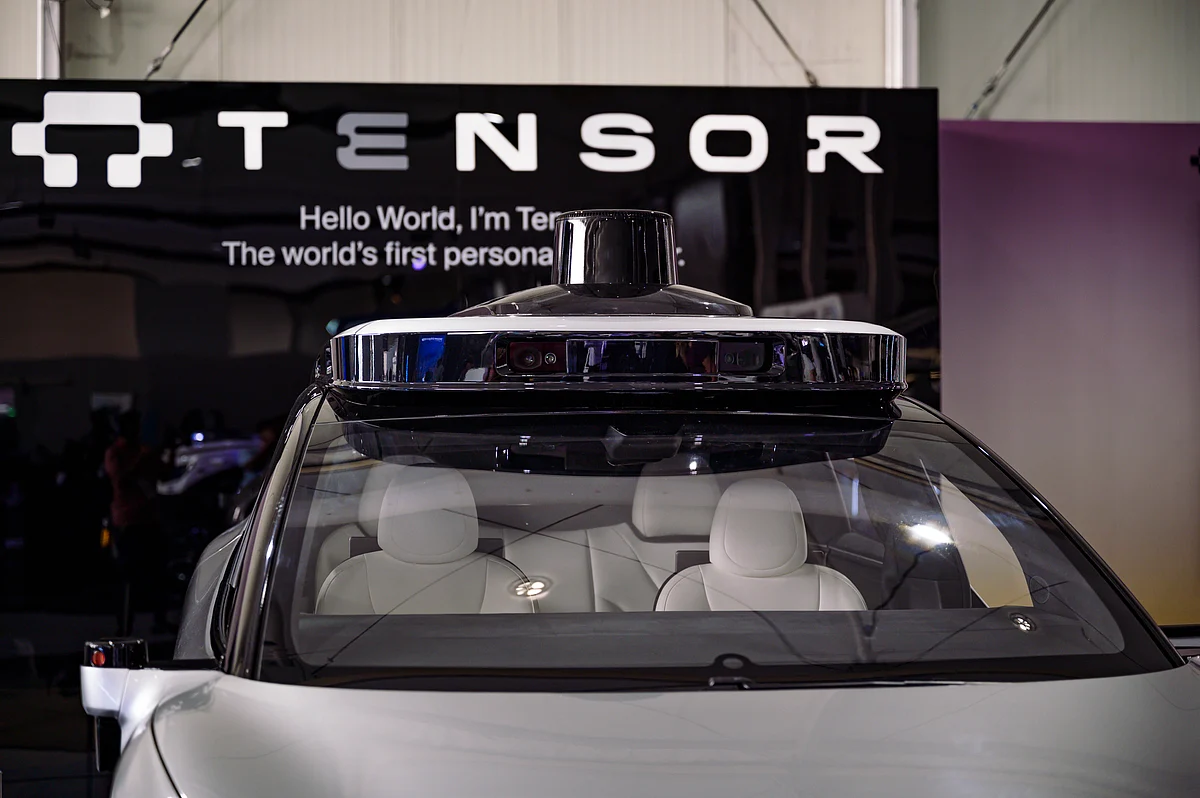
Tensor Features
The car boasts five LIDAR units—”one in the middle, two on the sides, one on top, and one at the rear”—alongside 37 cameras and over 100 sensors.
Each sensor comes with its own cleaning system: “There’s a wiper for this camera,” O’Dell demonstrated, pointing to the front. “Each LIDAR has a cleansing unit, ensuring that rain, fog, or other conditions don’t impair the vehicle’s safe operation.”
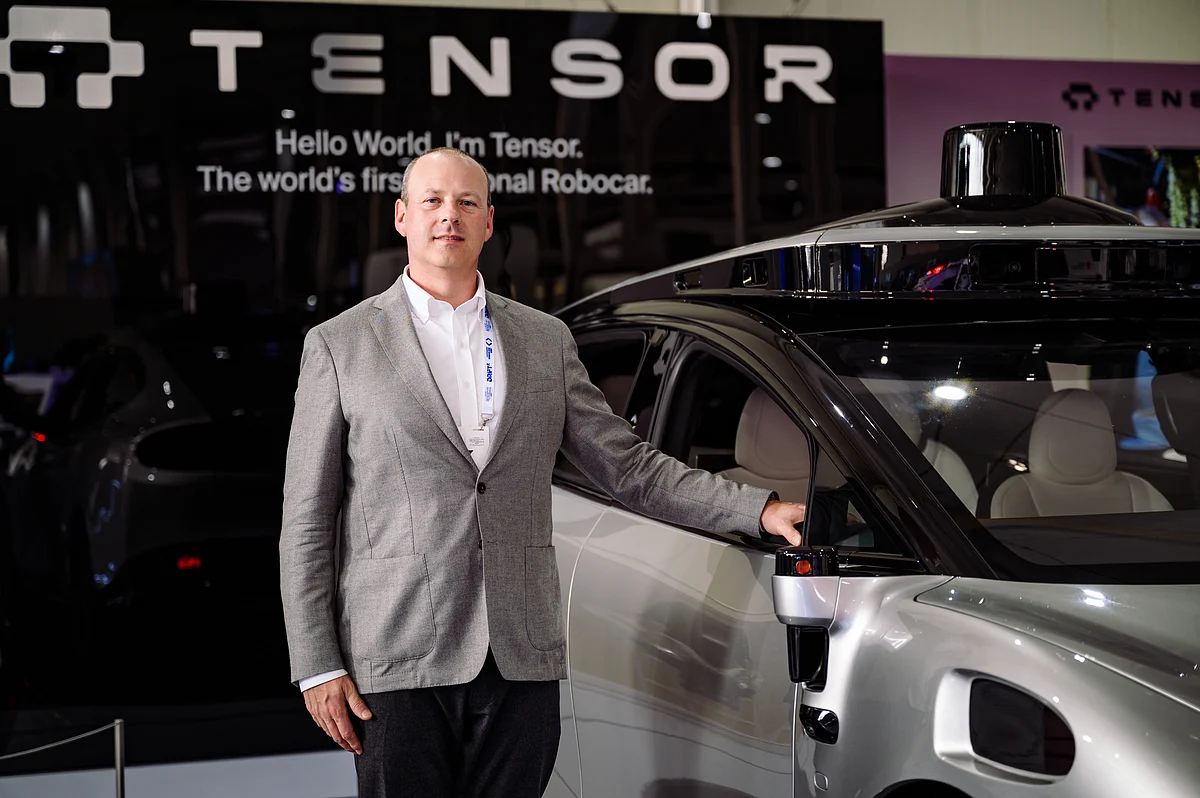
Eric O’Dell
This system is powered by eight NVIDIA Thor chips, which O’Dell described as “the most powerful automotive-grade supercomputer ever built into a car.”
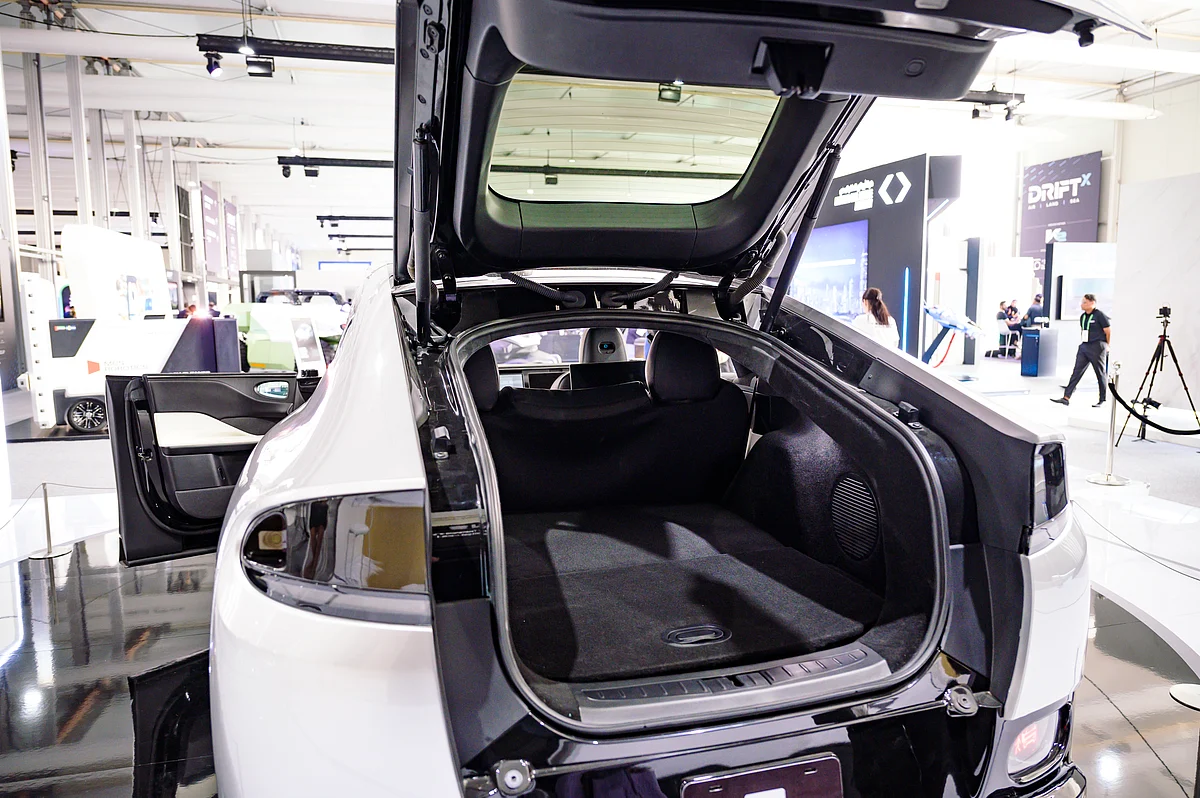
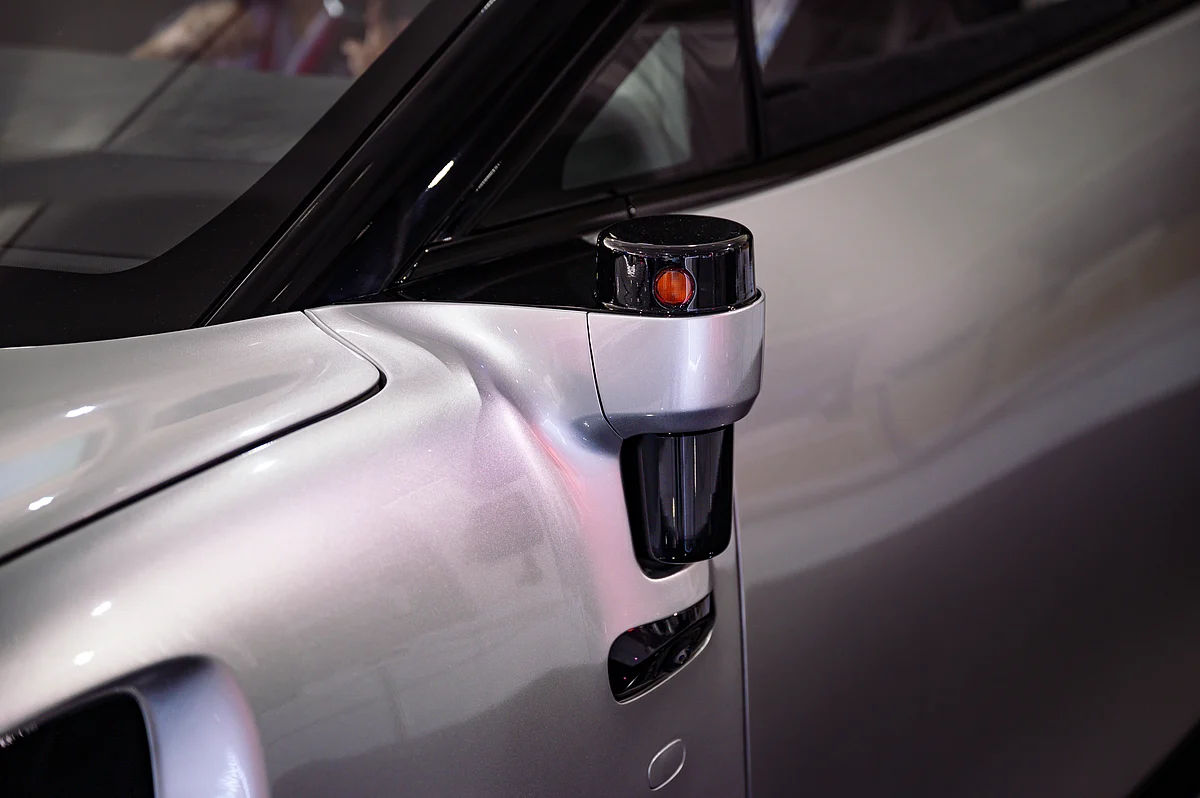
The vehicle has been rigorously tested in the UAE’s extreme heat and “performs well in rain, fog, and dust.” Its sensors include redundancy—”so if fog obscures the cameras, the LIDAR can still see.” The Tensor is equipped with run-flat tires, allowing safe travel even after a puncture.
Entering the Future
Inside, the atmosphere is more akin to a first-class lounge than a cockpit. “It features air suspension, ensuring a smooth ride,” O’Dell noted. “Once you’re inside, it feels like a luxury experience.”
In front, a large tablet illuminated the dashboard. O’Dell tapped a button, and the steering wheel folded away. “This is the world’s first foldable steering wheel,” he said. “When the vehicle is set to drive autonomously, the pedals retract, offering more legroom, and the tablet slides over, transforming the car owner into a passenger — eyes off, hands off, mind off.”
Control can be regained at “the touch of a button,” he added — “provided you are in a zone where autonomous driving is allowed.”
Passengers can manage everything—from navigation to entertainment—via the in-car screen or a mobile app. “You can sit in the back and use the iPhone app to direct it,” O’Dell said. The screen supports FaceTime, Zoom calls, and streaming services like Netflix and Spotify.
Luxury Beyond Autonomy
Tensor positions the car as a “luxury price point” vehicle, priced higher than a Tesla, with models for personal buyers and fleets. The company has already secured a deal with Lyft to supply 300 cars for ride-hailing in other markets. However, O’Dell emphasized that the UAE is the priority: “We’re starting here.”
When asked why someone would choose an autonomous car, he said: “People are seeking convenience. They want the option to drive or be driven… Sometimes you want to be productive or simply relax and disconnect from the road, and this car facilitates that.”
‘Safer than a Human’
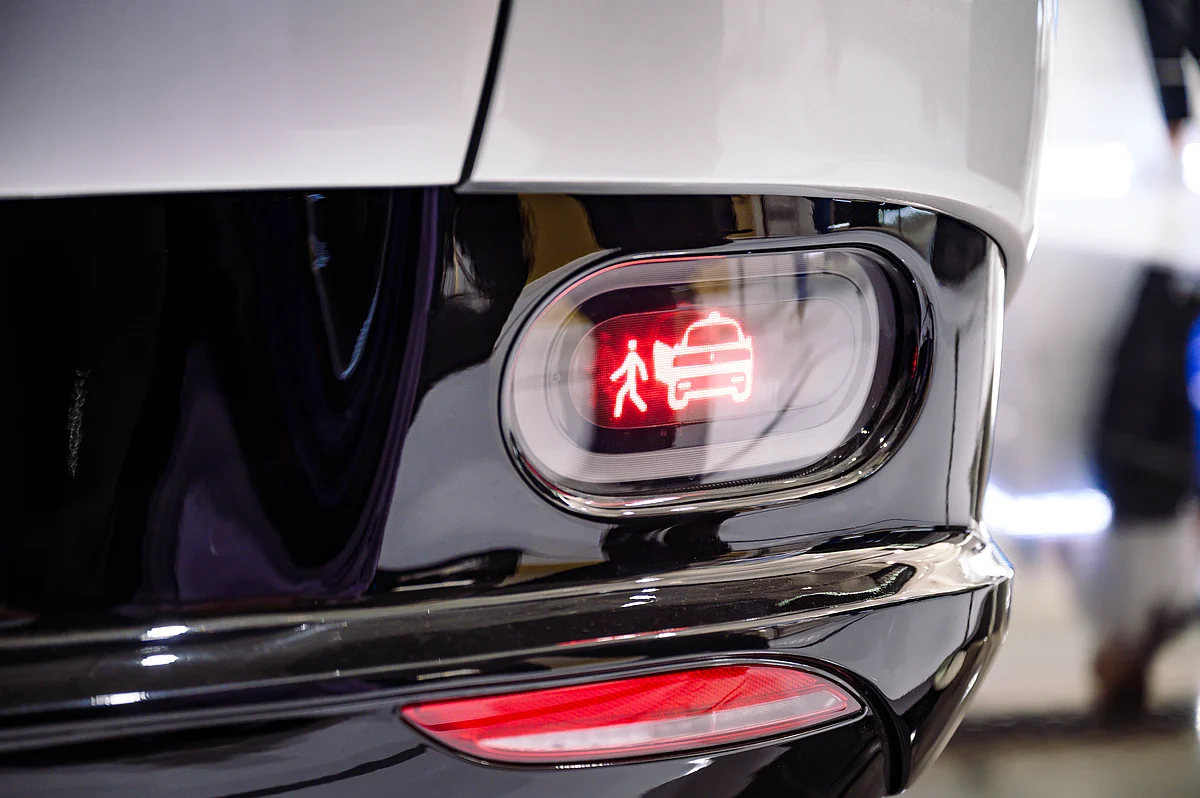
O’Dell assures that the Tensor is “the safest vehicle on the road” — not just due to its sensors, but its capabilities. “It can detect beyond human capacity,” he claimed. “Our proprietary LIDAR can spot a black tire on the road 300 meters ahead. With all the cameras, there’s redundancy ensuring multiple sensors monitor the same area.”
If the car is in driver mode, the driver is responsible. “But in autonomous mode, our insurance partners and we take responsibility,” he added. “We have such confidence in our autonomy system that we’re willing to underwrite that risk.”
As I exited—after remembering which button to press—it felt like stepping back from the future.