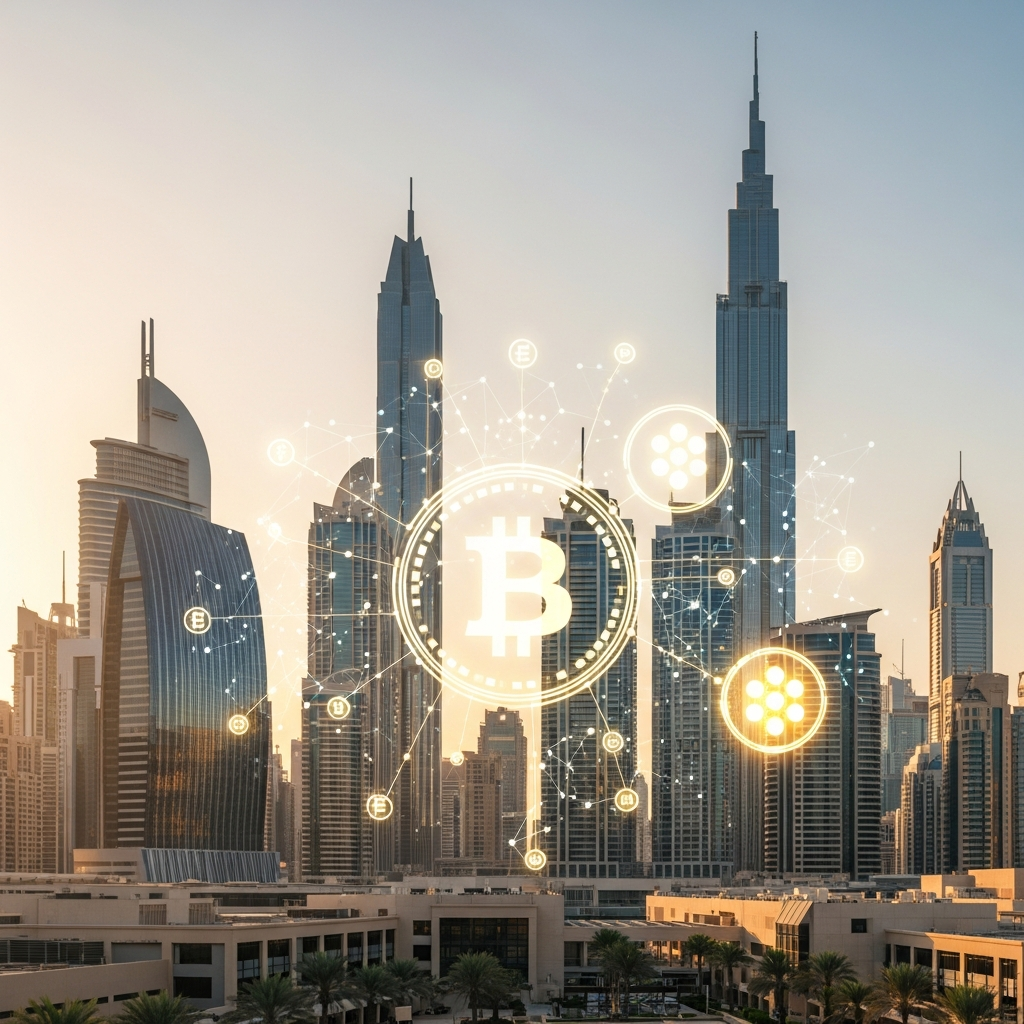
The UAE is rapidly establishing itself as a leading global hub for digital assets, with experts predicting it could become the Bitcoin equivalent of Wall Street. Early cryptocurrency adopters highlight the country’s clear regulations, welcoming business environment, and talent attraction as key drivers of this financial innovation surge.
Dr. Marwan Al Zarouni, CEO of the Dubai Blockchain Centre, noted that the UAE methodically developed its cryptocurrency framework. “We began with educational efforts in 2012,” he explained. “By 2016, when we introduced the Dubai blockchain strategy, regulators recognized the technology’s potential. We then embraced crypto, diving into regulation and licensing.”
He further mentioned that in 2018, the Dubai Multi Commodities Centre (DMCC) initiated the first over-the-counter (OTC) crypto trading license in the country, which he was the first to acquire. Dr. Marwan shared these insights during a panel on cryptocurrency adoption at the Bitcoin MENA conference in Abu Dhabi.
Stay informed with the latest updates. Follow KT on WhatsApp Channels.
His remarks followed closely on the heels of Binance, the largest cryptocurrency exchange globally, receiving approval from Abu Dhabi Global Market’s (ADGM) regulatory body to operate its platform.
Austin Alexander, partner at 10x capital and panel moderator, praised this development, noting Binance’s license was approved in just three and a half years. “If banking systems continue integrating with crypto, the UAE could become the world’s most liquid market for Bitcoin,” he said. “The UAE might well become Bitcoin’s Wall Street.”
Dr. Marwan concurred, stating, “This is the capital of capital. Now it’s up to individuals to decide if they want to come here.”
Regulatory Clarity
Speakers attributed the UAE’s success to its uniquely clear and competitive regulatory environment. Unlike regions with a singular regulator, the UAE offers varied licensing options for different digital asset businesses, such as VARA in Dubai, ADGM in Abu Dhabi, and DMCC’s Crypto Centre.
Panelist Paul Dawalibi, CEO of Innovation City in RAK, the first AI-powered free zone, said this flexibility makes the UAE particularly appealing. “Regardless of your virtual asset service, you can find a jurisdiction to get licensed,” he said. “Regulators here focus on activities, not whether an asset is a security or utility token.”
This clarity has attracted numerous global companies to establish regional or global headquarters in the UAE. Dr. Marwan mentioned Bitpanda, a European exchange, which recently secured a broker license and partnered with UAE banks to offer direct Bitcoin trading. Earlier this year, the UAE’s Central Bank approved Zand Bank to launch a regulated, multi-chain UAE dirham-backed stablecoin on public blockchains.
Humble Beginnings
During the discussion, Dr. Marwan reminisced about his introduction to Bitcoin while serving as a forensic investigator for Dubai Police. Captivated by the technology, he aggressively mined cryptocurrency, often neglecting basic needs. “I mined intensively, traveling and purchasing whatever was necessary,” he recalled. “I reinvested in Bitcoin and advocated for it both locally and globally.”
Austin remembered when he and Dr. Marwan were among just a handful involved with Bitcoin in the country. “We organized small meetups and even persuaded a pizza shop to accept Bitcoin,” he said, reflecting on the modest beginnings of cryptocurrency in the UAE.
Paul shared how he once used Bitcoin to buy skins for his Counter-Strike character. “It’s not the greatest investment story ever,” he chuckled. “The current dollar value of what I spent on Counter-Strike skins is quite staggering.”