The UAE is steering its powerful industrial foundation towards the realm of high-tech manufacturing, emphasizing renewable energy, semiconductors, AI technologies, and electric vehicles. This strategic redirection was unveiled at the seventh UAE Government Annual Meetings in Abu Dhabi.
During the meetings, Dr. Sultan Al Jaber, UAE Minister of Industry and Advanced Technology, presented a forward-thinking industrial vision that leverages the country’s existing strengths while branching into high-growth, technology-driven sectors.
“The world is evolving, and the rate of change is accelerating,” Dr. Al Jaber remarked. “Today’s indicators will not resemble tomorrow’s reality. Change occurs rapidly, so we must anticipate these shifts and remain agile in response.”
Stay informed with the latest updates. Follow KT on WhatsApp Channels.
Capitalizing on existing strengths
The minister highlighted that the new industrial strategy will build on the UAE’s established expertise in petrochemicals, aluminum, steel, and other resource-based industries to expand into advanced manufacturing.
“We are prioritizing the development of new industries rooted in our robust resources like petrochemicals, aluminum, steel, and rare earth materials,” he stated.
This strategy aims to form industrial clusters that merge traditional strengths with emerging technologies.
Focusing on renewable energy, semiconductors, data center components, AI infrastructure, energy storage batteries, and electric vehicles signifies a comprehensive push into sectors anticipated to shape global economic competitiveness in the coming years.
Notable growth since 2020
The ambitious future vision is grounded in remarkable achievements since the Ministry of Industry and Advanced Technology’s inception in 2020, amid the Covid-19 pandemic.
Dr. Al Jaber highlighted that the industrial sector’s GDP contribution surged by 62% to $120 billion, while industrial exports grew by 68% to $197 billion.
“These results were achieved through hard work, strategic planning, and unwavering support from our wise leadership,” Dr. Al Jaber said.
The ministry was established to transform the industrial sector from mere administrative oversight to a primary economic driver.
Priority was given to sectors with direct GDP impact, including pharmaceuticals, food security, and essential supplies, while ensuring supply chain sustainability and establishing a robust quality standards framework.
The in-country value transformation
A key success factor has been the National In-Country Value (ICV) program, which has significantly altered national spending flows.
The program redirected Dh210 billion into the national economy in 2024, marking a 244% increase since 2020.
Beyond its financial impact, the ICV program has become instrumental in Emiratisation, with 22,000 UAE nationals now employed in private sector companies, reflecting a 260% growth.
The program spans key economic sectors including energy, healthcare, aviation, telecommunications, infrastructure, and finance.
National champions paving the way
Dr. Al Jaber emphasized the crucial role of national companies in driving industrial growth, with ADNOC exemplifying successful public-private partnerships.
ADNOC has contributed over Dh242 billion to the national economy and dedicated Dh90 billion to local manufacturing in collaboration with global partners.
“Before the Ministry of Industry and the Made in the UAE initiative, companies operated independently. Now it’s organized and clear. We aim to enhance our national industrial capacity within this framework,” Dr. Al Jaber explained.
Another key player is TA’ZIZ, ADNOC’s downstream chemicals joint venture, investing over Dh30 billion in chemical and transformation industries. The Ruwais Industrial Complex now produces over 5 million tonnes of polymers annually, exported to more than 50 countries.
The ‘Made in the UAE’ platform
Central to the ministry’s strategy is the ‘Made in the UAE’ initiative, a comprehensive national program uniting developers, manufacturers, and businesses.
Since its inception, the platform has identified over 4,800 products for local production, valued at Dh168 billion.
To support this manufacturing drive, the ministry partnered with the Emirates Development Bank to offer competitive financing solutions.
The bank has allocated Dh40 billion to support national industrial projects, ensuring guaranteed purchase by national companies, offering manufacturers assured demand and reduced investment risks.
Global recognition and quality infrastructure
The UAE’s industrial transformation has gained global recognition. In the past three years, the nation has risen five places to 27th globally and first in the Arab world on the Competitive Industrial Performance Index. It also ranks fifth globally on the Quality Infrastructure Index.
These achievements are supported by a sophisticated quality and standards ecosystem, implementing over 220,000 national standards and accrediting 120 laboratories to international specifications. “Today, this system underpins global trust and market confidence in UAE-manufactured products,” Dr. Al Jaber noted.
From traditional to smart manufacturing
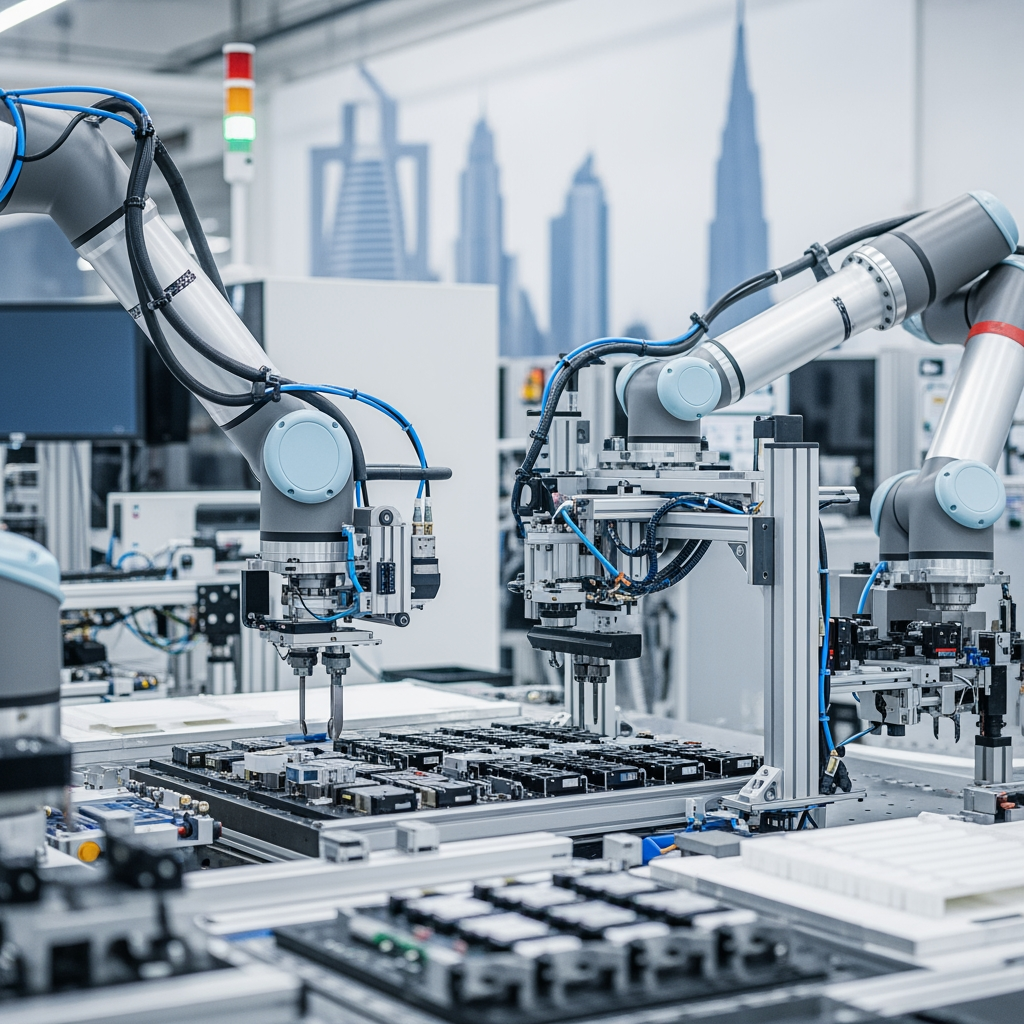
A key element of the ministry’s approach has been transitioning from traditional manufacturing to smart industries utilizing modern technologies, advanced techniques, AI, and the Fourth Industrial Revolution.
“This has enabled us to boost economic productivity and enhance local product competitiveness,” he said.
This focus on advanced manufacturing technologies positions the UAE to compete based on innovation, quality, and speed—key factors in the high-tech sectors the nation targets.