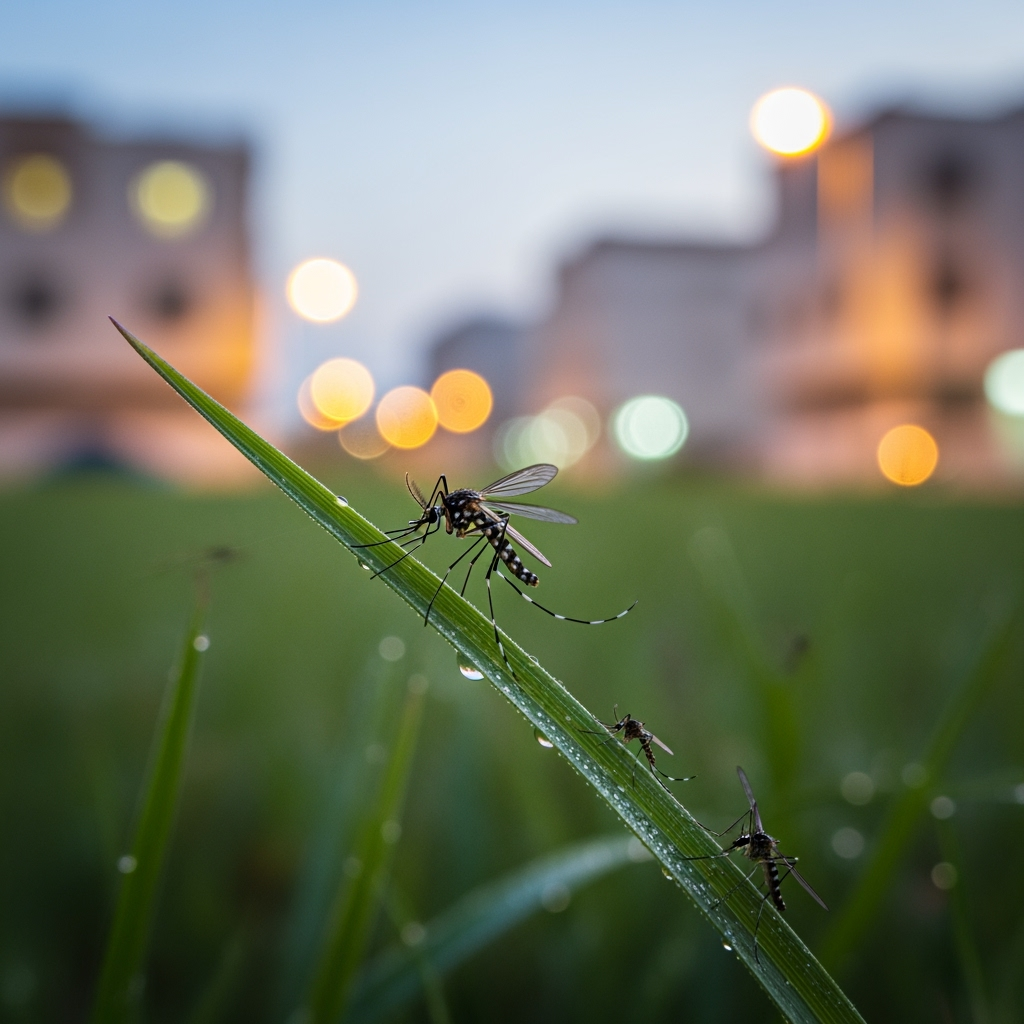
As the UAE gradually approaches the end of summer, residents are eagerly looking forward to cooler temperatures and refreshing rains. However, autumn in the UAE also brings an unwelcome increase in mosquitoes.
These parasitic insects thrive in humid areas and stagnant water, where they breed. Known to carry serious diseases like dengue fever, mosquitoes are classified as ‘public health pests’ by the Dubai Municipality. They can bite both day and night, and while present year-round, their numbers rise after rainfalls. Depending on species, humidity, temperature, and other factors, mosquitoes can live for two to four weeks.
Stay updated with the latest news. Follow KT on WhatsApp Channels.
Here are some ways to prevent mosquito bites:
-
Avoid areas with stagnant water, as they provide breeding grounds for mosquitoes. Report such sites to authorities by calling 8003050.
-
Install flyscreens on windows and doors if you wish to keep them open at any time. Always keep them closed if flyscreens are absent.
-
If mosquitoes get inside your home, chemical sprays offer a fast solution.
-
If you prefer to avoid chemicals due to children or pets, use a UV insect trap in each room, which works best in the dark.
-
In Dubai, a free pest control service is available via Dubai Municipality’s call centre, official app, or website chatbot.
-
The Dubai Municipality website lists authorized pest control providers. It is crucial to engage only authorized companies to prevent health hazards from pesticide misuse.
Measures by Authorities
In January, Dubai introduced a high-tech solution to its mosquito issue by installing 237 smart traps throughout the city. These eco-friendly, solar-powered traps offer continuous monitoring, allowing authorities to track and eliminate mosquito breeding spots.
Sharjah initiated a citywide campaign in April to control mosquito populations, regularly targeting common breeding areas such as public roads, parks, and residential outdoor spaces.