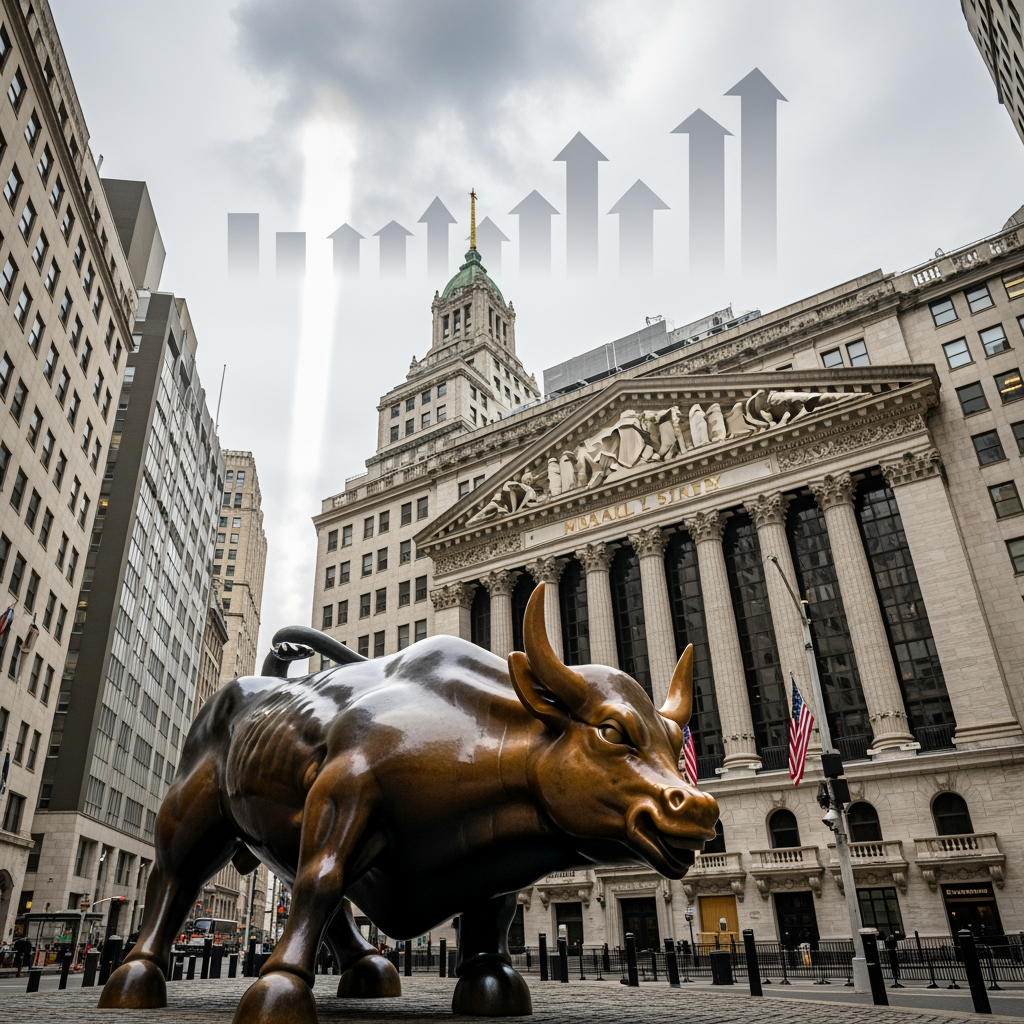
On Monday, Wall Street’s primary indexes rose as progress in Washington pointed to resolving the record government shutdown, which has delayed economic data releases and heightened economic concerns.
On Sunday, senators moved a House-approved bill forward with a procedural vote to fund the government until January 30. If the Senate passes it, the bill will need House approval and President Donald Trump’s signature, potentially taking a few days.
“The government shutdown lasted longer than expected, with concerns about the economy, possible flight cancellations, and broader economic impacts,” said Chris Zaccarelli, CIO at Northlight Asset Management.
“This negativity supported bearish views in the tech sector last week,” he added.
Tech stocks surged, with Nvidia up 3.4%, while Alphabet and Meta Platforms increased by 2.5% and 1.5%, respectively. Information technology and consumer discretionary stocks provided the most significant boosts to the S&P 500 index.
However, Home Depot dropped nearly 2%, affecting the Dow.
By 11:48 a.m. ET, the Dow Jones Industrial Average was up 7.14 points, or 0.02%, the S&P 500 rose 47.90 points, or 0.71%, and the Nasdaq Composite climbed 310.37 points, or 1.35%.
The CBOE volatility index decreased by 0.8 points to 18.26, pulling back from a three-week high on Friday.
The Russell 2000 small-cap index gained 0.6%, while a broader semiconductor index climbed 2.1%.
Airlines faced pressure as flight cuts and staffing absences continued to disrupt U.S. air travel, with United Airlines and American Airlines each dropping over 1%.
According to betting site Polymarket, predictions for ending the shutdown this week stood at 85%.
The longest federal shutdown in history has created a data void for the Federal Reserve and markets, relying on private data that has provided a mixed economic picture.
Some Fed officials reiterated their caution on monetary policy decisions at the central bank’s next meeting, while Fed Governor Stephen Miran repeated his call for a significant rate cut.
Optimism about artificial intelligence has driven a bull run in U.S. stocks this year, but concerns over monetization and spending in the sector led to a sell-off in tech stocks last week, marking the Nasdaq’s worst performance in over seven months.
Meanwhile, the third-quarter earnings season is nearing conclusion. Of the 446 S&P 500 companies that have reported, 83% have exceeded earnings expectations, according to LSEG data.
Health insurer shares fell after the U.S. Senate reached a deal to end the 40-day federal shutdown without extending Affordable Care Act subsidies, setting up a December vote on the issue.
Centene dropped 8.5%, reaching the bottom of the S&P 500, while Humana and Elevance Health each lost about 4%.
Metsera fell 15% as Pfizer won a $10 billion bidding war to acquire the company.
Eli Lilly shares rose 4.9% to a record intraday high after Leerink Partners upgraded its stock rating.
Advancing issues outnumbered decliners by a 1.77-to-1 ratio on the NYSE and a 1.65-to-1 ratio on the Nasdaq.
The S&P 500 recorded 20 new 52-week highs and seven new lows, while the Nasdaq Composite saw 75 new highs and 92 new lows.