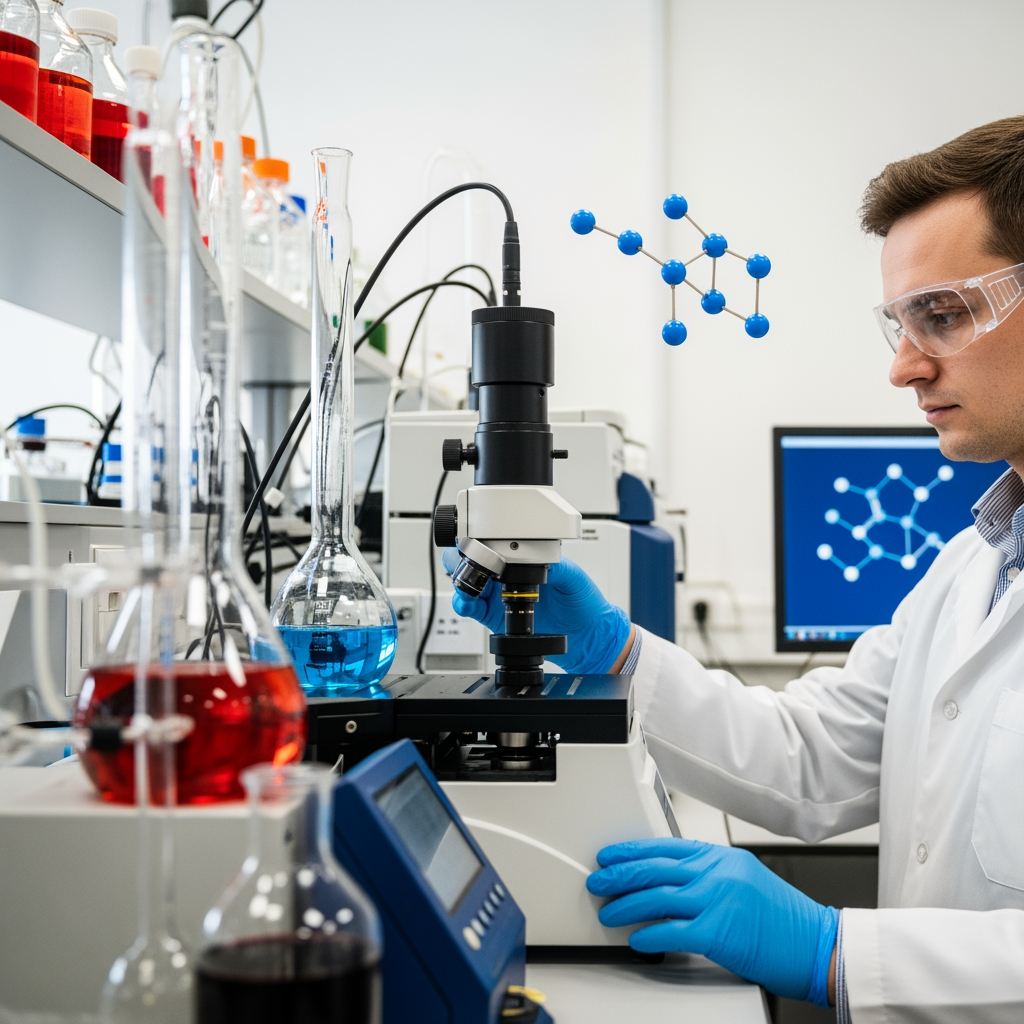
Yaroslavl – A statement issued by the provincial government today, Friday, announced that Yaroslavl State Technical University has created “Pirocomanoperimidinates” (complex molecules with a compound ring structure, used in medical research as antibacterial and anti-aging agents). These molecules are capable of treating diseases resistant to current antibiotics, slowing down cell aging, and possess antioxidant properties.
Dmitry Yunusov, Minister of Social Affairs and Scientific and Technological Development of the Yaroslavl Province, described this as the result of successful work and the effective use of available scientific capabilities and resources in the province. He added that the work is being conducted in collaboration with leading research laboratories and its results hold tangible practical potential, represented in innovative and effective solutions.
Elena Stepanova, the head of Yaroslavl State Technical University, noted that the new molecules developed have a unique mechanism of action against pathogens and will undoubtedly provide humanity with a safer future. The scientists at the university have made significant efforts in developing a new class of biologically active molecules, which may represent an important achievement in the field of Russian pharmaceuticals.
Galina Rebina, Director of the Institute of Chemistry and Chemical Technology at Yaroslavl State Technical University, stated that the manufactured molecules demonstrated strong antibacterial and antioxidant activity. According to the provincial government’s statement, the next step will be pre-clinical studies. Initial experiments helped in evaluating the activity of the new molecules against a variety of bacterial strains, while modeling assessed their potential impact on the human body.
The research was conducted at Yaroslavl State Technical University in collaboration with representatives from the Moscow Institute of Physics and Technology and the Pharmaceutical Technology Transfer Center at Yaroslavl State Pedagogical University.