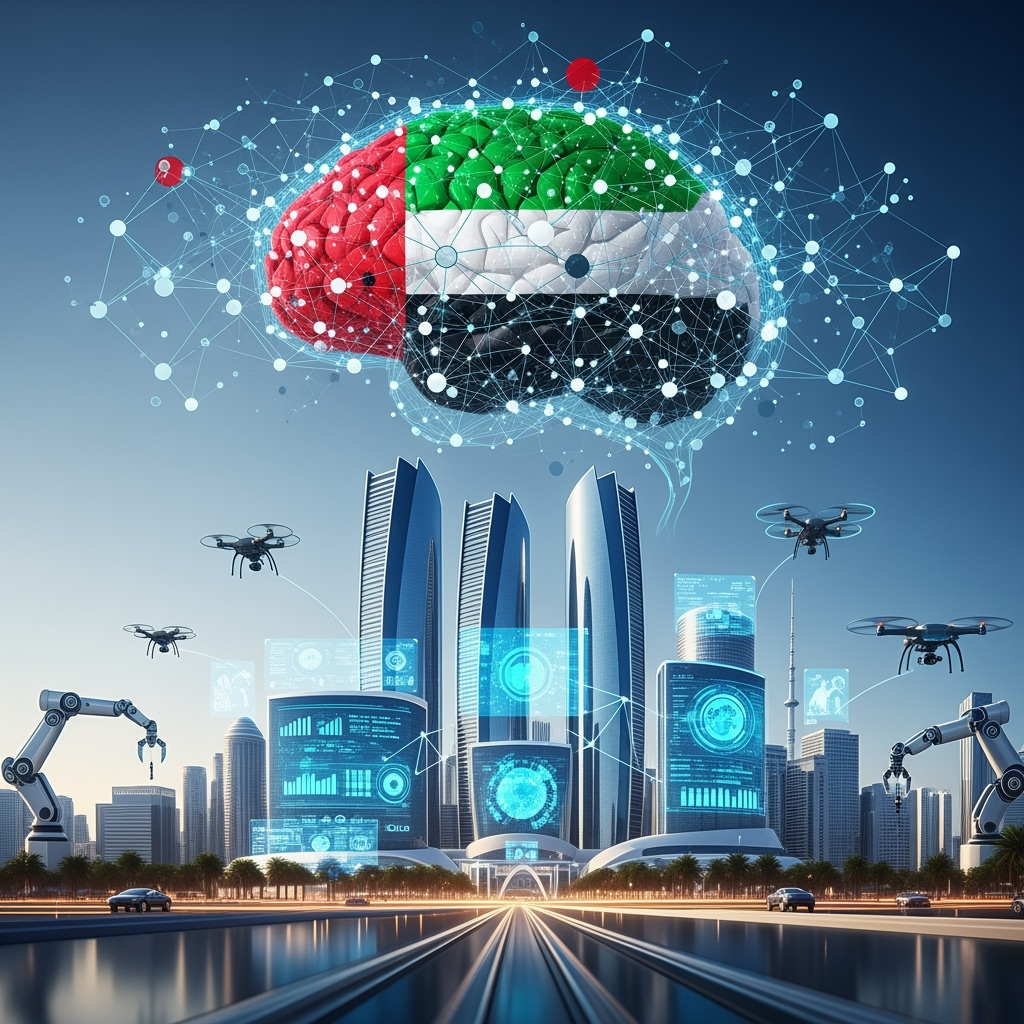
Abu Dhabi is on an ambitious journey to become the world’s first AI-powered native government by 2027, paving the way for improved government services and job opportunities for Emiratis, according to experts.
On Tuesday, the emirate announced a Dh13 billion budget to realize this vision, aiming to create up to 5,000 jobs for local talent.
Shiva Pillai, a project delivery expert at a high-tech firm in Abu Dhabi, highlighted the transformative potential of an AI-native government in areas such as cybersecurity, disaster preparedness, healthcare, law enforcement, and procurement.
Stay informed with the latest updates. Follow KT on WhatsApp Channels.
“AI enables better service predictions, enhancing citizens’ quality of life, boosting economic growth, and streamlining decision-making,” he noted.
However, challenges such as data breaches and service delivery inequalities due to inconsistent data remain.
“AI thrives on clean data, which might not be uniformly available for all residents. The cleaner the data an individual has, the more benefits they reap,” he explained, stressing that clean data means consistent information across systems.
He shared personal experiences of inconsistencies in gender titles and name spellings causing delays in procedures.
Additionally, embracing an AI-native government requires a cultural shift for acceptance. Pillai noted that despite self-service options at telecom and bank centers, many still prefer in-person help. Similarly, adapting to AI will require a mindset change among residents.
Regarding job opportunities, Pillai stated that demand will focus on machine learning engineers, AI engineers, data scientists, and robotics engineers, suggesting these areas for UAE nationals’ training.
Sultan Al Hajji, vice president at MBZUAI, remarked: “Soon, we’ll see more roles intersecting AI and robotics, as well as ethics and ethical AI system development.”
“MBZUAI leads in training AI practitioners through our M.Sc. and Ph.D. programs, plus programs for leaders like MEP and workshops,” he added.

Tech expert Sami Abd Alnour noted the strategy’s rise of AI roles like policy advisors, compliance officers, governance officers, and quality assurance specialists, alongside roles for designers, developers, cybersecurity experts, and trainers maintaining AI systems.
“For UAE nationals, roles merging AI with governance, ethics, and strategy are attractive, aligning with the nation’s focus on responsible AI and tech leadership.”
Abd Alnour mentioned that implementing Abu Dhabi’s AI-native strategy requires new infrastructure.
“This move demands powerful computers and advanced data centers. Sovereign cloud computing will ensure data security, scalability, and sovereignty.”
A centralized enterprise system will optimize processes and enhance collaboration between government and private sectors. Automation will reduce bureaucracy, “eliminating unnecessary service steps and empowering AI-driven e-services for efficient issue resolution.”
“This transformation will make life faster, smoother, and more convenient for citizens.”
“AI-enabled monitoring systems will keep the government secure and future-ready,” he added.
Personal data protection and reduced cyberattacks are expected benefits.
He described a fully native AI government as “AI integration across governance, from decision-making to citizen interactions and planning.”
Key benefits include streamlined operations, enhanced decision-making through real-time insights, cost reduction, and improved citizen experiences with faster, accessible services.
ALSO READ:
Abu Dhabi unveils Dh13 billion strategy for world’s first ‘fully AI-native govt’ by 2027
UAE: Over 60% of employees worry about future skill relevance