In a tech lab in Abu Dhabi, engineers are advancing robots beyond basic commands. Their aim is to enable machines to reason, adapt, and decide like humans—an achievement that could revolutionize industries and everyday life.
The TII-NVIDIA facility is the first Nvidia AI Technology Centre in the Middle East, focusing on robotics, and one of the few globally combining large language models with real-world robotics, positioning Abu Dhabi alongside Silicon Valley and Shenzhen.
“Unlike most labs focusing on a single topic, our lab separately explores advanced AI and robotics and integrates them to build future intelligence,” Dr. Hakim Hacid, Chief Researcher at TII’s AI Research Centre, told Khaleej Times.
Stay updated with the latest news. Follow KT on WhatsApp Channels.
The lab utilizes TII’s Falcon language models with Nvidia’s Thor chip, crafted for robotic applications. Projects include adapting robotic arms for manufacturing changes and four-legged robots for desert environment inspections, among others.
“By merging Nvidia’s computing platforms with TII’s robotics and AI expertise, we’re creating robots that can perceive, reason, and act in complex settings,” Hacid explained.
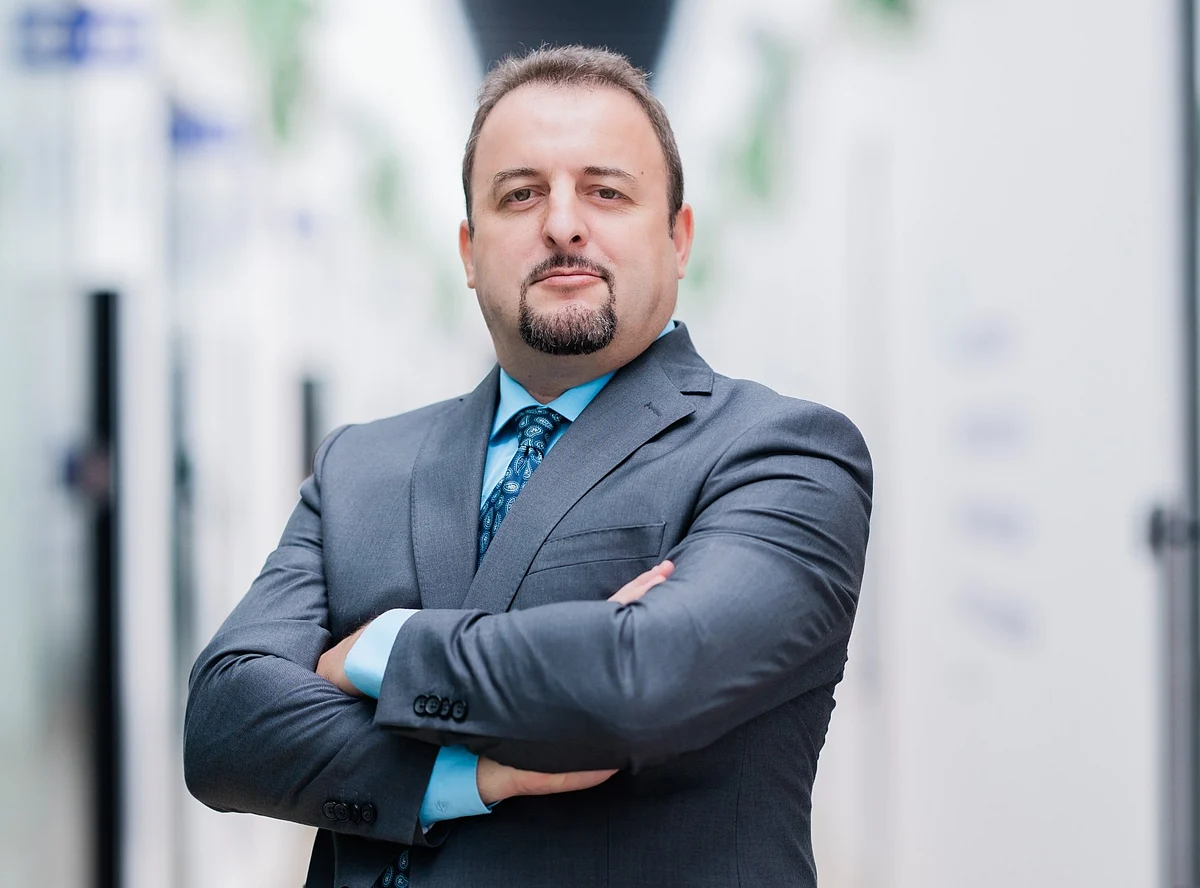
Photo: Dr Hakim Hacid
The research spans sectors like logistics, healthcare, smart cities, and environmental monitoring. In warehouses, robots could autonomously manage operations. In hospitals, they could assist in patient care, discerning when human help is necessary.
This collaboration places the UAE among AI and robotics research leaders, where the US and China currently lead.
“With this lab, Abu Dhabi strengthens its role as a global AI and robotics leader, both competing and collaborating. We’re building the next generation of intelligent systems for safe, effective large-scale operation,” said the lead researcher.
Talent development is crucial. UAE’s young engineers gain unique opportunities to work with global experts, fostering local technology development instead of importing.
“This lab provides young talents with exceptional exposure to top researchers and engineers, offering real-world problem-solving experiences to nurture future innovators and leaders,” Hacid stated.
Integrating TII’s Falcon models enhances regional understanding and Arabic language capabilities, addressing gaps that international AI systems face in the Middle East.
“This lab aims to advance sectors reliant on real-time decision-making and autonomous systems,” Hacid told Khaleej Times. “The focus is on technologies ready for deployment, not just experimental.”
Current projects include collaborative systems working safely with humans, ultimately developing human-like robots to aid in work and daily life.
“By blending Falcon with Nvidia’s computing platforms, we aim for machines to comprehend language, interpret environments, and act contextually,” Hacid told Khaleej Times.
Looking forward, the chief scientist anticipated breakthroughs: “AI-driven robotics systems and increased automation levels, enhancing productivity, performance, and economy.”
In factories, hospitals, or smart cities, breakthroughs from this Abu Dhabi lab could accelerate the integration of intelligent machines into daily life in the UAE.