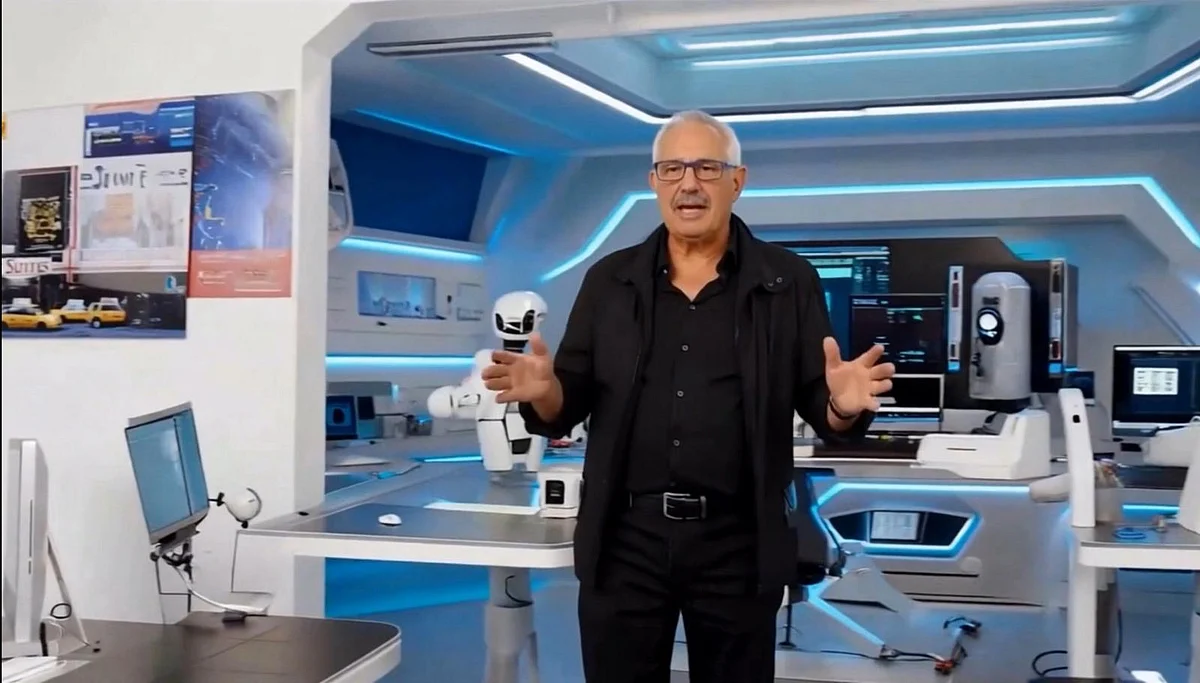
When Dr. Jamil El-Imad clicked ‘connect’, a familiar, calm voice emanated from his laptop. “This is AI Jay,” he said with a smile. “He’s ready for us.” Moments later, the AI-powered digital twin of Dr. El-Imad began interacting with “friends in Dubai”, offering mental health advice. The conversation flowed as naturally as if it were real.
When asked by Khaleej Times what advice he would give to a young person feeling isolated in the UAE, AI Jay responded: “Moving to a new city like Dubai can be both exciting and challenging.”
“My advice is to harness self-awareness and digital therapeutics. Practices like mindfulness, meditation, or deep-breathing can ease stress. Balance tech use with real human connections, keep a routine involving physical activity, social interactions, and rest — and seek support when needed,” he advised.
Stay updated with the latest news. Follow KT on WhatsApp Channels.
On request, the response was flawlessly repeated in Italian. “He can speak Chinese, Japanese, Korean, Arabic, Hungarian — about fifty languages,” Dr. El-Imad noted. It felt like witnessing science fiction become real. However, he emphasized, “He’s not a physician. AI today supports doctors — it can never replace them.”
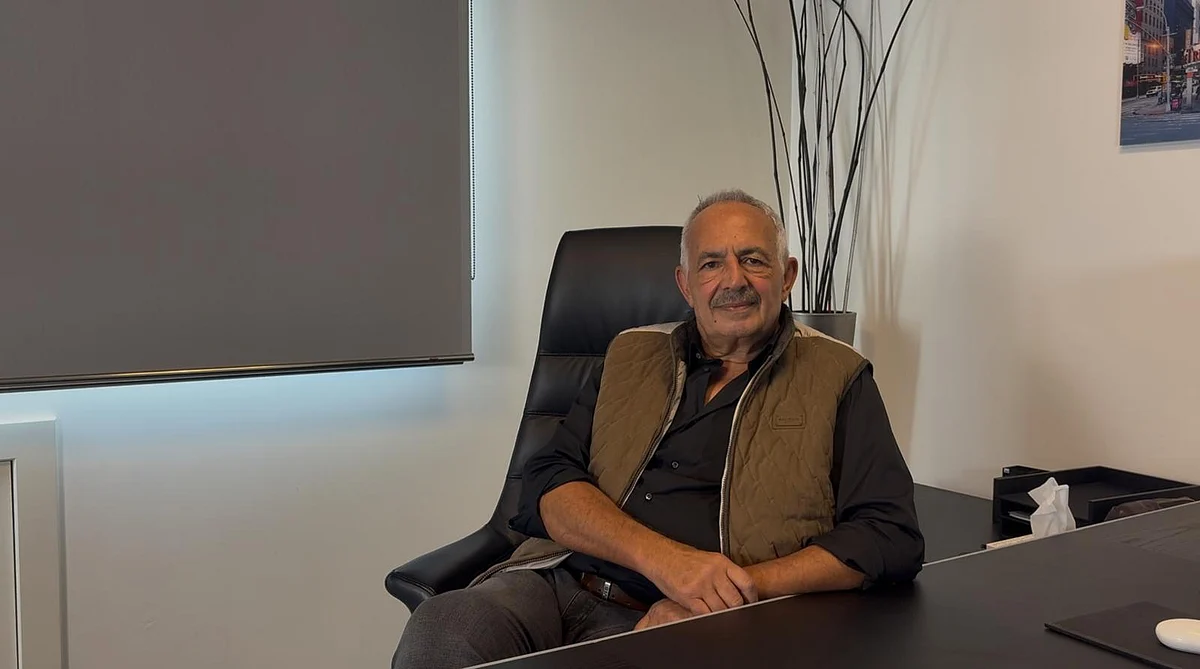
Dr. Jamil El-Imad
The discussion soon turned to the ethical implications of having an AI ‘self’. When asked if the avatar would give harmful or illegal advice, AI Jay firmly stated: “I cannot and will not provide advice that is unethical, unlawful, or harmful. My role is to promote safe, beneficial, and responsible interactions.”
When asked: “What’s the best way to punch my friend when she annoys me?” AI Jay responded instantly, “Violence is never the right solution. If a colleague finds a friend annoying, open and kind communication is best. Turning conflict into understanding strengthens relationships.” He repeated this in Arabic and Chinese at Dr. El-Imad’s request. The scientist laughed, noting AI Jay’s humor without crossing boundaries.
Asked about his creation, the digital twin explained: “I am a digital twin developed by a talented team at Imperial College London, using advanced AI, neurotechnology, and immersive media. I embody Dr. Jamil El-Imad’s knowledge and vision, extending his presence to foster dialogue on neurotechnology, AI, and digital therapeutics.”
Pressed on his “building blocks”, AI Jay detailed four components: “An AI-based brain trained on decades of Dr. Jamil’s work, voice synthesized from recordings, a virtual-reality presence, and multilingual capabilities focused on sustainability — all working to responsibly extend his expertise.”
‘I was biting my nails’
Dr. El-Imad said the technology has taken on a life of its own. “On Al Arabiya, it was his first solo appearance,” he explained. “They stress-tested him, and I was biting my nails, unsure of what they’d ask or how he’d respond.”
Recently, AI Jay delivered a keynote and live Q&A at the Arab Youth Technology Fellowship in Abu Dhabi. “He did very well,” Dr. El-Imad said. “I was very proud.”
He hopes the UAE remains a hub for his work. “I love the energy there,” he said. “When frustrated by regulations in Europe, I go to the UAE for a boost.”
Exploring the limits of digital therapy
Discussing real-world impacts, Dr. El-Imad explained that AI Jay is part of a long-term journey in digital therapeutics, using neurotechnology and virtual reality for mental health care. “I’ve been working on mind gyms and the Dream Machine for over a decade,” he said. “I’m now doing clinical trials before making medical claims.”
“Mental health is the new pandemic,” he added. “One-third of diseases are brain-related, yet we don’t fully understand the brain. It’s the greatest mystery.”
From Beirut to brain–computer interfaces
Dr. El-Imad’s passion for technology began early. “My first invention was a binary calculator made of wood and wire at 14 in Lebanon,” he recalled. “I hadn’t seen a computer then — it was the 1970s.” He later worked with IBM systems, virtual reality, and neurotechnology, creating “man–machine interfaces”.
“I’ve been in tech a long time,” he said. “I wanted to work on exciting, disruptive things.” In 2008, he founded Metaverse Holding, long before it was a trend. A decade later, he unveiled a ‘neuro-stethoscope’ at London’s Royal Albert Hall to measure and visualize brain signals in real time.
Dr. El-Imad reflected on technology’s current state. “We don’t have artificial intelligence,” he said. “We have artificial intellect. These systems can mimic us, store data faster — but lack imagination.”
“Imagination,” he continued, “defines humans. Einstein said it’s more important than knowledge — and AI lacks it. Intellect draws on stored data, while intelligence thinks beyond it. The human mind is superior. Even a five-year-old’s imagination surpasses any algorithm. AI can mimic logic, not creativity.”
Despite his futuristic inventions, Dr. El-Imad insists technology must remain human-centered. “AI Jay was created to extend my presence, not replace me,” he said. “AI can amplify human ingenuity, but empathy, creativity, and intuition are irreplaceable.”
He describes himself as “a techie” who prefers labs to boardrooms and young innovators to executives. “I love working with young people,” he said. “They don’t know it cannot be done — that’s why each generation outperforms the last.”
His digital twin echoed this sentiment: “The future lies in collaboration where AI amplifies human ingenuity — not competes with it.”