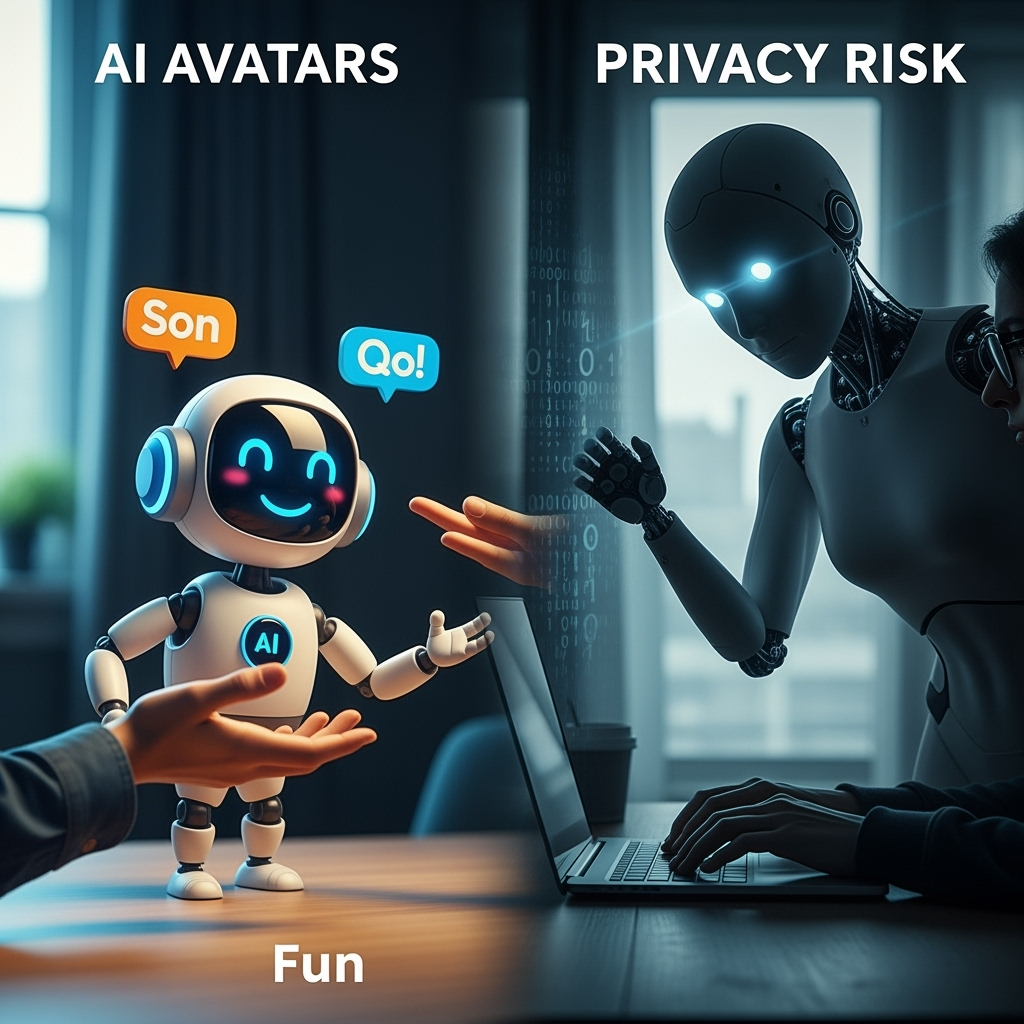
Have you ever used an AI app to transform your photo into a cartoon avatar? What seems like innocent fun has now raised serious concerns from Abu Dhabi authorities. The Department of Government Enablement has warned residents that such apps might expose biometric data—unique facial characteristics that, if breached, cannot be replaced. Simply by uploading one image, users might unknowingly be training AI systems to identify their faces, leading to risks like identity theft, fraud, and the creation of realistic deepfakes.
Privacy risks in avatar trends
Earlier this year, trends like Studio Ghibli-inspired avatars exploded on social media, followed by the Barbie Box challenge, allowing users to create boxed versions of themselves. While engagement soared, experts highlighted the hidden risks. Nicolai Solling, CTO of Help AG, noted that many avatars capture more than just a stylized image. “Uploaded photos might include metadata like device details and location, inadvertently revealing your whereabouts,” he warned.
Social media experts agree that these AI trends succeed because they tap into creativity and self-expression. However, the data driving them can also be misused by malicious entities or absorbed by platforms to train AI systems without explicit consent. Unless users opt for premium services, their photos might be repurposed to enhance algorithms, raising concerns over data ownership and control.
Interestingly, AI tools themselves are beginning to impose limits. During the Barbie Box challenge, some users noticed ChatGPT refused to create hyper-realistic action figures from real photos due to content policy restrictions. While it allowed cartoon-inspired versions, this refusal highlighted a significant point—AI platforms are shaping what is permissible, blurring the lines between fun, ethics, and safety. This digital self-regulation shows growing awareness of how realistic likenesses can be misused. But as one UAE resident noted, the difference between “inspired by” and “modeled exactly” might seem minor to users, especially if their photo is still uploaded and processed in the background.
The cultural shift of AI-generated content
For many, these viral challenges aren’t just temporary fads but part of a broader cultural change. Sam Proctor, head of technology at Asset Integrity Engineering, views them as “early signs of a larger pattern of AI consumerization.” As tools become more advanced and accessible, people will likely continue experimenting with identity and creativity, merging play, nostalgia, and technology.
However, this shift has faced criticism. Some marketing professionals say AI-generated content dilutes originality, threatening creative industries. Tayiba Ahmed, head of audience engagement at Street FZC, believes AI should complement brainstorming rather than replace human creativity. “It’s great for generating references you might not find online,” she said, “but lacks the genuine effort behind artistic expression.”
Trust in digital systems
The core issue isn’t just about avatars or cartoon filters, but about trust. Who owns the data shared with AI apps? What happens to biometric information once uploaded? Christoph, a UAE-based privacy expert, warned this data might be stored, reused, or even sold. Beyond faces, AI can infer age, gender, mood, ethnicity, and location. “Unless users request deletion, images could circulate indefinitely behind the scenes,” he cautioned. Proctor added that while large, reputable companies generally handle data securely, bad actors can exploit AI trends to target vulnerable users. For example, a fake “fun filter” app could be designed specifically to harvest faces for scams, phishing, or identity fraud. With AI making fake calls and deepfake videos more convincing, the risks are increasing.
Protecting authenticity in a deepfake era
For UAE brands and institutions, these risks extend beyond personal privacy. Reputation is now at stake in a digital environment where fake voices, images, and even entire campaigns can be created in minutes. Maintaining authenticity is now a strategic priority.
Authorities recommend three practical steps for individuals: delete unused apps and images uploaded to AI platforms, restrict app permissions to block unnecessary access, and raise awareness among friends and family. For businesses, the advice is similar—invest in monitoring tools, verify sources, and implement strict governance policies for digital content.
A future of cautious optimism
Despite these risks, experts remain cautiously optimistic. When used responsibly, AI-generated avatars can even enhance privacy by obscuring real faces in public spaces. The key is awareness and control. As Proctor noted, “We trust email, cloud services, and numerous digital tools daily. The same must apply to AI, but only with clear boundaries.”
For brands in the UAE, the challenge will be navigating this cultural shift while preserving trust. In the age of deepfakes, reputation is as delicate as a single click, and authenticity is the most valuable currency.