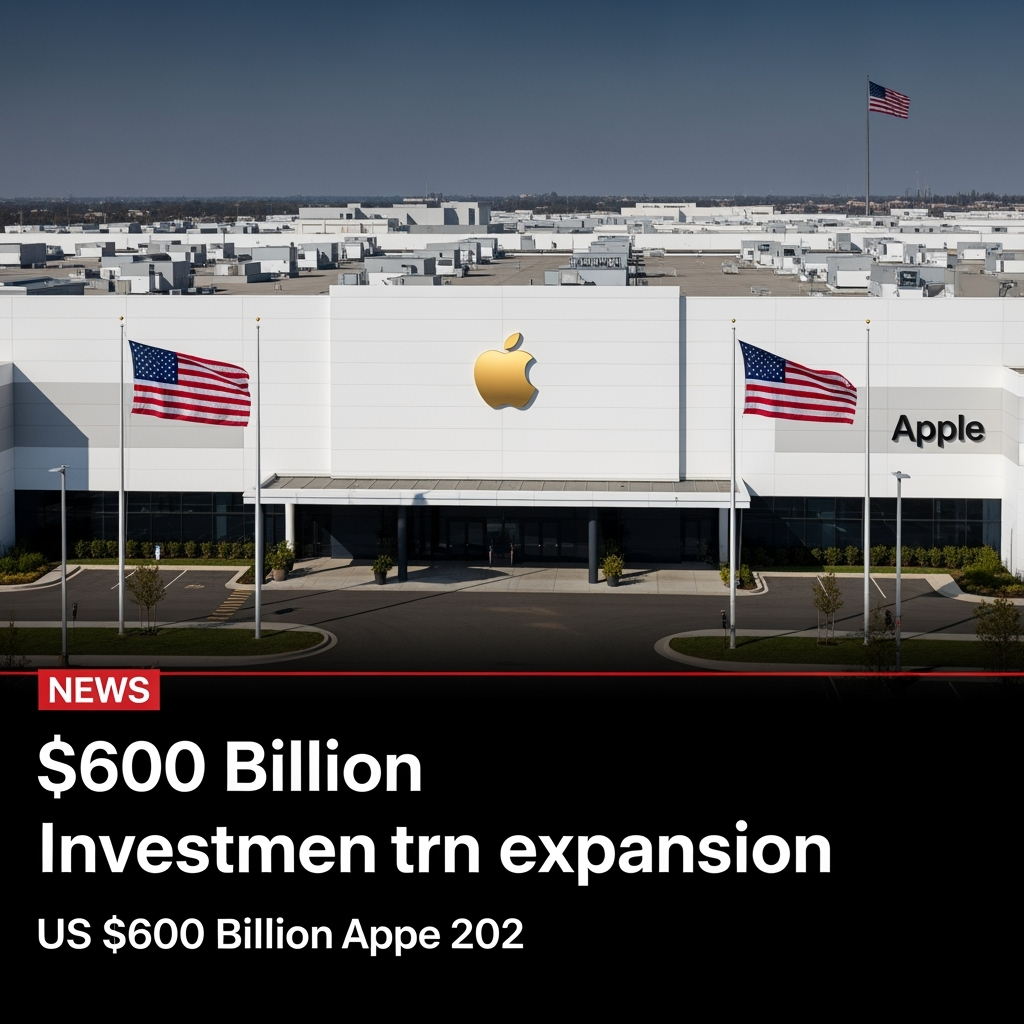
In a landmark agreement on August 6, 2025, at the White House’s Oval Office, Apple CEO Tim Cook and President Donald Trump witnessed Apple’s pledge to invest an extra $100 billion in US manufacturing. This brings Apple’s total commitment to $600 billion over the next four years, focusing on advanced manufacturing, supply chain growth, and tech development. Cook announced this as the Apple American Manufacturing Programme (AMP), aiming to boost the production of key components like iPhone and Apple Watch glass, rare earth magnets, and semiconductors in the US. Within AMP, Apple will partner with at least 10 US companies, including Corning, Applied Materials, Texas Instruments, Broadcom, GlobalWafers, Coherent, Amkor, Samsung, GlobalFoundries, and MP Materials.
Enhancing US Supply Chains and Innovation
A prime example of AMP’s impact is the expansion of Corning’s Harrodsburg, Kentucky plant, soon hosting the world’s largest smartphone cover glass line. Every iPhone and Apple Watch will feature glass made in Kentucky, with a new Apple-Corning Innovation Centre driving future design and manufacturing advances.
The program also covers specialized components like VCSEL lasers for Face ID, produced at Coherent’s Texas site. It will boost US sourcing of rare earth magnets from MP Materials, including a recycling line in California. Apple aims to create a complete domestic semiconductor supply chain, working with GlobalWafers America, Applied Materials, and chipmakers like Texas Instruments and TSMC’s Arizona plant to produce over 19 billion chips for its products by 2025.
Beyond manufacturing, the economic impact is vast. Apple supports over 450,000 jobs in its US supplier network and operates in 79 US factories. With this investment, Apple plans to hire 20,000 employees focusing on R&D, silicon engineering, software development, and AI/machine learning.
Tariff Pressures and Political Strategy
This announcement comes amid trade policy tensions. In May, Trump threatened a 25% tariff on Apple’s foreign-made products, reversing previous exceptions for Chinese imports. These tariff threats added to Apple’s challenges, costing nearly $800 million in the June quarter. Trump also hinted at a 100% tariff on computer chips, exempting US manufacturers like Apple. Analysts saw Apple’s investment as a strategic move to avoid tariffs.
Wall Street reacted positively. Apple’s stock rose almost 5% after the announcement, while Corning and Applied Materials shares increased by 4% and 2% in extended trading. Analysts from Wedbush Securities and Citi viewed the move as a savvy political strategy, aiding Apple amid trade tensions.
However, some remain skeptical. Despite the $600 billion figure, much aligns with Apple’s existing spending plans. The investment adds about $25 billion annually to prior plans, accelerating commitments rather than introducing new funding. Full-scale iPhone assembly in the US is still not planned, with Cook noting that while many components are US-made, final assembly will remain overseas due to cost and supply-chain complexity.
Still, the initiative is strategically significant. It shows Apple’s readiness to align with US policy, strengthen supply chains, and enhance domestic innovation, particularly in semiconductors and AI. For Trump, it offers a powerful narrative of reshoring, job creation, and industrial revival.