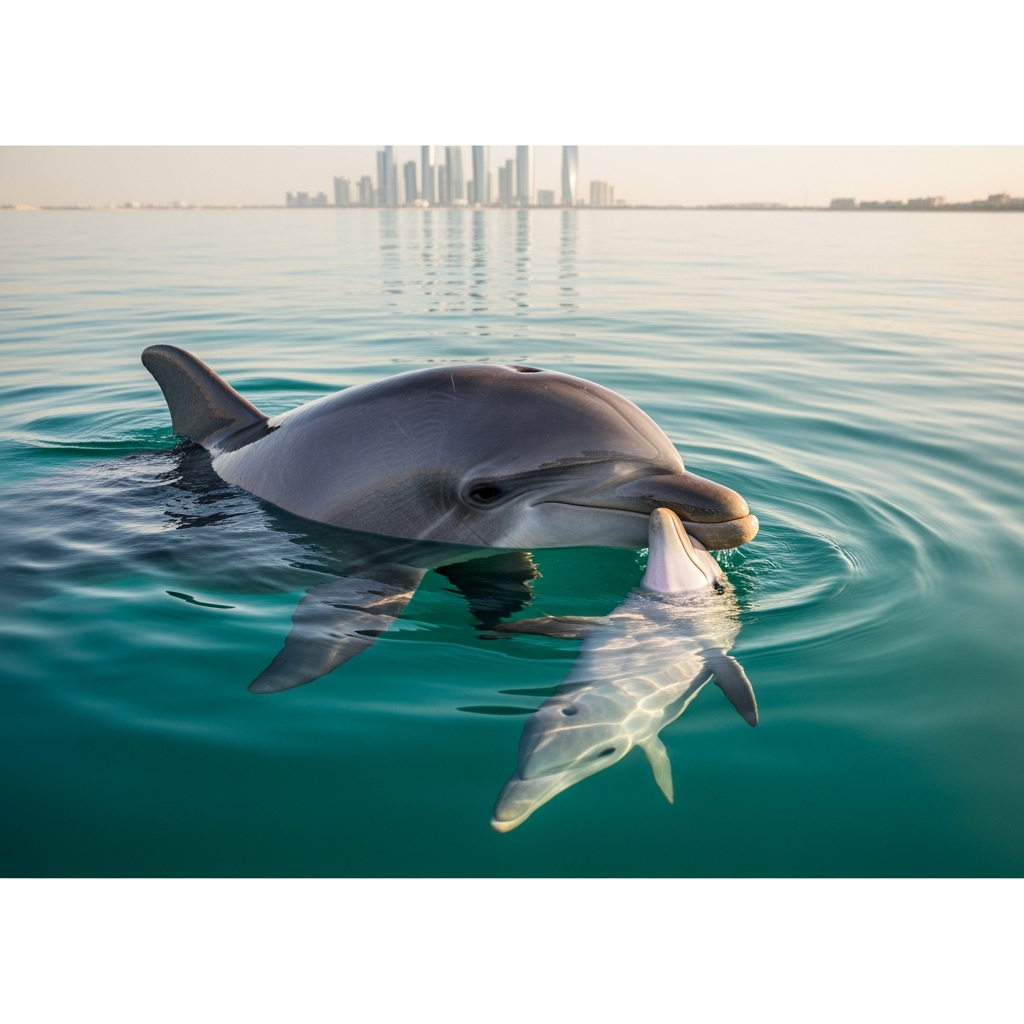
Last week, scientists in Abu Dhabi observed a poignant display of animal behavior in the emirate’s waters: a mother dolphin pushing her lifeless calf around. The video quickly sparked a range of reactions from social media users, from heartbreak over the emotional scene to admiration for the deep bond between mother and child.
Indian Ocean humpback dolphins, like the mother seen in the video, can live between 46 to 60 years, with calves typically staying with their parents for up to five years.
But do animals really grieve? Khaleej Times reached out to the experts at Environment Agency Abu Dhabi (EAD) to understand how animals process grief. According to the EAD team, “grief-like behaviors are increasingly documented across mammals.”
Dolphins are often observed carrying, supporting, or pushing deceased calves near the surface. This behavior may be interpreted as mourning and has been documented globally.
EAD explained that the cause of death in this specific instance remains unknown, although “such incidents are sadly not unheard of in nearshore habitats.”
Even though the scene was a sad one, sharing videos of such interactions helps remind people that dolphins have complex emotional lives and “strengthens public empathy and support for conservation,” EAD said.
The scientists explained that, as conservationists, such videos underscore “the urgency to protect not only the species but emotional lives that depend on healthy, undisturbed ecosystems.”
Since 2014, Abu Dhabi has used non-invasive methods like mark-recapture via dorsal fin notches to track and study dolphins’ movements, along with conserving their habitats, to help maintain the presence of the species. “They are also native to the region,” EAD added.
The result is that Abu Dhabi is now home to the largest population of Indian Ocean humpback dolphins, with more than 700 of them thriving in the emirate’s waters.