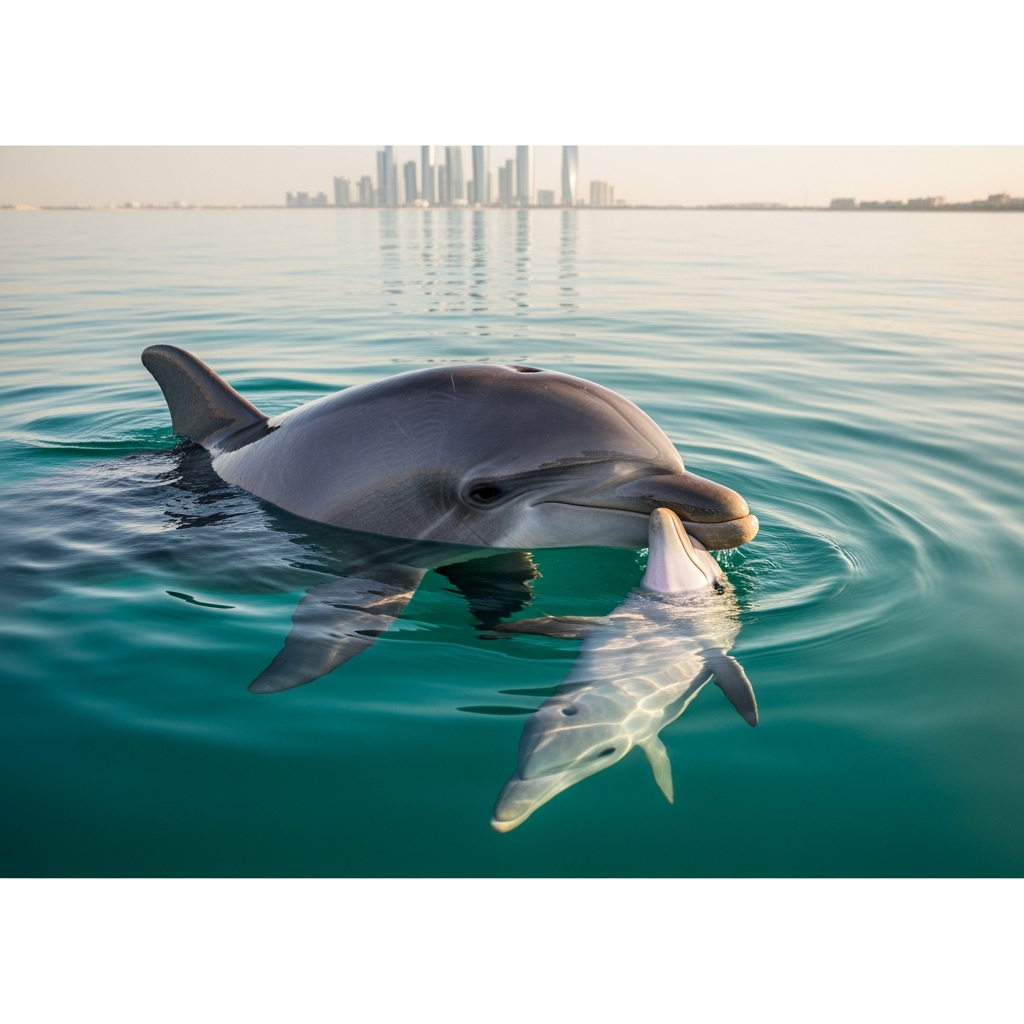
Recently, researchers in Abu Dhabi observed a poignant display of animal behavior: a mother dolphin was seen carrying her deceased calf. The video touched many on social media, evoking emotions from sorrow over the touching scene to admiration for the strong bond between mother and offspring.
Indian Ocean humpback dolphins, like the mother in the video, have a lifespan ranging from 46 to 60 years, with calves generally staying with their mother for up to five years.
Do animals truly experience grief? Khaleej Times consulted experts from Environment Agency Abu Dhabi (EAD) to delve into how animals cope with loss. The EAD team noted that “mourning-like behaviors are increasingly observed across mammal species.”
Stay informed with the latest updates. Follow KT on WhatsApp Channels.
Dolphins are frequently seen carrying, supporting, or pushing deceased calves near the surface, a behavior often interpreted as mourning and documented worldwide.
EAD mentioned that the cause of death in this situation is unknown, though “such occurrences are unfortunately common in coastal habitats.”
Bigger Picture
Although the scene was heart-wrenching, sharing such videos highlights the complex emotional lives of dolphins, “enhancing public empathy and conservation support,” according to EAD.
Scientists emphasize that for conservationists, these videos highlight “the urgent need to protect not only the species but the emotional lives that rely on healthy ecosystems.”
Watch the video here:
Since 2014, Abu Dhabi has employed non-invasive methods such as mark-recapture using dorsal fin notches to monitor dolphins’ movements and conserve their habitats, aiding in the species’ preservation. “They are indigenous to the region,” added EAD.
Consequently, Abu Dhabi now hosts the largest population of Indian Ocean humpback dolphins, with over 700 thriving in its waters.