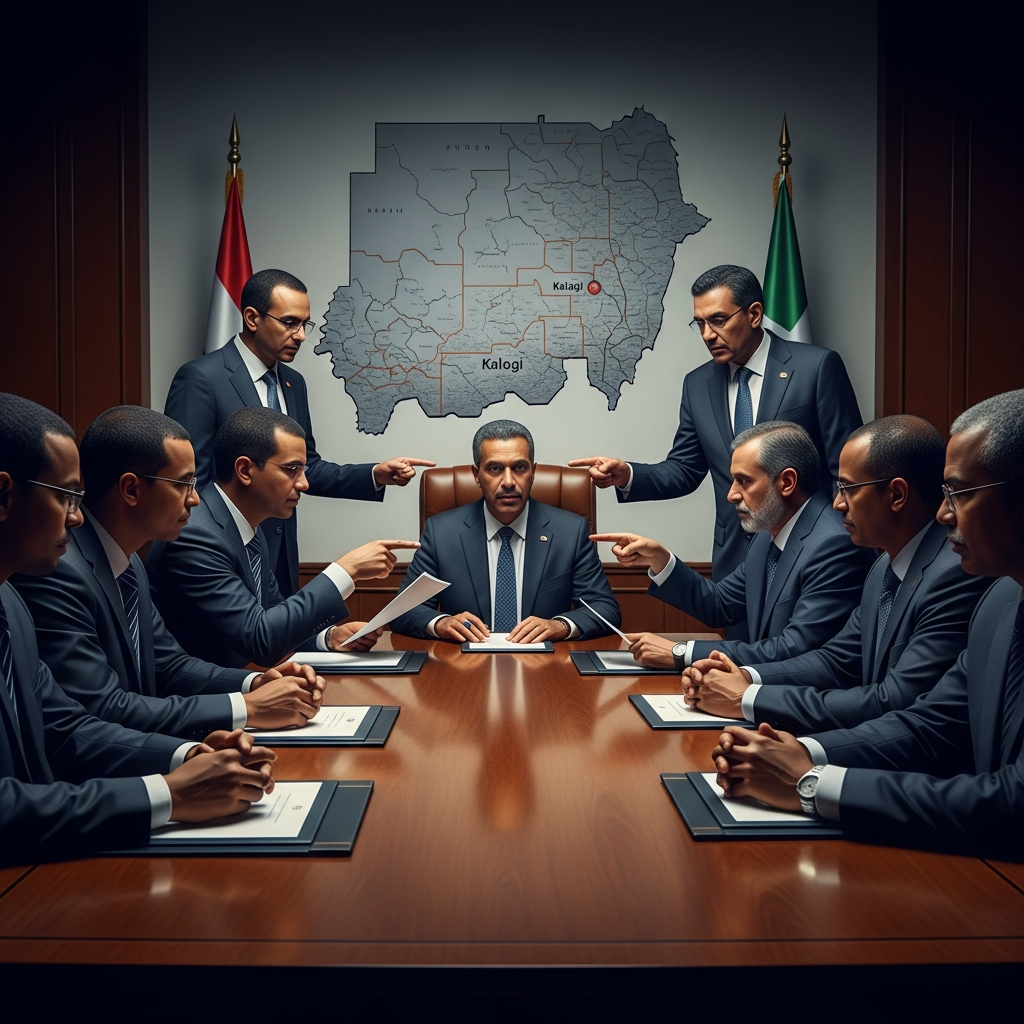
The Arab League held those responsible for the massacre in the city of Kalogi fully accountable for the legal and criminal acts committed against the residents. It also warned of the continued dangerous slide in the situation in Sudan, indicating that the expansion of violence and its transformation into a systematic practice poses a serious threat. The Arab League confirmed that it continues to work with its regional and international partners in an effort to stop the unprecedented wave of violence in Sudan and reach solutions to restore security and stability to the country.
The head of the Transitional Sovereignty Council and the commander-in-chief of the Sudanese Armed Forces, General Abdel Fattah al-Burhan, emphasized last week the need to reshape the Sudanese state according to true foundations. Al-Burhan stated that his country “will not accept any solution that does not dismantle the Rapid Support Forces and disarm them,” affirming that “there is a particular suffering and tragedy in El Fasher.” He added, “The only solution in Sudan is the removal of militias,” pointing out that all Sudanese have tasted the bitterness of war, and he called on “any Sudanese capable of bearing arms to join us in fighting the militia.”
In April 2023, intense and widespread clashes erupted between the Sudanese army and the Rapid Support Forces in various parts of Sudan, as both parties attempted to control vital headquarters. Arab, African, and international parties mediated to cease fire, but these mediations did not succeed in achieving a permanent ceasefire.
Differences between the head of the Sovereignty Council, the commander of the Sudanese Armed Forces, Abdel Fattah al-Burhan, and the commander of the Rapid Support Forces, Mohamed Hamdan Dagalo, came to light after signing the ‘framework agreement’ that laid the foundation for the transitional period between the military component, which includes the army and the Rapid Support Forces. This agreement stipulated the army’s withdrawal from politics and the transfer of power to civilians.
Dagalo accused the Sudanese army of “planning to remain in power and not handing over authority to civilians,” following the army’s demands to integrate the Rapid Support Forces under the armed forces’ banner. Meanwhile, the army considered the movements of the Rapid Support Forces as “rebellion against the state.” The war resulted in the deaths of tens of thousands and the displacement of about 13 million people, some to neighboring countries, and caused a humanitarian crisis considered one of the worst in the world, according to the United Nations and the African Union.