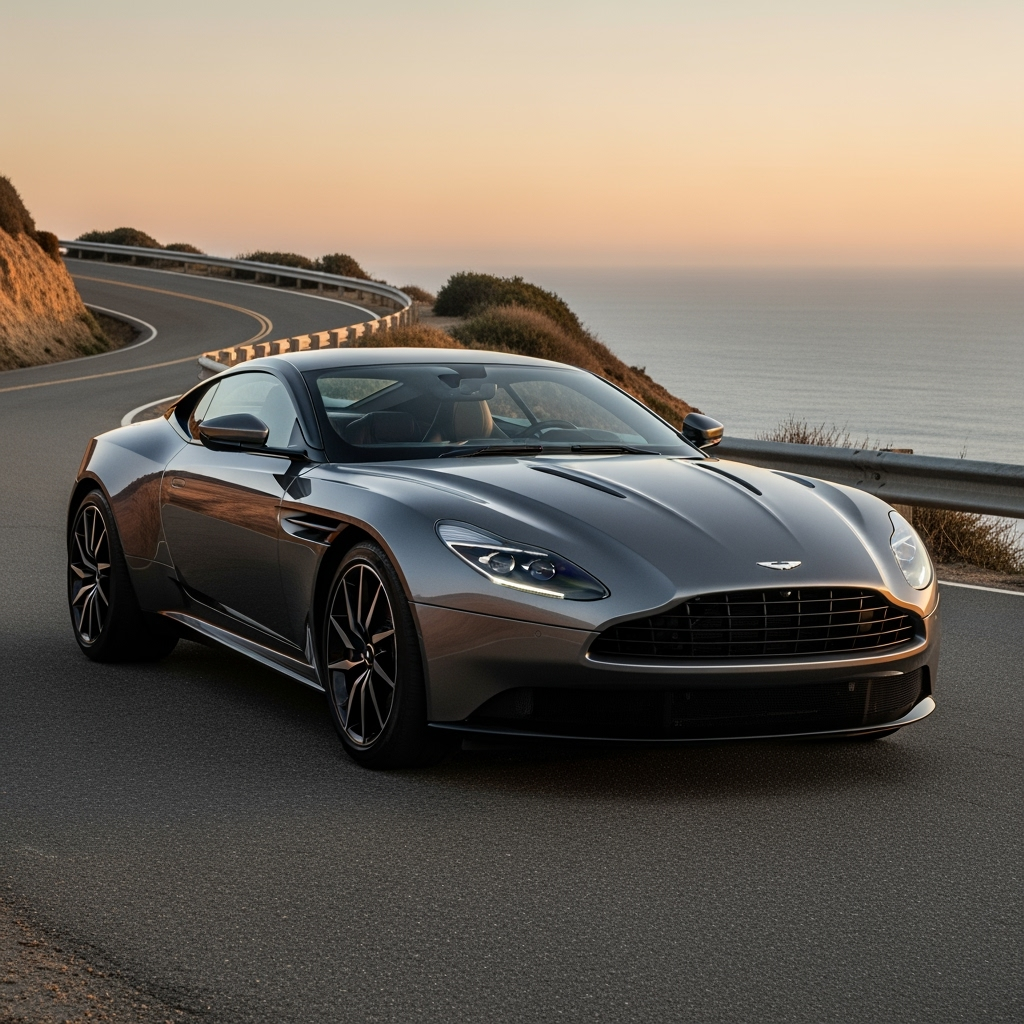
Aston Martin has carved a unique niche in the automotive industry, largely due to its legendary DB series — from the renowned DB5 seen in James Bond films to the sophisticated DB9. The unveiling of the DB12 in 2023 did not just introduce a new chapter in luxury touring but also celebrated two significant milestones: Aston Martin’s 110th anniversary and 75 years of the DB series. However, the DB12 is more than just a grand tourer. Aston Martin ambitiously labels it as the world’s first “Super Tourer”, asserting, “Grand is not enough.” Recently, we evaluated both the car and this bold claim.
DESIGN AND AESTHETICS
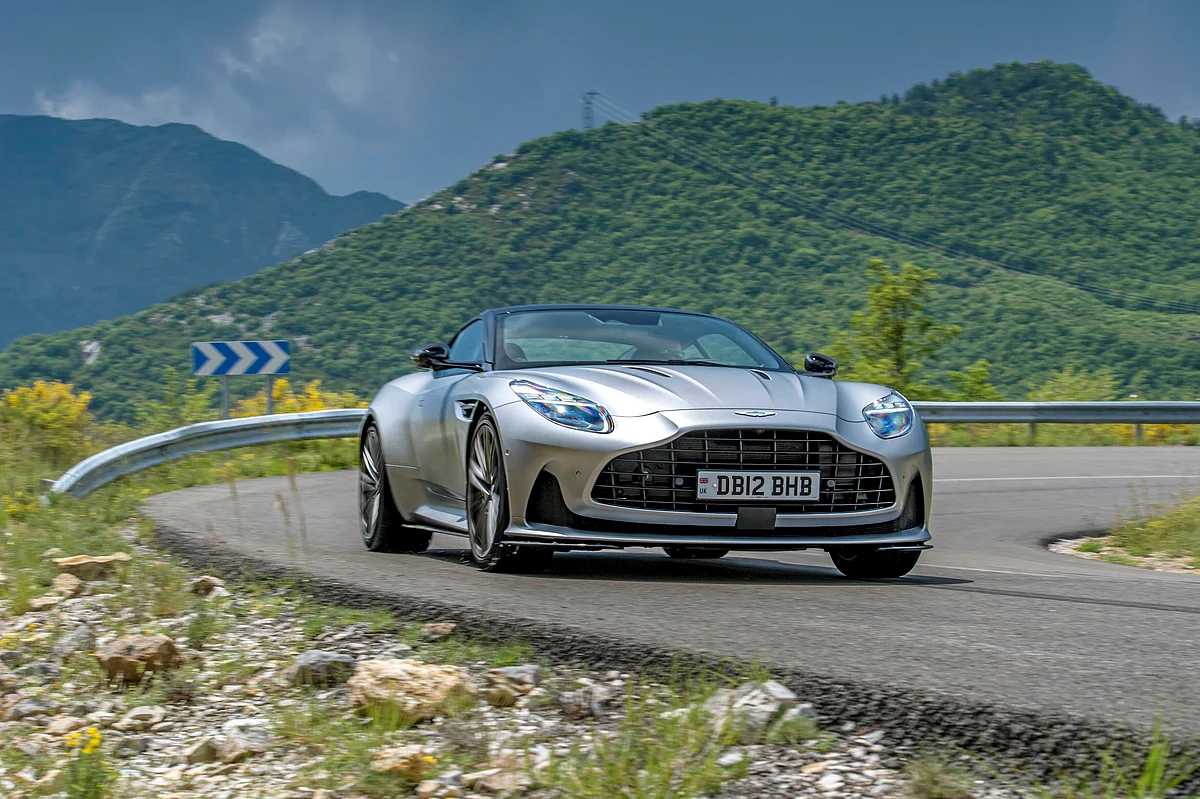
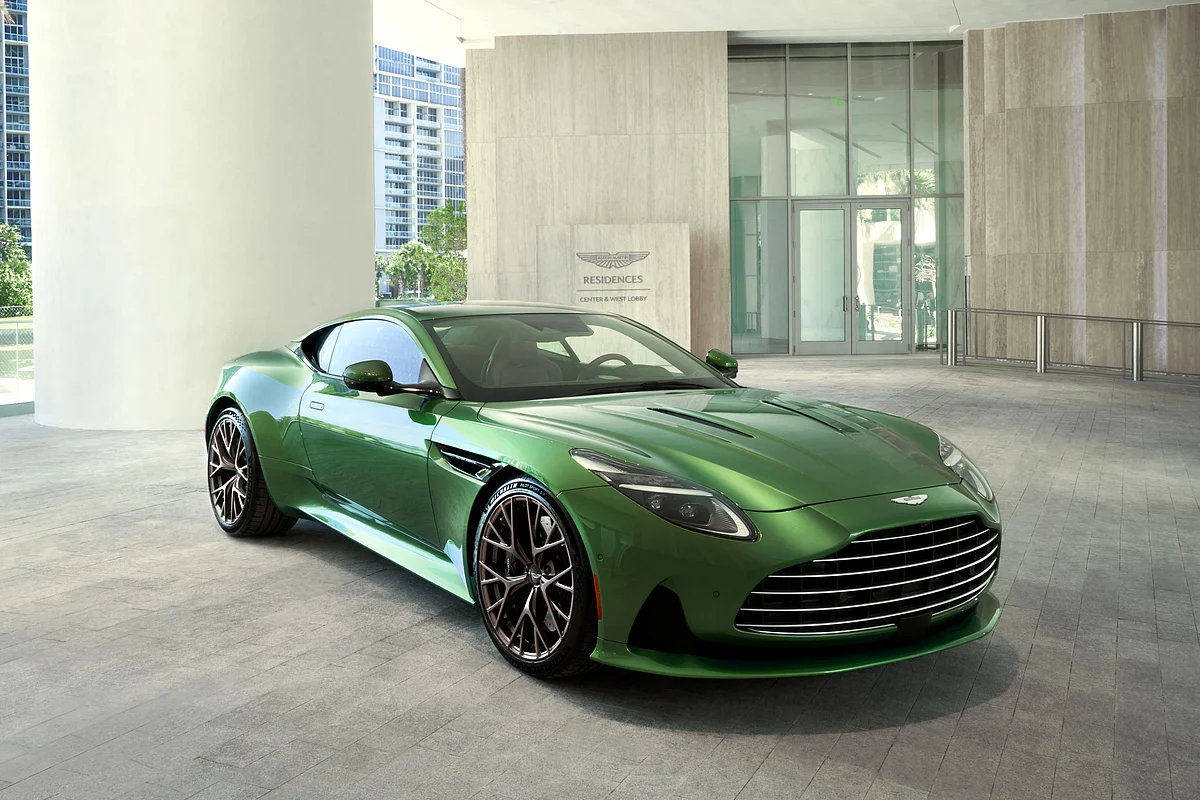
Despite being technically based on the DB11, the DB12 represents a complete transformation — a true evolution. While maintaining its elegant shape, Aston Martin has given it a more robust appearance, widening the front track by 6mm and the rear by 22mm. The front end now boasts a larger, more prominent grille, along with redesigned LED headlights and a new, striking DRL signature. These features together convey a sense of unleashed power. The body follows the sharp front design, creating a streamlined, comet-like effect, with the tapered rear enhancing this imagery and giving the car an almost otherworldly beauty.
This is a vehicle you don’t just drive; you cherish it as a personal treasure. It subtly suggests you wear nothing less than the finest attire from Savile Row.
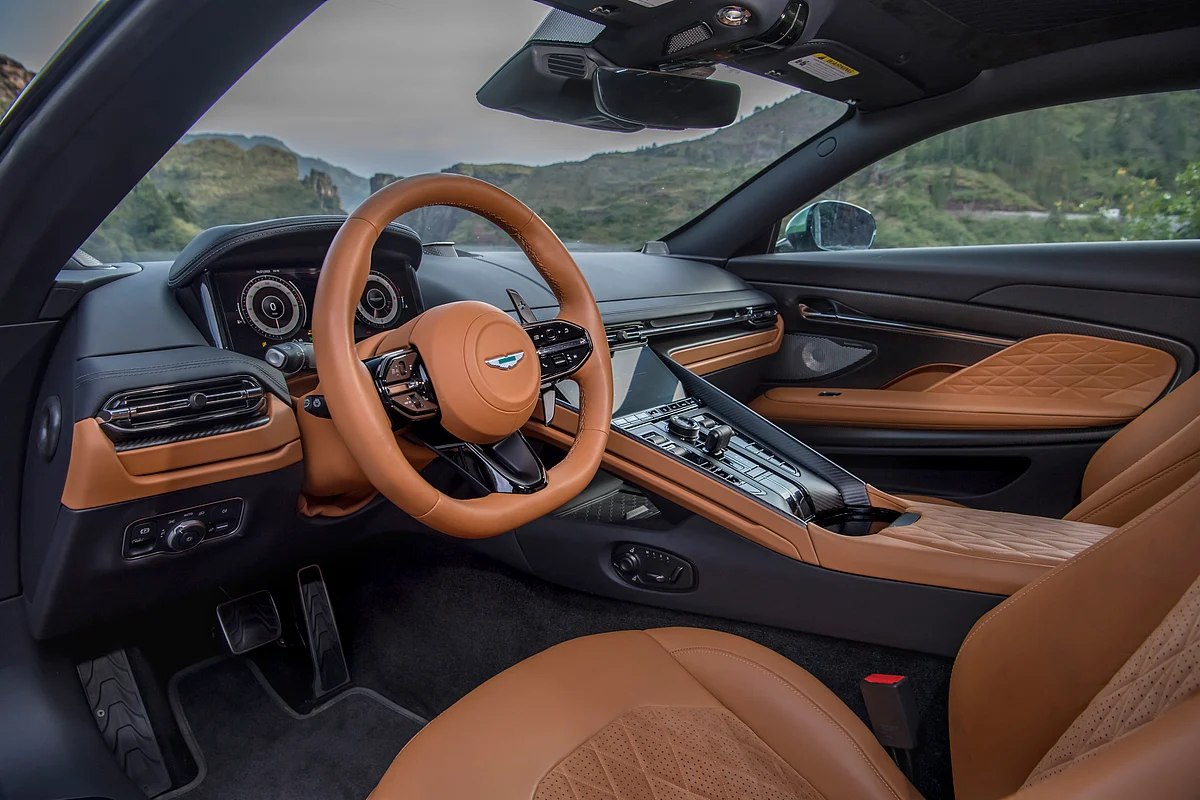
The DB12’s doors open slightly upwards, cleverly avoiding curbs. Inside, the transformation is remarkable. While the DB11’s cabin had a quirky charm with angled vents, ribbed leather, and a protruding center console, the DB12 adopts a cleaner, more Germanic aesthetic reminiscent of a Porsche Panamera, with horizontal lines and a sloping center console. The cabin exudes effortless luxury, with hand-stitched Bridge of Weir leather throughout and special matte carbon fiber trims enhancing the interior. The driver’s seat is exceptionally comfortable, and the three-spoke steering wheel and well-placed pedals give the cockpit a tailored feel. While the long-stem side mirrors are a nice touch, the controls can be tricky, and the steering controls lack tactile feedback. The cabin is notably more ergonomic, featuring two 10.25-inch HD displays with clear graphics — one for instrumentation and one for infotainment. Thankfully, the familiar PRND buttons have been replaced by a toggle shifter, and there’s a practical under-console shelf.
Technically, it’s a 2+2, but the rear seats are primarily decorative, requiring some contortion to access.
POWERTRAIN AND PERFORMANCE
The DB12’s muscular new exterior is matched by a significant performance upgrade. Although some may miss the V12, the DB12’s AMG-derived twin-turbo 4.0-liter V8 surpasses its predecessors, delivering 680 PS and 800 Nm. These improvements come from revised cam profiles, larger turbos, and enhanced cooling. True to sports car form, this power is channeled to the rear wheels via an eight-speed automatic transmission.
This isn’t a car you just hop into and drive. Its substantial dimensions and unique throttle calibration require a gentle touch before unleashing its full potential. And when you do, it’s incredibly fast — reaching 100 km/h from a standstill in under four seconds, with the roaring exhausts adding to the thrill. The large paddle shifters allow for precise control over torque and sound. Around corners, the chassis feels firm, but as speeds increase, it embraces the grand touring experience. It isn’t as responsive to minor steering and throttle inputs at high speeds as some pure sports cars, favoring smoother inputs instead. This dynamic performance is made possible by the new adaptive suspension with intelligent dampers and an electronic differential. Braking is made effortless by large cast-iron discs, or opt for the lighter, more fade-resistant carbon-ceramic brakes. Additionally, the Michelin Pilot Sport 5 S tires with noise-canceling foam reduce road noise by 20%, ensuring a comfortable ride across all drive modes and enhancing cabin refinement. However, be mindful of the limited range, as it runs out at just 300 km.
FEATURES AND FUNCTIONALITY
Historically, infotainment wasn’t Aston Martin’s strong suit, but this time, screen responsiveness and user experience have greatly improved. Bluetooth pairing is swift, and wireless Apple CarPlay and Android Auto are supported. However, the wireless charger is somewhat difficult to access. There are also two USB-C ports in the small central cubby. The 15-speaker, 1,170W Bowers & Wilkins system offers an excellent listening experience, though not quite class-leading.
The boot space is limited, accommodating only a single suitcase, and the access opening is small. For safety, a 360-degree camera provides a clear but compact view due to the landscape screen, and the suite of advanced driver-assistance systems is included as required.
VERDICT
The 2025 Aston Martin DB12 is the pinnacle of automotive craftsmanship, with a luxurious, material-rich cabin that justifies its price. Its expertly calibrated chassis manages the 600-plus turbocharged horsepower, delivering an exhilarating ride as you navigate corners with precision. This isn’t about racing the clock; it’s the car you drive to the races. It represents taste and a love for speed. While the rear seats are mostly decorative, the boot is small, and the V12 is absent, the DB12 lives up to its ‘Super Tourer’ title by every subjective measure.
Body type: 2+2-seater; two-door high-performance luxury coupe
Engine: Front-engine; twin-turbo 4.0-litre V8; rear-wheel drive
Transmission: 8-speed automatic
Peak output: 680 PS @ 6,000 rpm – 800 Nm @ 2,750 – 6,000 rpm
0 to 100kmph: 3.7 seconds (estimated)
Top speed: 325 km/h (drag limited; claimed)
Price: Starting at Dh1,200,000 approx.
GOOD: Peak automotive beauty; immense power; thrilling exhaust note; comfortable ride
BAD: No V12 option; rear seats are decorative; some ergonomic issues; high fuel consumption