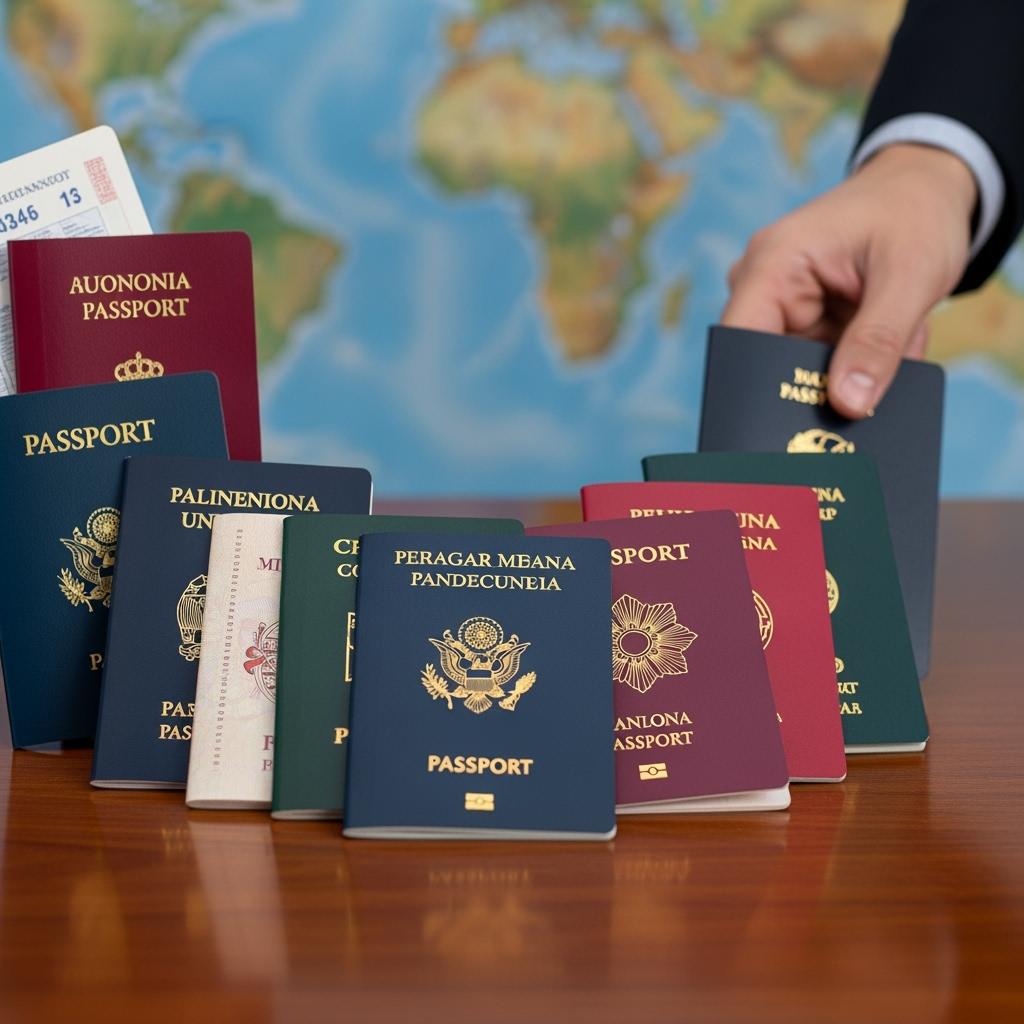
In an era of continual geopolitical shifts and evolving tax laws, the affluent are moving beyond the comfort of a single passport. Instead, they are crafting ‘passport portfolios’—strategically assembled collections of residencies and citizenships designed to enhance mobility, safeguard assets, and secure their family’s future.
Previously the domain of billionaires and covert operatives, the appetite for global mobility has surged. Ultra-high-net-worth individuals (UHNWIs) from the Middle East, Asia, and North America are embracing a ‘sovereign portfolio’ approach. For them, it’s as crucial as maintaining a diversified investment portfolio.
David Lesperance, founder of Lesperance and Associates, has witnessed the passport portfolio evolution firsthand, advising clients for over 30 years. Investing in real estate, launching a business, or purchasing property in the destination country are popular pathways to residency. “The landscape of citizenship and residency by investment is ever-changing,” he notes. “People ask if programme X will be around in three years. Having been in this field for over three decades, I can only assure you that tomorrow will differ from today.”
Lesperance highlights Portugal’s golden visa changes, Malta’s fluctuating fast-track citizenship, and Canada’s increasing processing times as indicators of a dynamic environment. This volatility, he asserts, demands constant vigilance. “You have to stay informed, evaluate the situation, and assess the ongoing rumors and developments.”
From Passports to Portfolios
This paradigm shift is echoed by Jihad Elabbas, a senior private client adviser at Henley & Partners in Dubai, known as ‘the firm of global citizens’. “Today’s discerning clients aren’t just after a single passport or residency. They’re constructing ‘sovereign portfolios’: strategic combinations of citizenships and residence permits that collectively offer broader advantages,” he explains.
“The query has evolved from ‘which country offers the best passport?’ to ‘which blend of mobility options ensures optimal global flexibility, security, and opportunities?’”
Elabbas elucidates that affluent families are engaging in “geopolitical arbitrage,” capitalizing on variations in legal, economic, and political systems across nations to protect their wealth and lifestyle. For instance, a Caribbean passport might enable swift visa-free travel, whereas EU residency offers access to education, business, and healthcare. Combined, they form a comprehensive wealth strategy.
George Eid, senior vice-president of sales at Arton Capital, assists UHNWIs and their families in achieving global citizenship through investments in secondary residences or citizenships. Eid compares the process to crafting an investment portfolio. “Just as you design a financial strategy with immediate, mid-term, and long-term goals, a residency and citizenship portfolio should align with a client’s current and future needs,” he states. “Certain programs provide rapid mobility solutions at competitive entry levels, while others focus on long-term stability, EU access, or intergenerational continuity.”
The ‘Ideal’ Combination
What constitutes a typical passport portfolio? According to Henley & Partners’ Elabbas, clear trends are emerging. “A robust sovereign portfolio often features European residence permits paired with Caribbean citizenships,” he observes. “Caribbean programs like Antigua and Barbuda, Grenada, or St. Kitts & Nevis grant visa-free access to over 140 countries with processing times under six months, while European residencies in Greece or Malta are appealing for their long-term stability and potential citizenship pathways.”
Arton Capital’s Eid notes an increasing trend of combining a Middle Eastern base, such as the UAE, with a Caribbean passport or EU residency. This combination offers tax efficiency, strong connectivity, and cross-continental options. While each passport portfolio is unique, the ‘ideal’ one maximizes global mobility.
Lesperance’s ideal package includes Ireland, offering access to both the EU under the Treaty of Rome and the UK via the Common Travel Agreement; New Zealand, providing access to both New Zealand and Australia; Canada, which doesn’t tax based on citizenship and grants preferred access to Mexico and the US; and Dubai residence, covering the globe substantially.
The motivations behind building a portfolio are as diverse as the jurisdictions themselves. “Clients pursue multiple passports and residencies for the same reasons investors diversify asset classes: diversification and freedom of choice,” Eid explains. “Mobility, security, tax efficiency, education, legacy planning—these are overlapping motivations.”
Elabbas emphasizes the practical benefits of owning multiple passports and residencies. “A single location rarely suffices for wealthy families aiming to protect their estate and intergenerational wealth,” he says. “Combining two or three programs not only grants residency rights but also peace of mind—a form of insurance against global uncertainty.”
Rising Barriers
As demand for multiple passports grows, so do the barriers to entry. “In Greece, the minimum investment requirement in Athens has surged from €250,000 to €800,000 (Dh1 million to Dh3.4 million) in just two years,” Elabbas points out. “Caribbean programs have also significantly increased their prices following a major overhaul.”
Eid views this evolution as part of the industry’s natural maturation. “Governments are implementing stricter regulations, stronger compliance standards, and higher investment thresholds,” he explains. “For clients, this means solutions are becoming more robust and future-proof. Programs remain accessible but now require more thoughtful planning, higher investments, and experienced advisory.”
Yet, new opportunities are emerging. Elabbas mentions Nauru’s newly launched Economic and Climate Resilience Citizenship Programme and hints at future offerings Henley and Partners are developing with the Maldives. Lesperance also notes, “most countries have provisions in their legislation to waive naturalization requirements.” Thus, for the right client with the right business interests, bespoke negotiations with governments are still possible.
“The mass affluent can still move to obtain second residences, but they will face higher costs, longer wait times, and the need to relocate,” Lesperance remarks.
A passport portfolio also signifies wealth, alongside international properties, luxury cars, and investments. Eid describes the growing trend as the ultimate hedge. “Clients are now building layered portfolios across multiple jurisdictions, effectively creating a ‘Plan B’ and ‘Plan C’, ensuring independence from a single government, tax system, or travel freedom.”
Citizenship criteria and residency programs can change overnight, impacting not just wealth but family security. The value of strategic, customized advice is invaluable. Answers won’t be found in catchy social media posts.