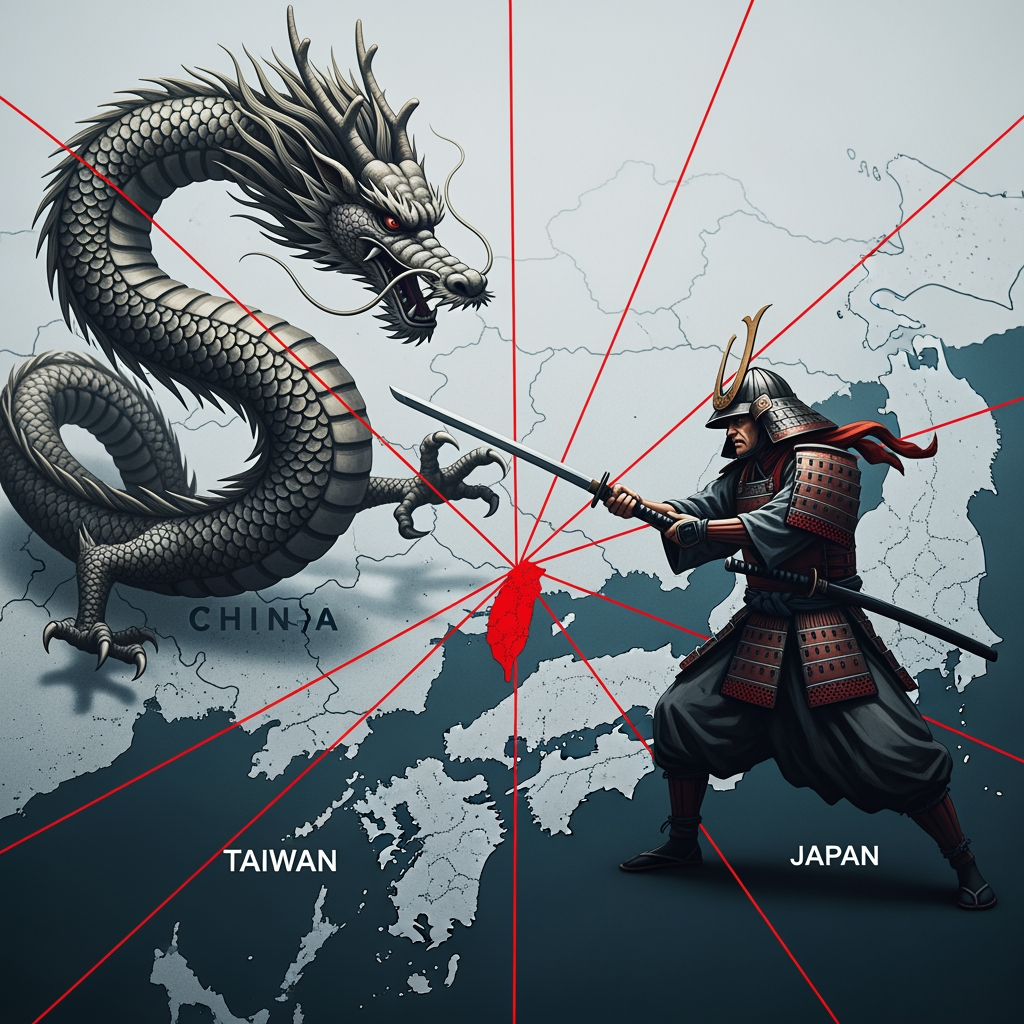
The Chinese embassy in Japan stated in a post on an app that recent statements by Japanese leaders were “blatantly provocative regarding Taiwan and caused significant harm to the atmosphere of popular exchange between the two countries.” It added that the situation poses “great risks to the safety and lives of Chinese citizens in Japan.” This comes after the Chinese Foreign Ministry summoned the Japanese ambassador to Beijing on Thursday, issuing a formal protest regarding the statements made by Japan’s Prime Minister, Sanae Takaichi, about Taiwan.
The Japanese Prime Minister stated on November 7 before the parliament that “launching armed attacks on Taiwan may justify Japan sending support forces to the island under the right of collective defense,” according to her statement. Takaichi described the scenario as potentially posing an “existential threat to Japan,” following her meeting with a representative from Taiwan during the APEC summit in South Korea earlier this month, which angered Beijing.
Despite the diplomatic escalation, Takaichi affirmed that she does not intend to retract her statement, confirming that it aligns with Japan’s long-standing policy, but she noted that she would avoid referencing specific scenarios in the future. According to the Japanese constitution, strict restrictions are imposed on the use of the military, but a law issued in 2015 reinterpreted it to allow the use of military force for “collective defense in limited cases,” including a “situation representing an existential threat to Japan.”
Previous governments have avoided specifying the conditions under which this classification might apply. The classification of “existential threat” is important as it provides a legal basis that allows Japan to deploy its military forces to defend friendly nations. Beijing considers Taiwan as part of Chinese territory and threatens to reclaim it by force if necessary, while the ruling Democratic Progressive Party on the island considers it an independent state.
While China possesses one of the world’s largest fleets, ranked first globally, Taiwan plans to counter any potential Chinese attack with military tactics that include relying on mobile combat groups, reducing the size of fixed forces that can be targeted, and focusing on electronic warfare means.