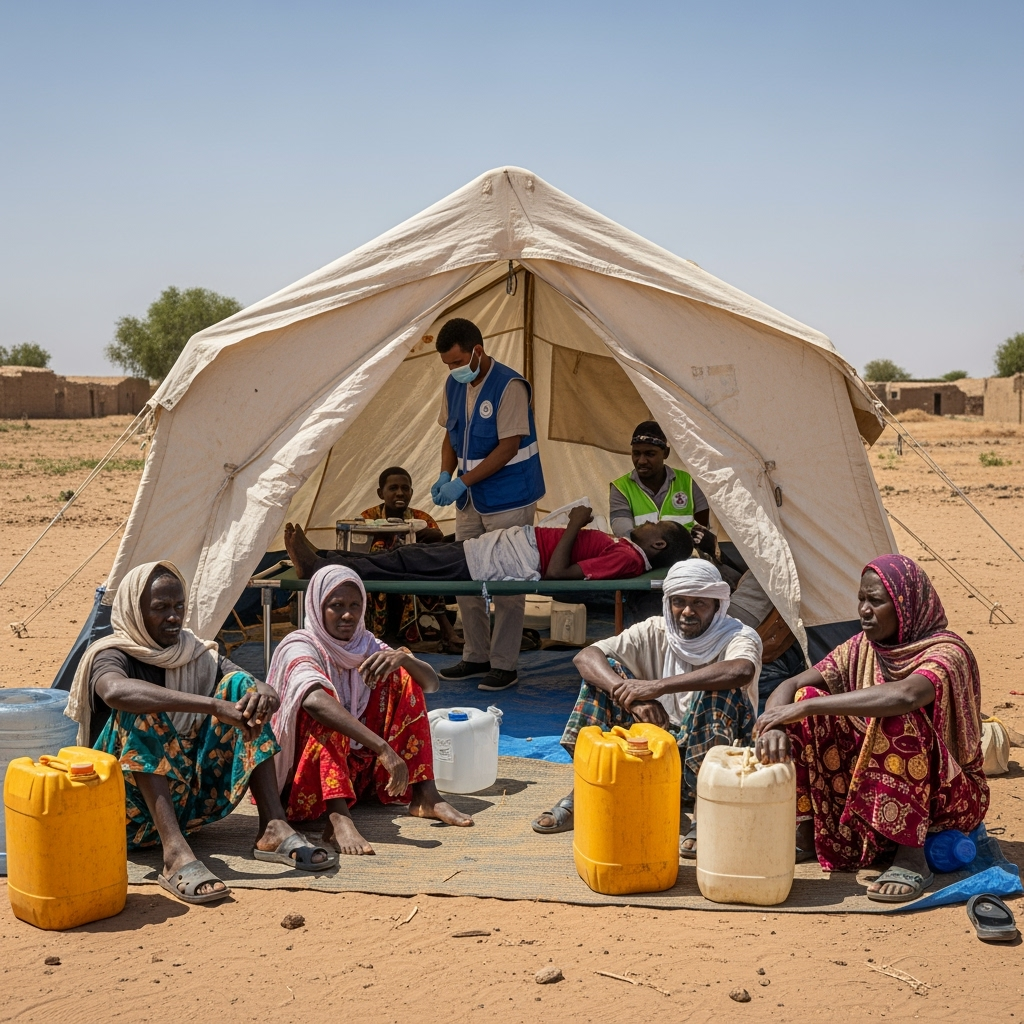
The Sudan Doctors Network announced that the number of confirmed cases has exceeded 6,000, according to official data. In the Tawila area in North Darfur, cholera cases have risen to more than 2,500, with 103 deaths, including children and women, as of early August. The network confirmed that this outbreak would not have spread so catastrophically without the systematic collapse of the healthcare system in the region. This is due to the blockade by the Rapid Support Forces, which halted supply chains, stopped essential care programs, caused a lack of medicine, and displaced hundreds of doctors and medical staff.
The Sudan Doctors Network holds the Rapid Support Forces fully responsible for the epidemic’s spread due to depriving official institutions and organizations from quickly intervening to stop the epidemic. They also blame the increase in the number of displaced people to the Tawila area. The network calls on the international community, UN organizations, and human rights bodies to take urgent and firm actions against the leaders of the Rapid Support Forces to stop these violations and ensure the unrestricted delivery of humanitarian and medical aid, as well as the protection of civilians from the starvation and intimidation policies practiced by the Rapid Support Forces against the people of Darfur.
Sudan Tribune reported that the state government confirmed that the city of Al-Obeid has received large numbers of displaced people, with recorded deaths and cholera cases among the population. The state’s Humanitarian Aid Commissioner, Mohamed Ismail, explained that more than 600 families, approximately 30,000 people, have been displaced from villages north of Bara due to military conditions in the area. He added that Al-Obeid is experiencing continuous inflows from the areas of Al-Khoy, south of the city, and Bara, noting that the targeted villages are not experiencing any military activities.
Local sources informed the newspaper that residents of the village of Um Zein, located 50 kilometers east of Al-Obeid, have evacuated on foot or with animals. Fighting broke out in Sudan on April 15, 2023, between the army led by Abdel Fattah al-Burhan and the Rapid Support Forces led by Mohamed Hamdan Dagalo (Hemeti) in various areas of Sudan. This has impacted the healthcare services and living conditions of Sudanese people, especially exacerbating the internal and external displacement crisis. Arabic, African, and international parties have mediated to cease fire, but these mediations have not succeeded in achieving a permanent ceasefire.