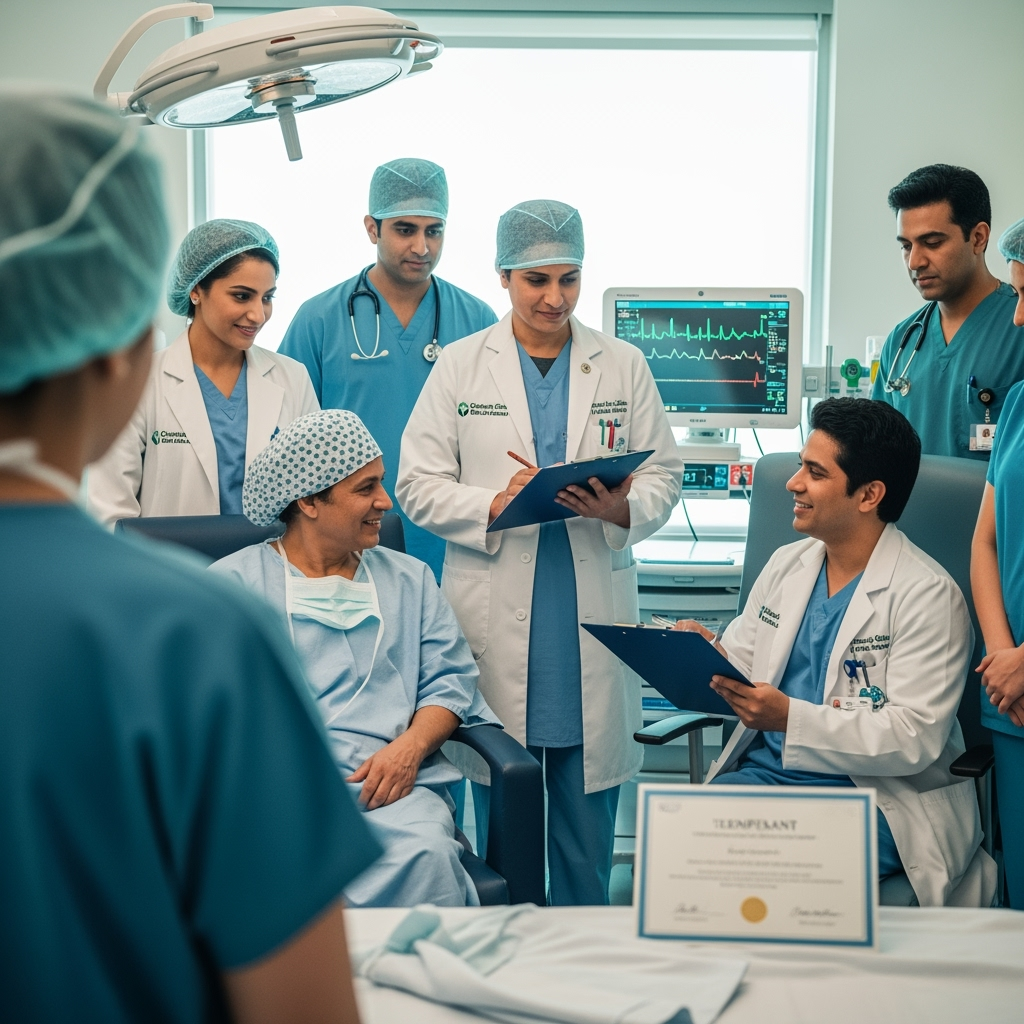
At Cleveland Clinic Abu Dhabi (CCAD), over 280 patients are currently on the waiting list for critical organ transplants, according to the Institute of Surgical Subspecialties. This includes more than 200 individuals needing kidney transplants, 50 awaiting liver transplants, 20 for lungs, and 12 for hearts.
Dr. Bashir Sankari, Chief of Urology at the Integrated Surgical Institute, noted that the increase is due to heightened awareness of transplant services and a scarcity of suitable donors. “Blood type significantly impacts waiting times,” he stated.
Kidney patients with blood type AB usually wait about three months, while those with type B might wait six months to a year. Type A patients wait one to two years, and type O — the most common blood type — can wait three to five years, compared to eight to ten years in the US.
Stay informed with the latest updates. Follow KT on WhatsApp Channels.
Despite the rising waiting list, Dr. Usman Ahmad, Division Chair of Thoracic Surgery at CCAD, highlighted that outcomes in the UAE are exceptional. Since opening the first multi-organ transplant center in 2017, CCAD has conducted over 936 transplants with a 95% patient survival rate. These include:
-
415 kidney transplants (182 from living donors, 233 from deceased donors)
-
397 liver transplants (34 from living donors, 363 from deceased donors)
-
70 lung transplants
-
38 heart transplants
-
16 pancreas transplants
The hospital has also executed complex combined procedures, including 36 liver-and-kidney, 16 kidney-and-pancreas transplants, and rare heart-lung and heart-kidney operations.
CCAD attributes technological advancements to expanding the pool of viable organs and aiding critically ill patients. Advanced preservation machines can maintain donor organs outside the body for hours, enabling assessment and repair before transplant. ECMO, a heart-lung bypass system, supports critically ill patients until suitable organs are found.
The hospital is also focused on training future transplant specialists. A new fellowship starting in January will train three Emirati women in transplant surgery, a crucial step in developing local expertise and ensuring culturally sensitive care.